
I originally mislabeled the bone as the right coracoid, it is actually the left coracoid.
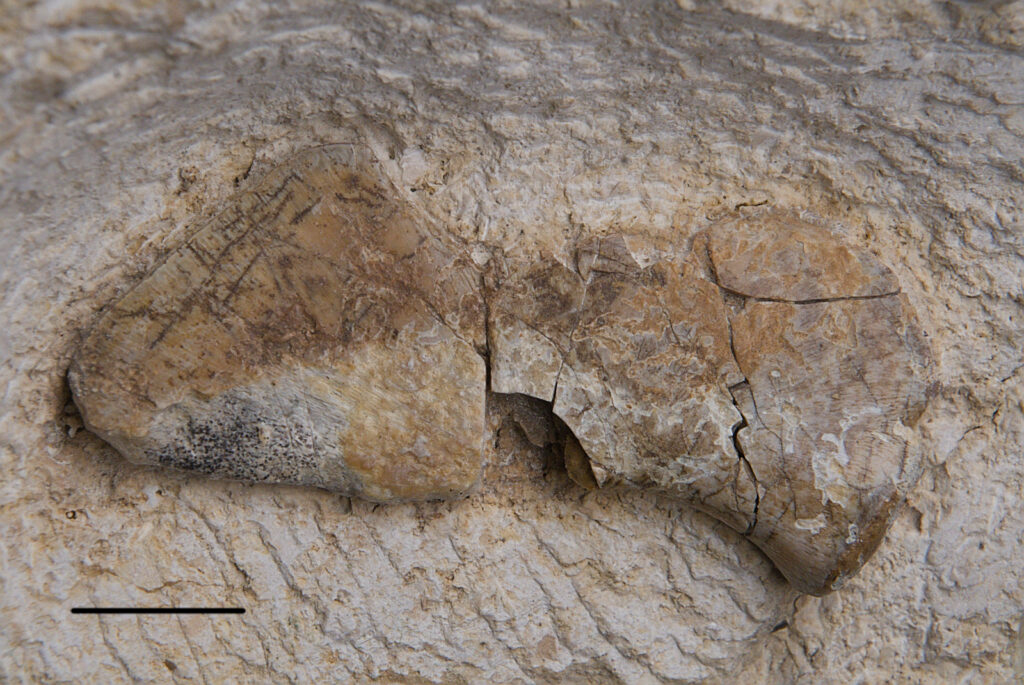
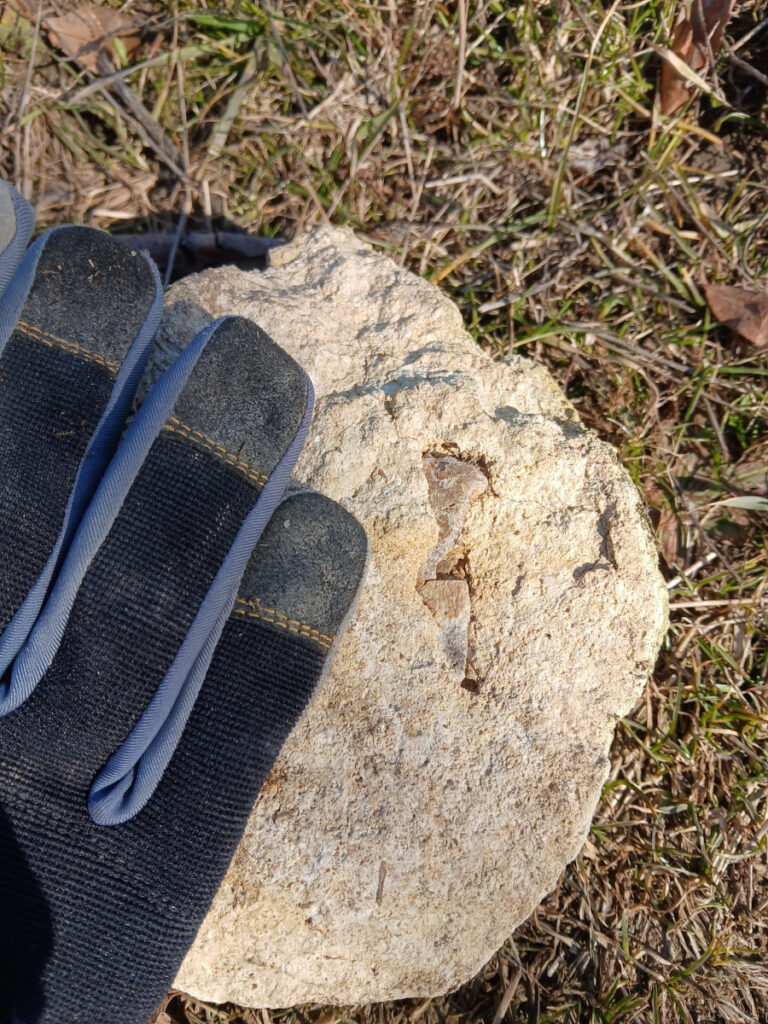
Nothosaurus sp., left coracoid
Middle Triassic, Gogolin Beds, Upper Silesia, Poland
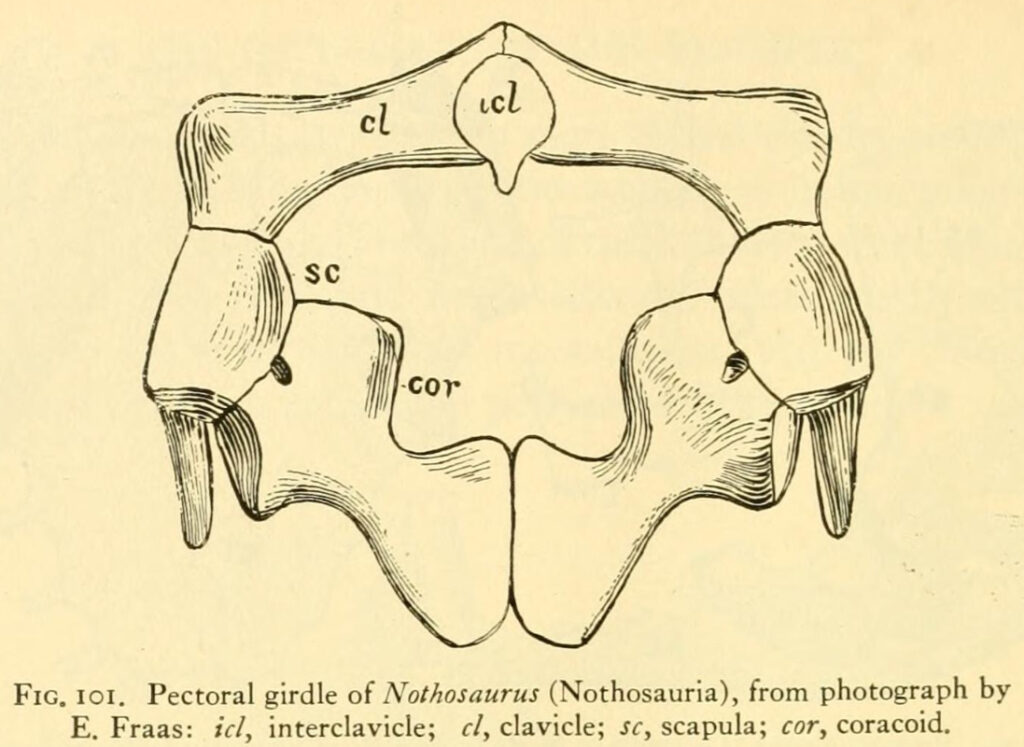
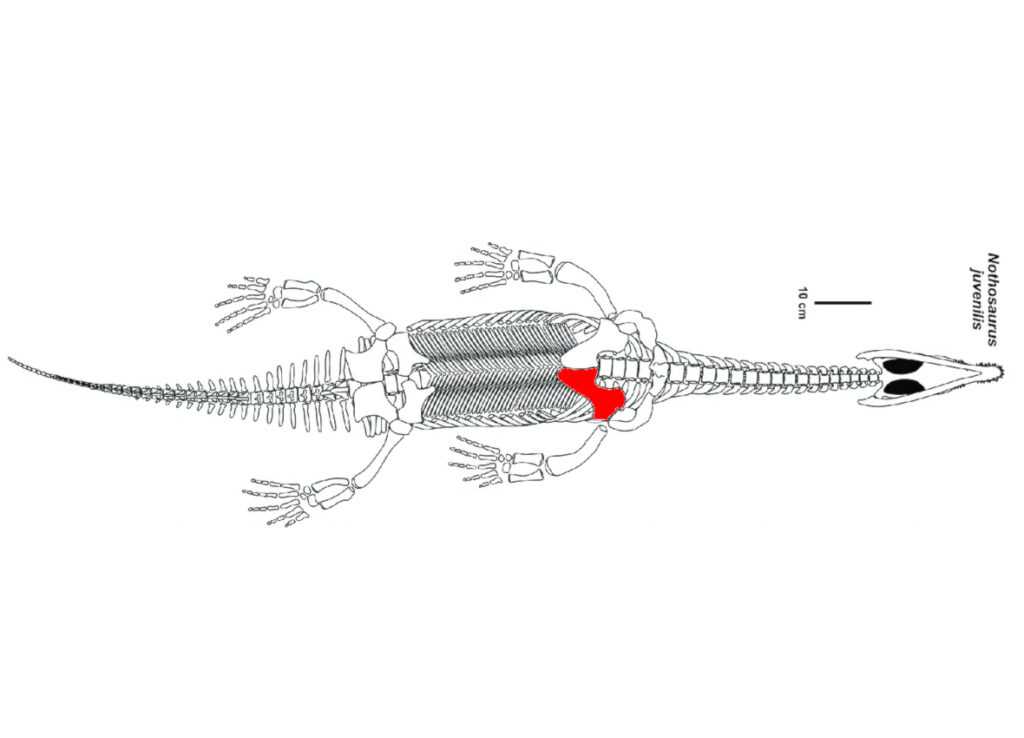
This specimen is a partially weathered left coracoid, viewed from the ventral (bottom) side. It most likely belonging to Nothosaurus. The coracoid is a bone that forms part of the pectoral or shoulder girdle. The structure of the girdle, and therefore the coracoid itself, is a very important diagnostic element.
Based on the girdle’s structure, we can not only determine the group of animals to which the specimen belonged, but paleontologists can also determine the animal’s locomotion pattern. These skeletal elements are structured differently in Nothosaurus, Placodontids, and even differently in, for example, Pistosaurus. The anatomical differences resulted directly from adaptations to an aquatic lifestyle.
The story
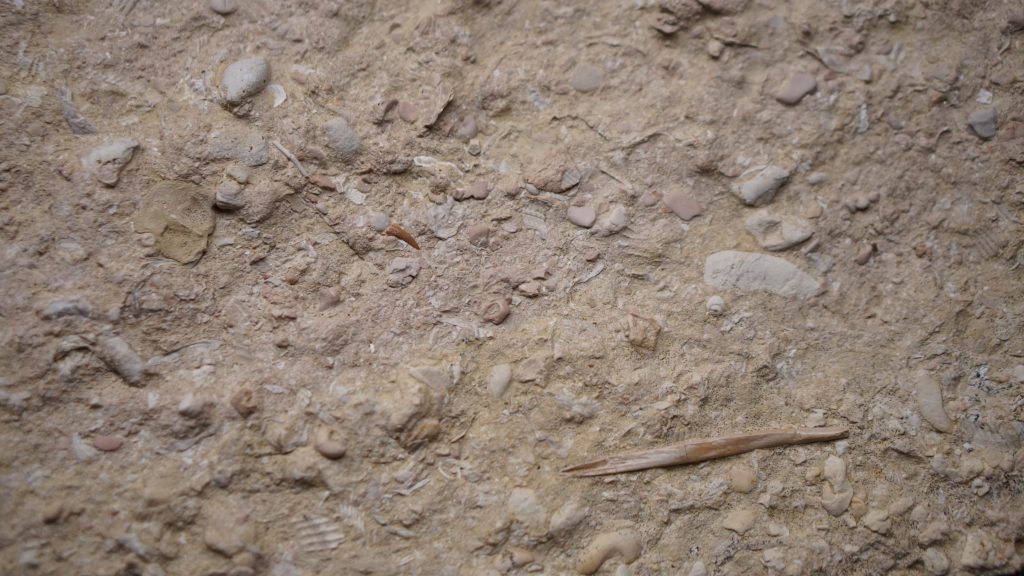
The state of preservation of this specimen and the visible damage caused by weathering are related to the circumstances in which I found it. The specimen was lying in the middle of a path – a path that many people and cyclists used daily. Conclusion: watch your step carefully! 🙂
As additional illustrations, I’ve included engravings of the shoulder girdle from the excellent, classic (though now outdated) book by Williston (1925). The book is available in the public domain and can be explored at the Internet Archive.
Reference:
Williston, S. W. (1925). The Osteology of the Reptiles. Cambridge: Harvard University Press.
Diedrich, C. G. (2013). Marine Triassic reptile biodiversity and change in the Bad Sulza Formation (Illyrian, Middle Triassic) of Central Germany and a contribution to the evolution of Nothosaurus in the Germanic Basin. New Mexico Museum of Natural History and Science Bulletin, 61, 147-157.
Leave a Reply