
Tag: Gogolin Formation
-

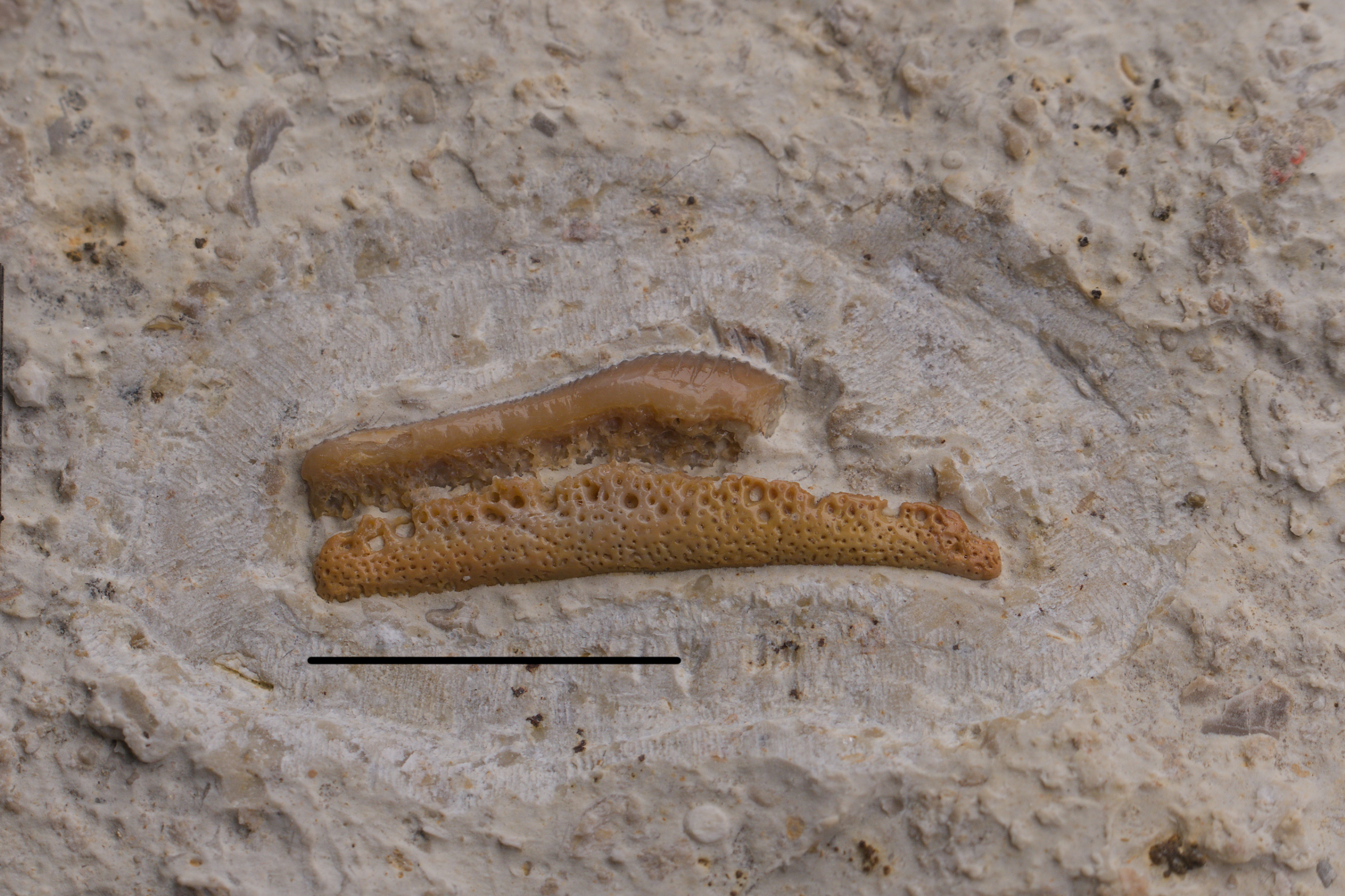
Acrodus sp. tooth 6/LMK
Acrodus sp. Middle Triassic, Lower Muschelkalk (Anisian), Lower Gogolin Beds, Upper Silesia, Poland The photo shows a complete tooth (crown with root) from a Triassic shark of the genus Acrodus. At first glance, the specimen shows signs of damage. But in my opinion, that’s what’s most interesting about it! These aren’t traces of modern erosion.…
-
Pachypleurosauridae vertebra 5/LMK
Sauropterygia ?Pachypleurosauridae indet. complete vertebra Middle Triassic, Lower Muschelkalk (Anisian), Gogolin Beds, Upper Silesia, Poland The vast majority of fossil vertebrate specimens in the Silesian Muschelkalk are single, isolated bones. As for the vertebrae themselves, I most often encounter vertebral centra, sometimes neural arches. Complete vertebrae, however, are truly rare – almost always separated into…
-
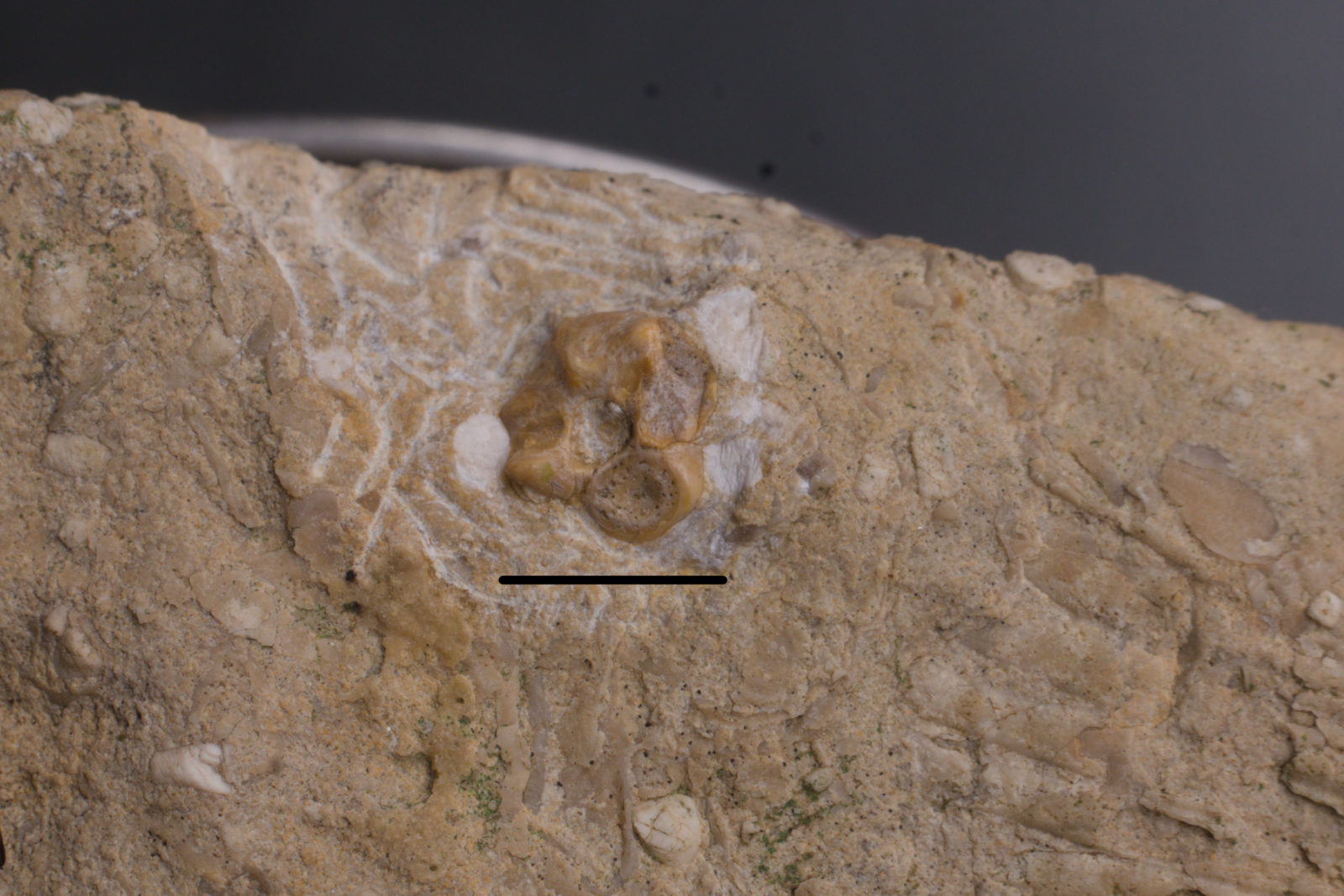
Pachypleurosauridae disarticulated elements 4/LMK
Sauropterygia ?Pachypleurosauridae indet. Disarticulated elements (tooth, neural arch, vertebral centrum) Middle Triassic, Lower Muschelkalk (Anisian), Gogolin Beds, Upper Silesia, Poland Here, you can see three specimens in one. The rock fragment contains disarticulated parts of the skeleton of a small Sauropterygian – a tooth, a vertebra centrum, and a neural arch. Given their age and…
-
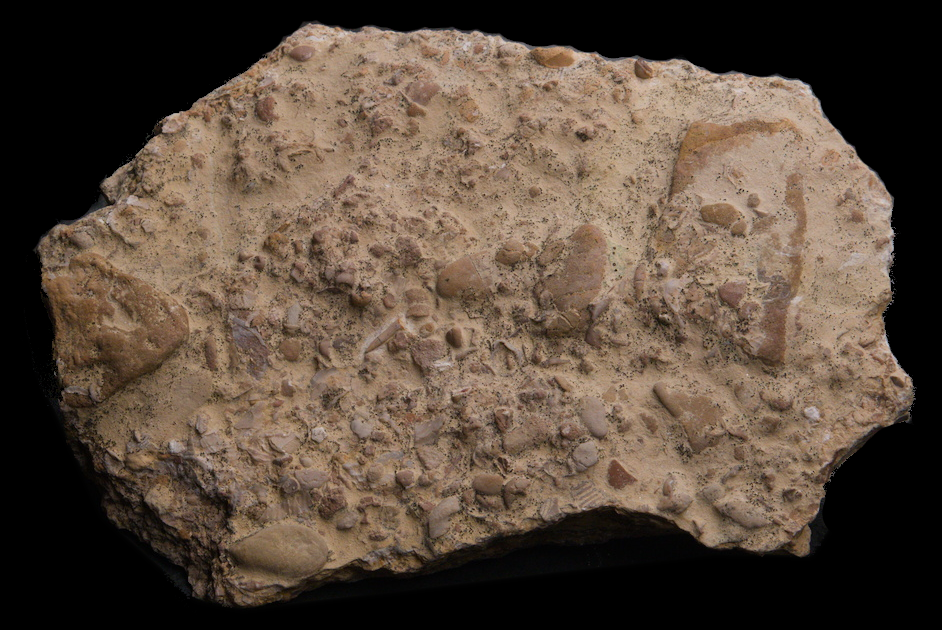
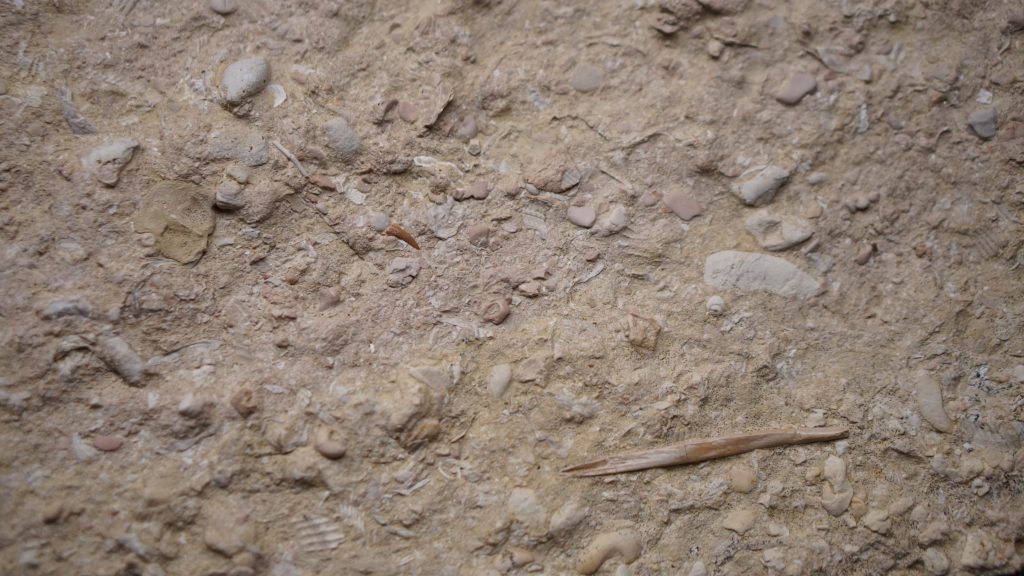
Sauropterygia assoc. Acrodus teeth 2/LMK
Sauropterygia indet. assoc. Acrodus sp. Middle Triassic, Lower Muschelkalk (Anisian), Gogolin Beds, Upper Silesia, Poland This is the type of fossil I like best. The plate you see is a snapshot, a frozen image of a section of the seabed from 240 million years ago. Between fragments of crushed, older sediment, pebbles, and crushed fragments…
-
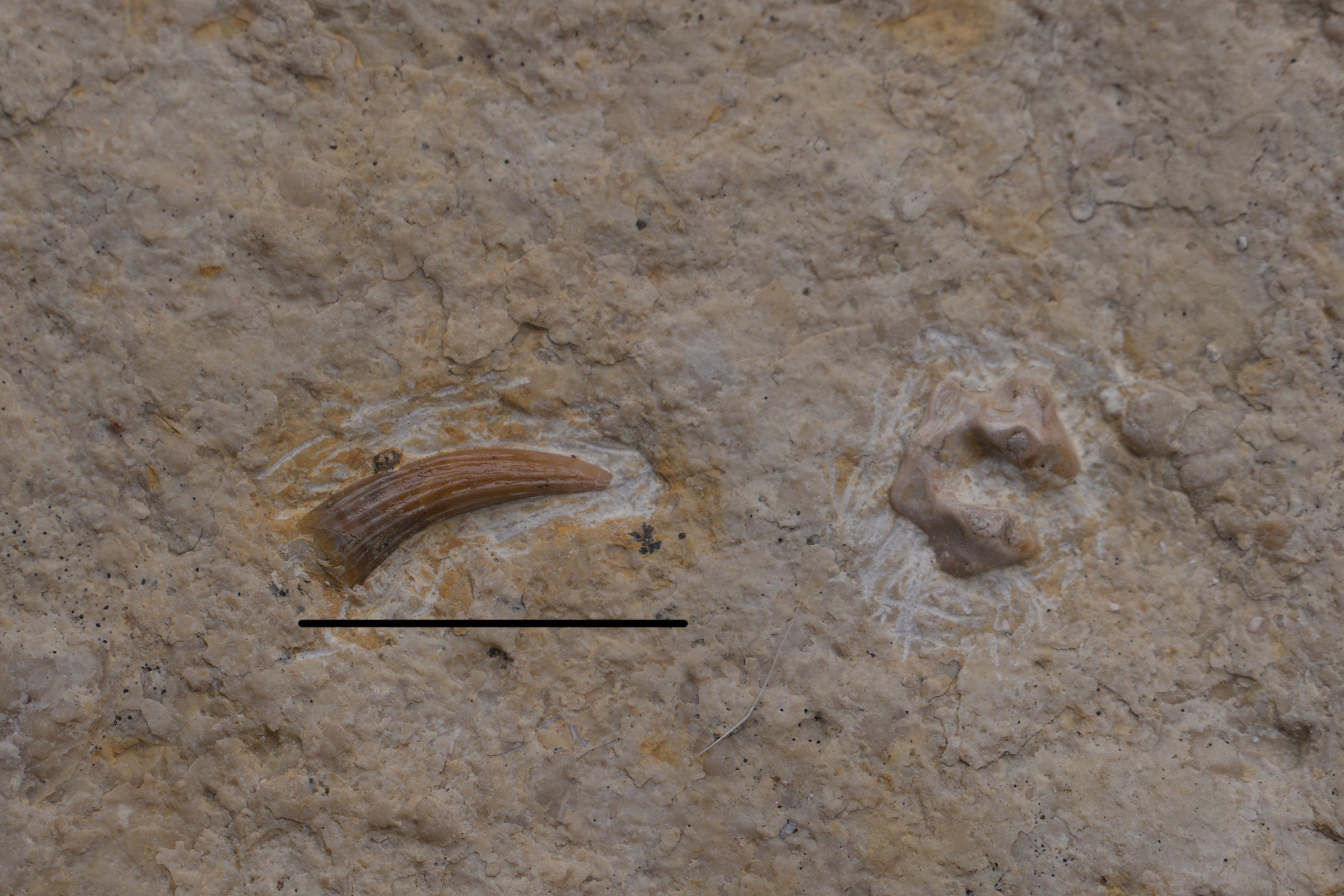
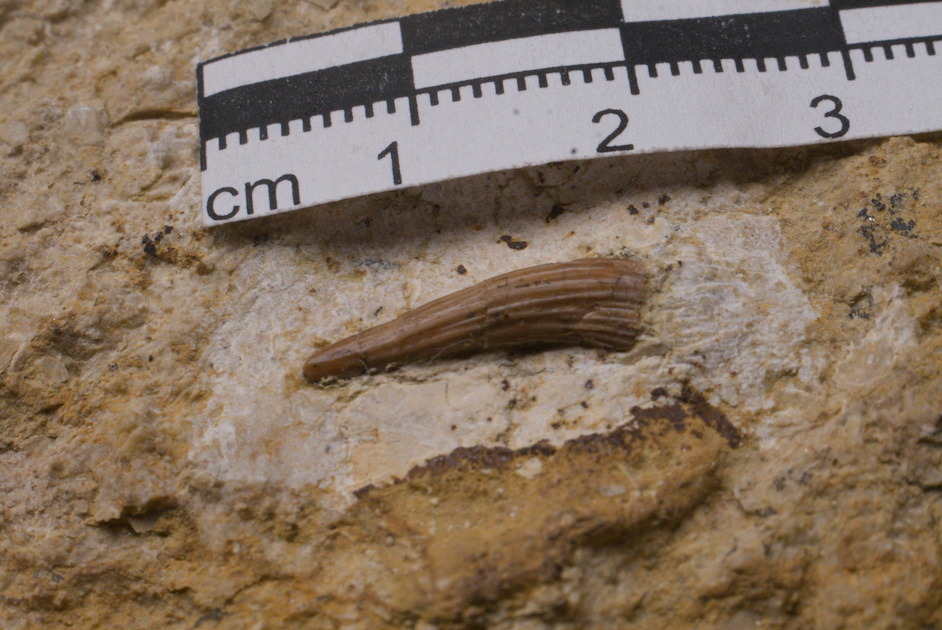
Sauropterygia cf. Nothosaurus tooth 1/LMK
Sauropterygia indet. cf. Nothosaurus Middle Triassic, Lower Muschelkalk (Anisian), Lower Gogolin Beds, Upper Silesia, Poland These types of teeth are traditionally designed as the genus Nothosaurus. This is a gross simplification. According to a paleontologist friend of mine, the four groups of Triassic reptiles have similar teeth (Nothosaurus, Germanosaurus, Cymatosaurus and Lamprosauroides) and we can’t…