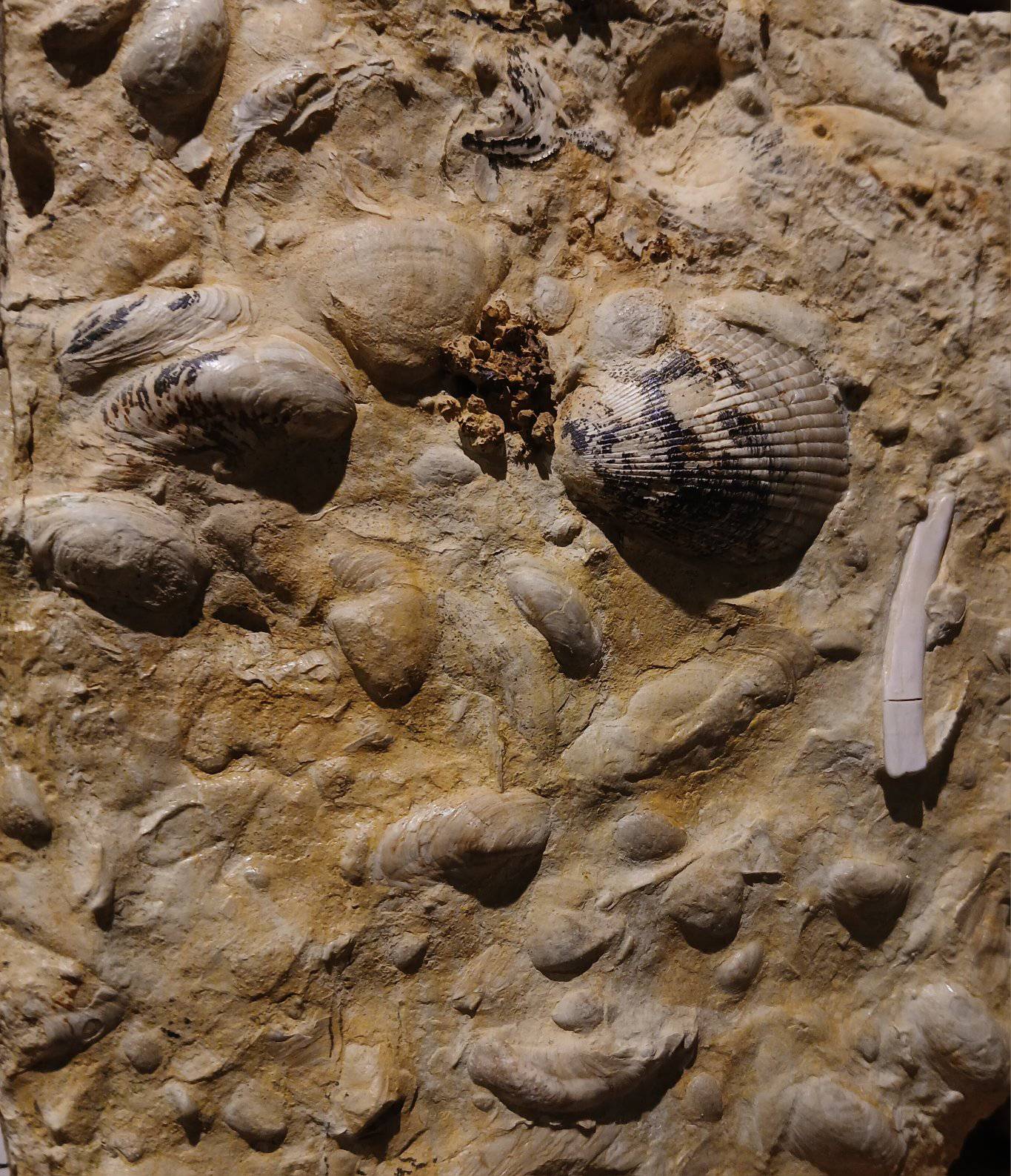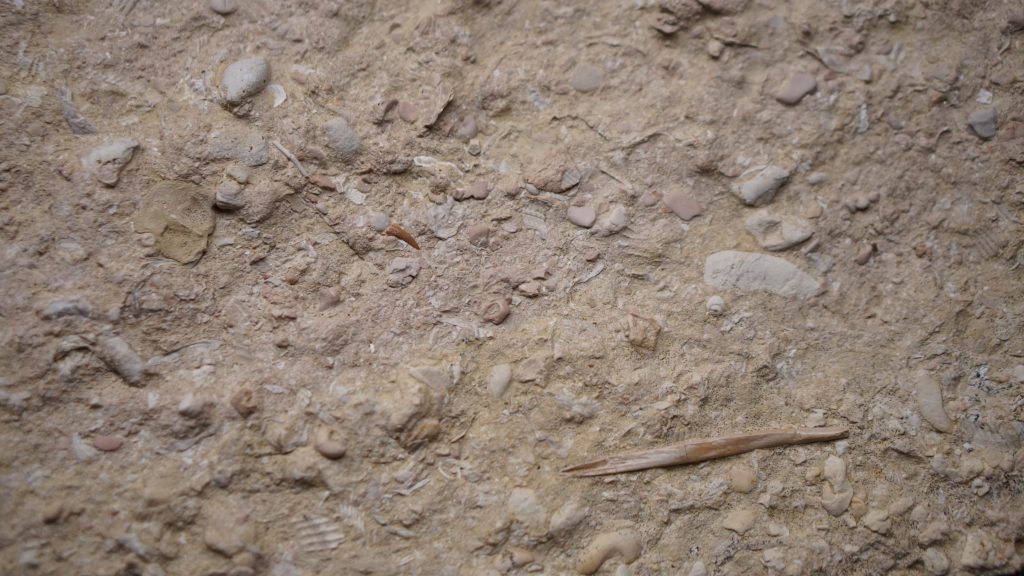

The Triassic is the oldest period of the Mesozoic Era – a time when reptiles dominated Earth. It lasted approximately 252 to 201 million years ago and occurred immediately after the greatest ecological catastrophe to hit our planet – the Permian-Triassic extinction event. This prompted nature to rush to fill the void left by the extinct organisms. The Triassic was a period of numerous evolutionary experiments and rapid evolutionary radiation.
During this time, conditions in Poland, and especially in Upper Silesia, shifted from continental to marine and vice versa. For me, the most interesting period is the Middle Triassic, when this area was dominated by marine conditions and lay within the so-called Germanic Basin, almost isolated from the Tethys Ocean. The fossil fauna of this basin is so distinctive that an informal stratigraphy has been introduced for it, common to the entire basin, stretching roughly from eastern Poland to the British Isles.
Virtually my entire collection comprises the so-called Lower Muschelkalk and Upper Muschelkalk (247 to 240 million years ago), meaning it covers almost the entire Middle Triassic – from the Anisian to the Ladinian. During this time, Upper Silesia was characterized by marine conditions. Sometimes it was deeper, sometimes shallower, but there are virtually no episodes of its complete disappearance during this period. These changes are clearly visible in the sedimentary rocks and fossil material.