
| Ptychoceratodus sp. |
| toothplate |
| Middle Triassic, Lower Muschelkalk (Anisian) |
| Upper Silesia, Poland |
Description
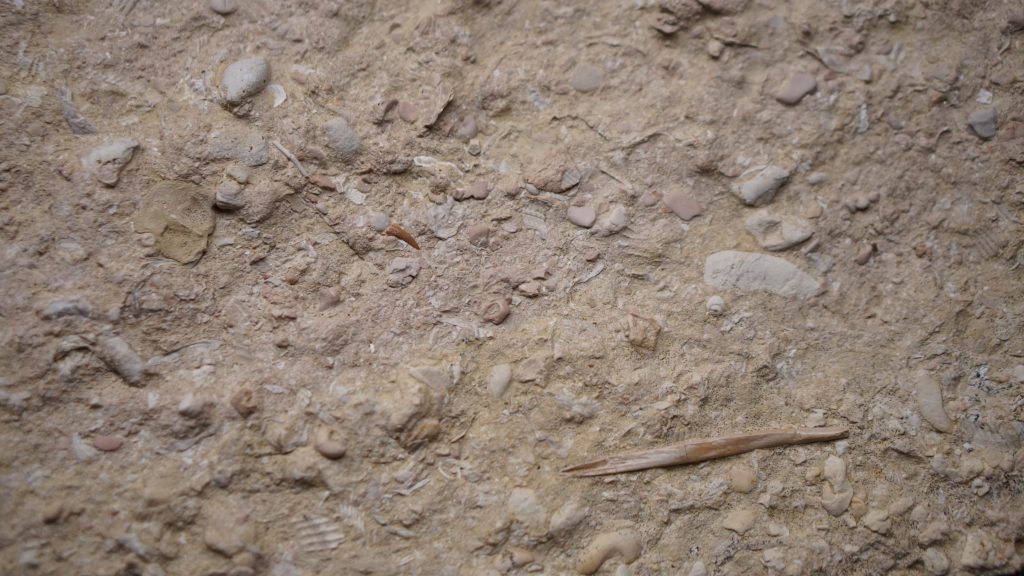
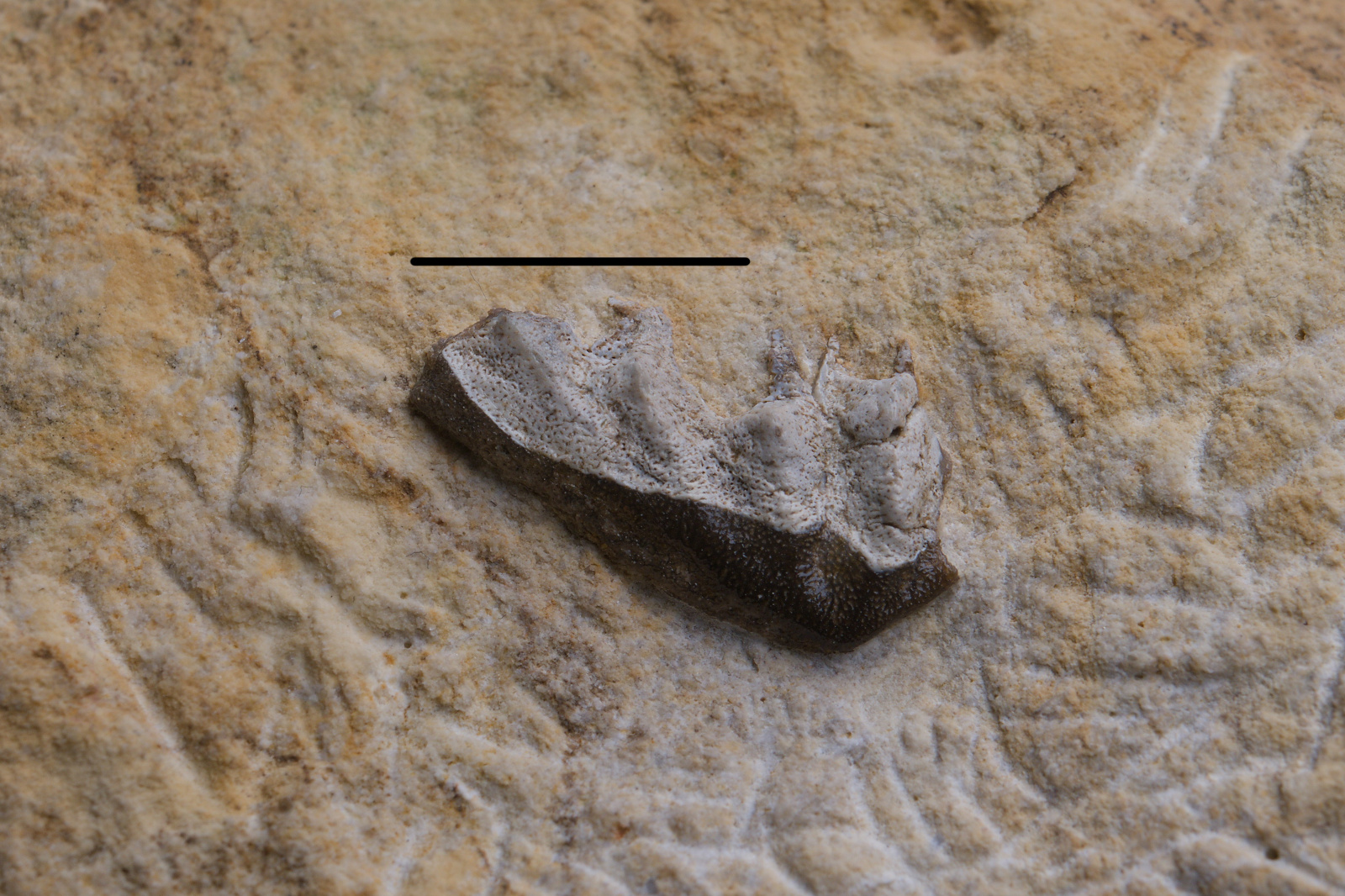
A very rare specimen from the Lower Muschelkalk. A dental plate of a lungfish (Dipnoi).
Ptychoeratodus is an extinct genus of lungfish that occurred from the Early Triassic to the Late Cretacerous. The fossil record usualy preserves dental plates (the fish had two pairs of them) and sometimes skull elements.
The specimen is quite heavily eroded (white elements), but retains its characteristic shape (acute, prominent ridges) and surface texture.
To be completely honest, I based my assignment of the material on stratigraphy and the likelihood of P. madelungi occurring in the Lower Anisian. Lack of access to comparative material and good literature allows me to only guess.
In the Muschelkalk, the genus Ptychoceratodus may potentially be represented by several species (P. madelungi, P. serratus). In case of 9/LMK, due to the state of preservation and the small size (the dental plate likely belonged to a juvenile), it is not possible to assign the specimen to a specific species; hence, it is designated as Ptychoceratodus sp.
References
- Skrzycki, Piotr. (2015). New species of lungfish (Sarcopterygii, Dipnoi) from the Late Triassic Krasiejów site in Poland, with remarks on the ontogeny of Triassic dipnoan tooth plates. Journal of Vertebrate Paleontology. 35. 10.1080/02724634.2015.964357
- Pawlak, W., Tałanda, M., Sulej, T., & Niedźwiedzki, G. (2020). Dipnoan from the Upper Triassic of East Greenland and remarks about palaeobiogeography of Ptychoceratodus. Acta Palaeontologica Polonica, 65(3), 561–574. https://doi.org/10.4202/app.00679.2019
Chnages
- 2026-09-25 – Specimen identification changed to a more conservative one – Ptychoceratodus sp. (thanks to W. Pawlak for the clarification)
Leave a Reply