
Nothosaurus sp.
Middle Triassic, Gogolin Beds, Upper Silesia, Poland
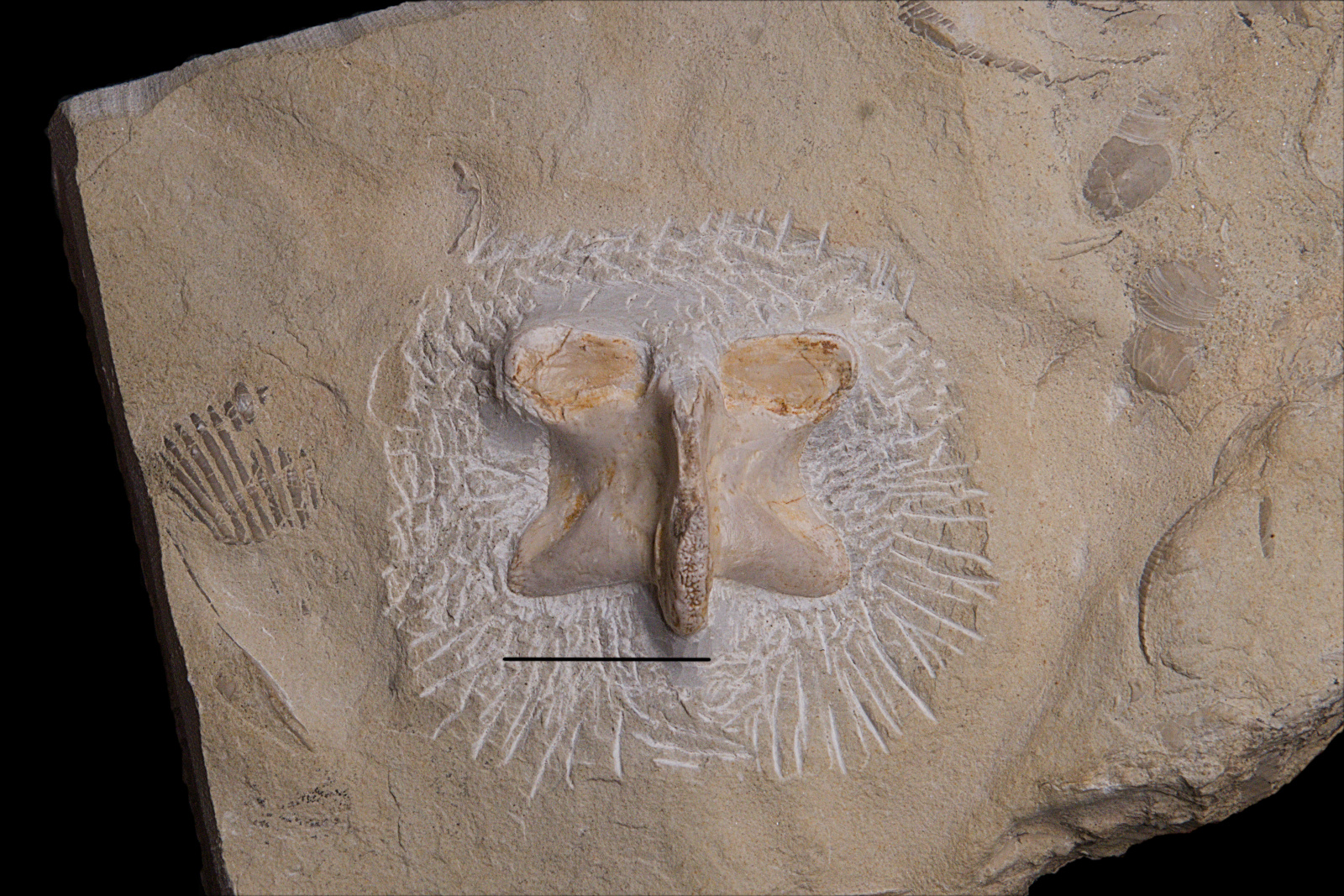
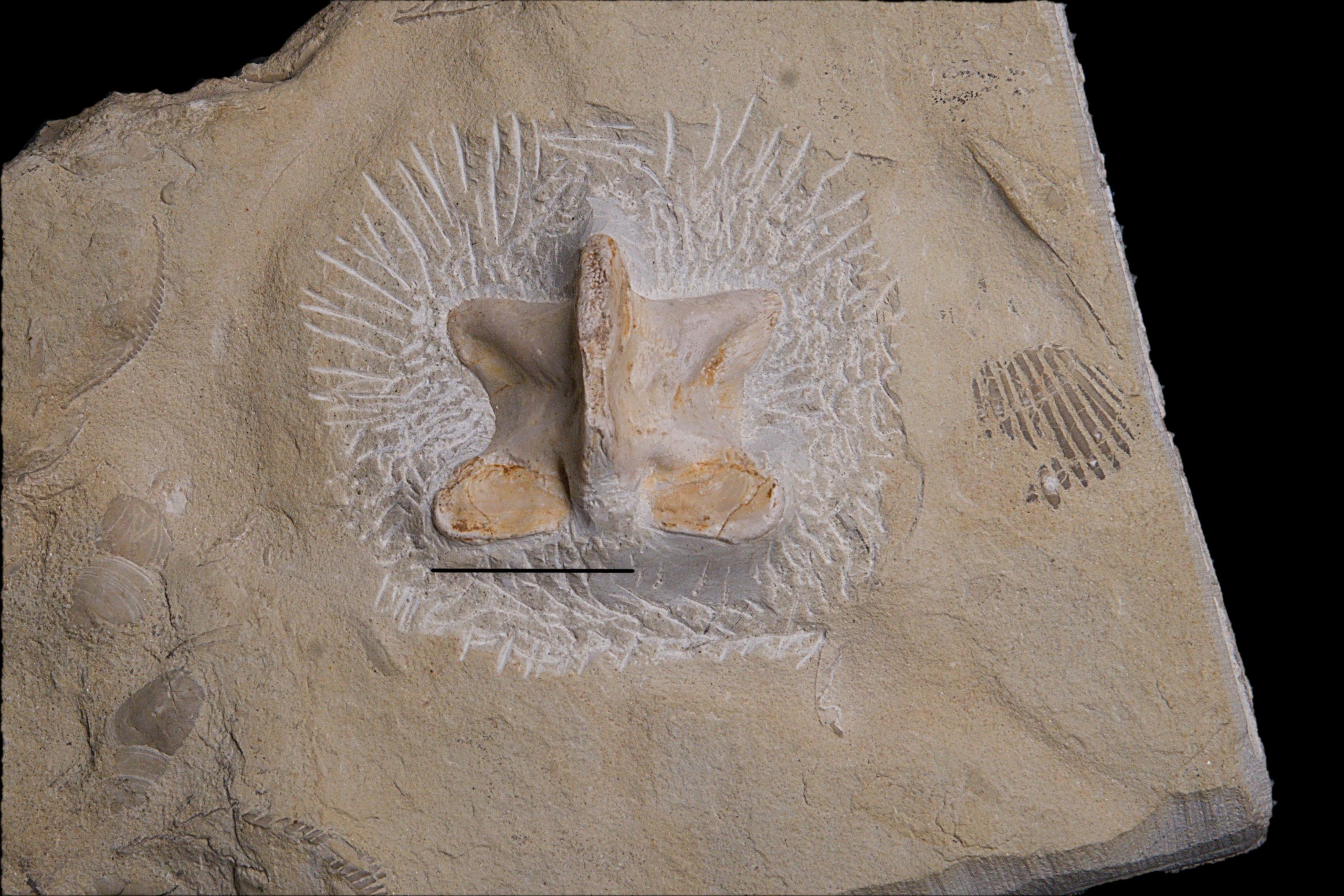
The specimen is a beautifully preserved neural arch (in dorsal view). Considering its shape and size, it can be fairly safely assigned to the genus Nothosaurus.
Incidentally, I think it’s worth explaining what exactly we’re seeing here – for a long time, these “butterflies” were a mystery to me. The neural arch was connected to the vertebra centrum (this part is hidden in the matrix beneath the specimen). In sauropterygians, this connection was not permanent, and we usually find one or the other part (articulated ones are very rare).
If you want to see what a complete vertebra looks like, with both the centrum and the neural arch preserved, take a look at completele Sauropterygia indet. vertebra (25/LMK) specimen or Sauropterygia indet., ?dorsal vertebra, 25/LMK.
Returning to our specimen – let’s take a look at the first photo. The front of the neural arch is located in the upper part of the photo. We can see two processes with articulated surfaces. These processes supported the two processes visible in the lower (posterior) part of the specimen – the anterior ones point upward, the posterior ones downward.
The spinous process runs along the line of symmetry of the entire neural arch. Its anterior part is lower, and the posterior part is higher, further back, creating a sort of overhang or hook. This overhang fits perfectly into the depression visible in the anterior part of the neural arch.
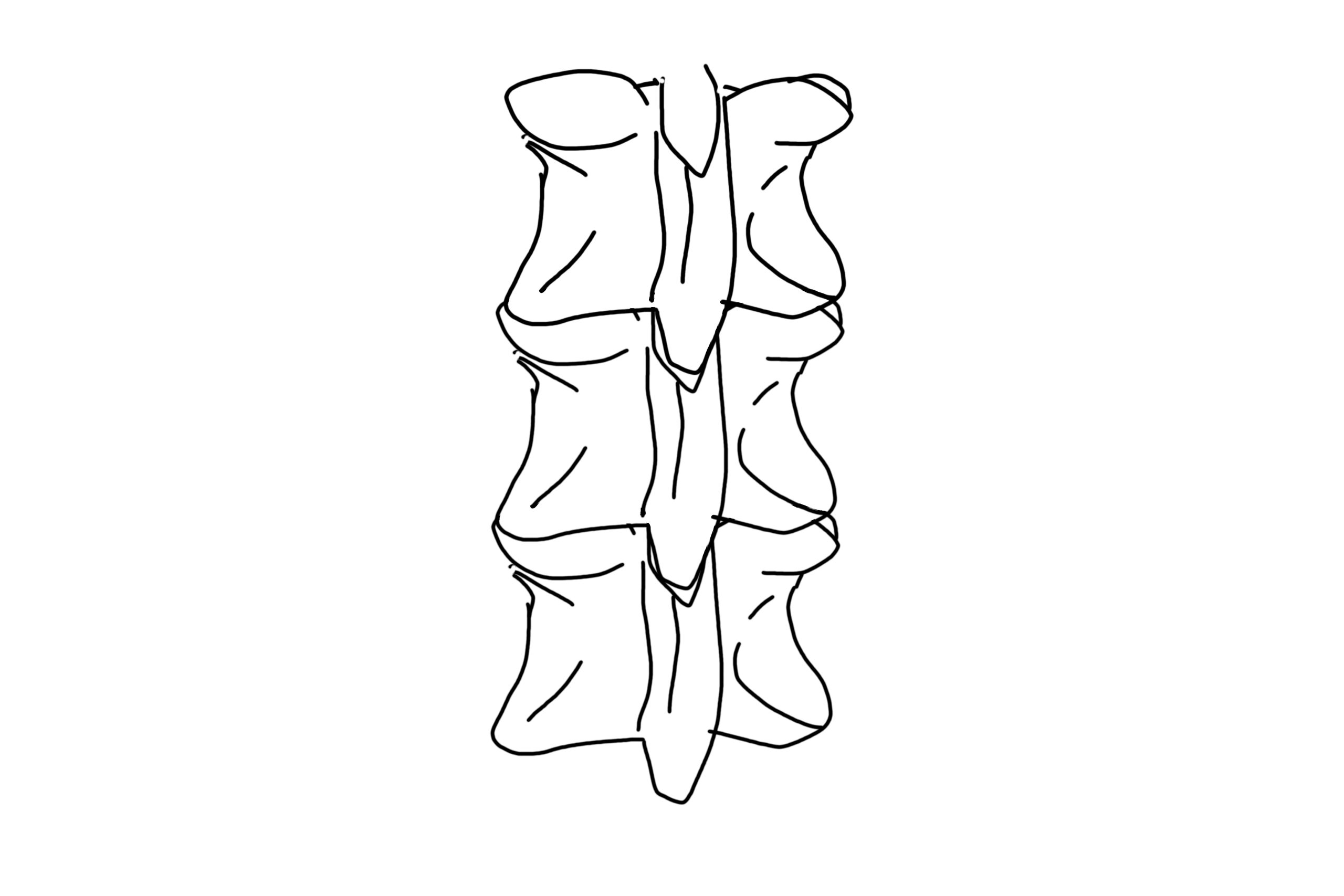
In the sketch, I’ve shown what it would look like if the vertebrae remained articulated. The whole creates a mobile yet relatively rigid structure.
Leave a Reply