
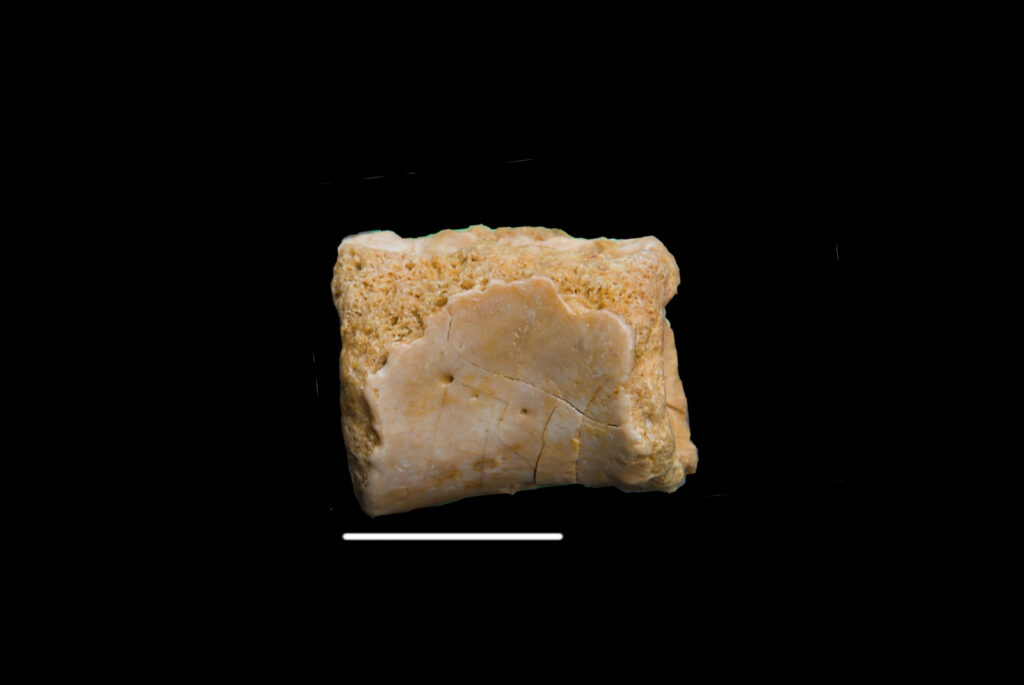
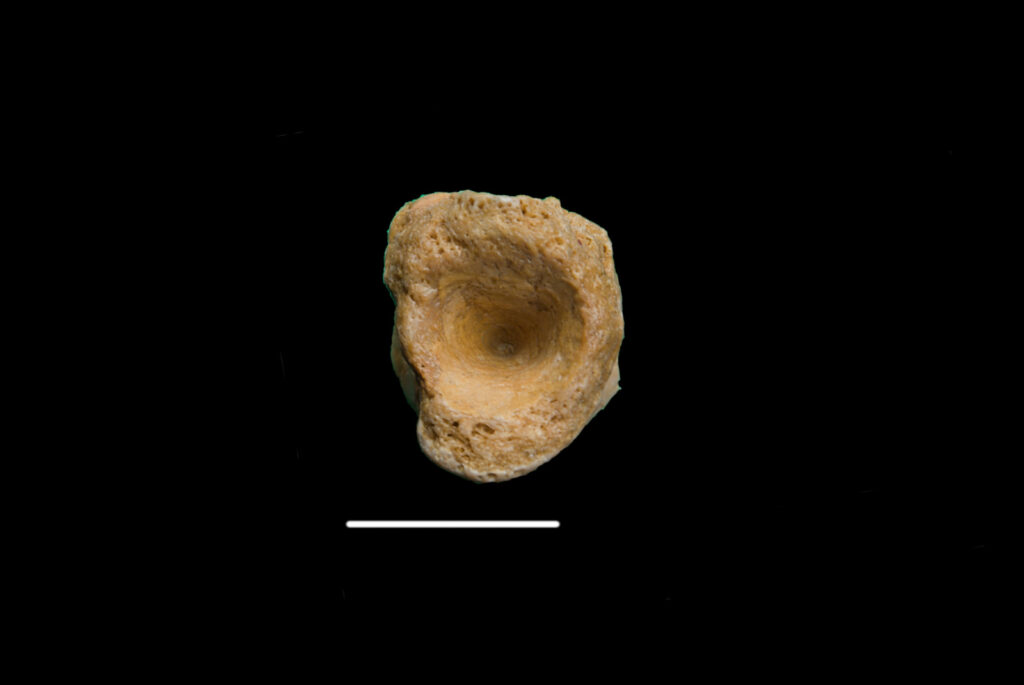
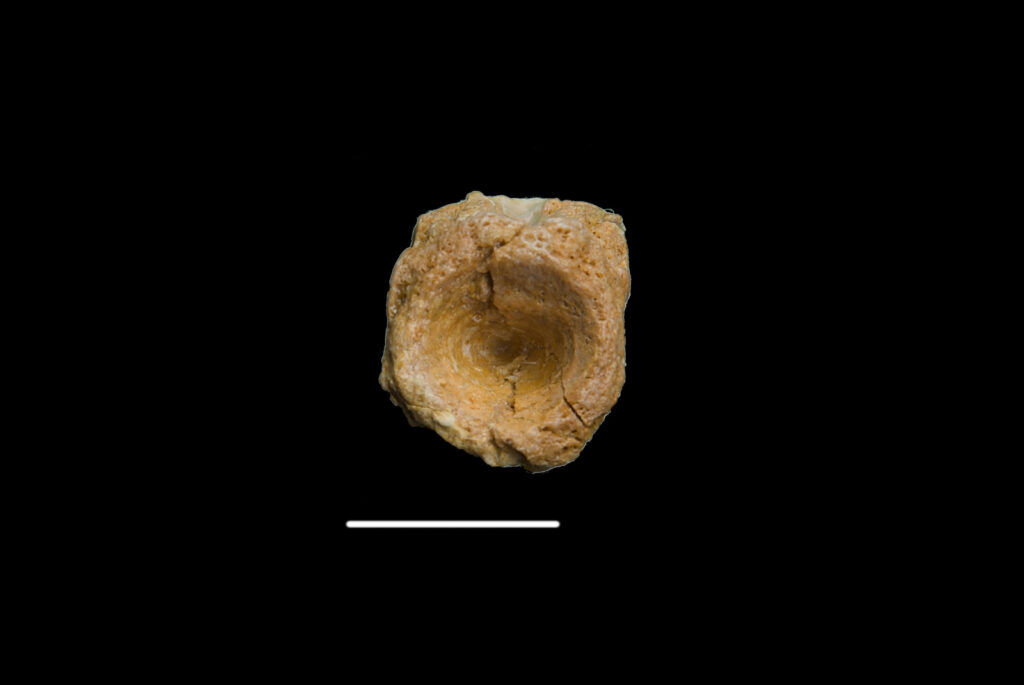
Specimen summary
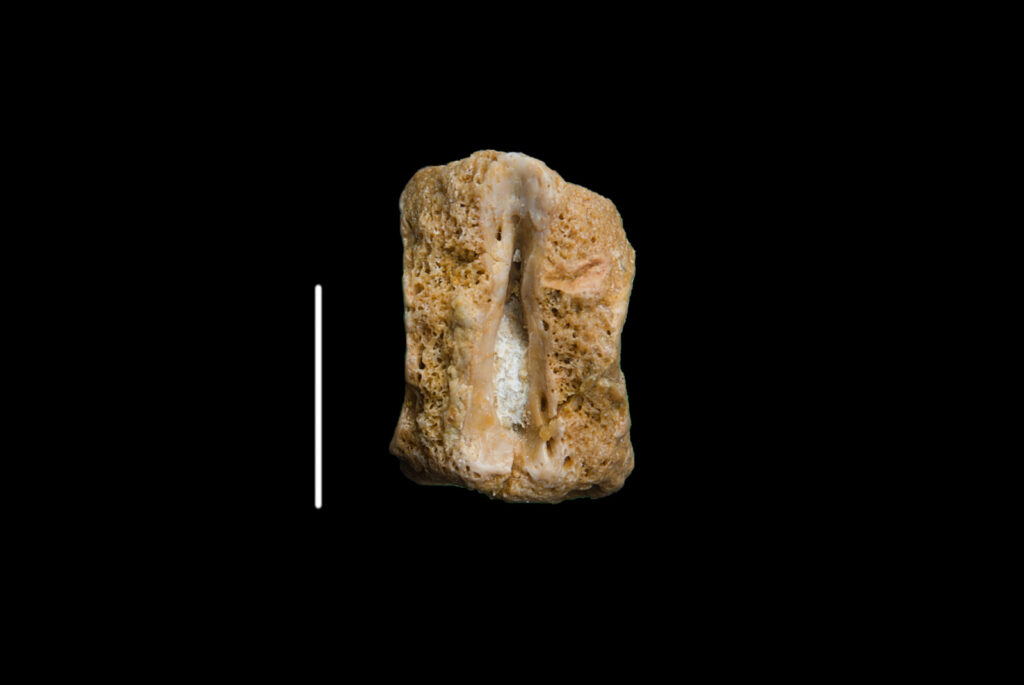
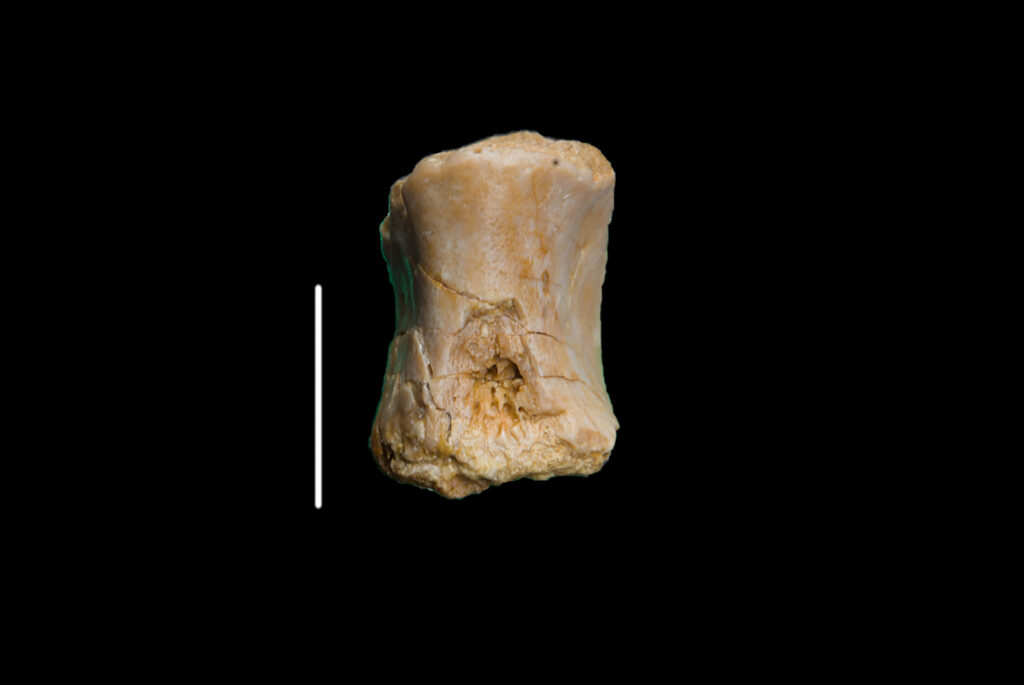
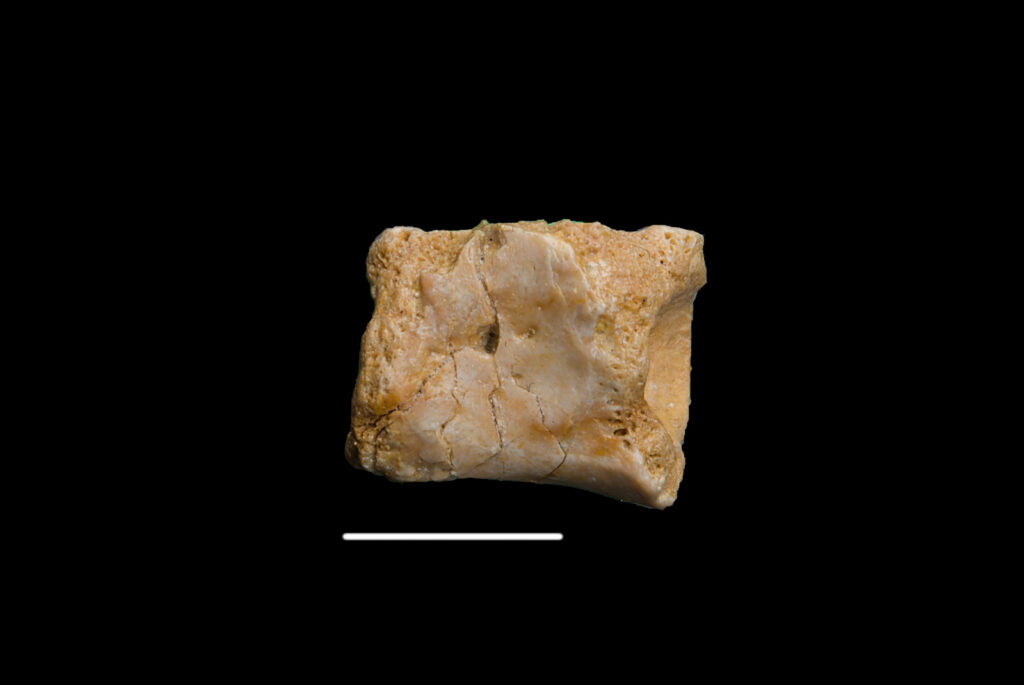
Vertebral centrum of an indeterminate placodont (marine reptile) from the Lower Muschelkalk (Middle Triassic) of Upper Silesia, Poland. Despite abrasion, it preserves features typical of placodont vertebrae, including clearly amphicoelous articular surfaces.
Description
Placodontia indet.
Middle Triassic, Lower Muschelkalk (Anisian), Gogolin Beds
Upper Silesia, Poland
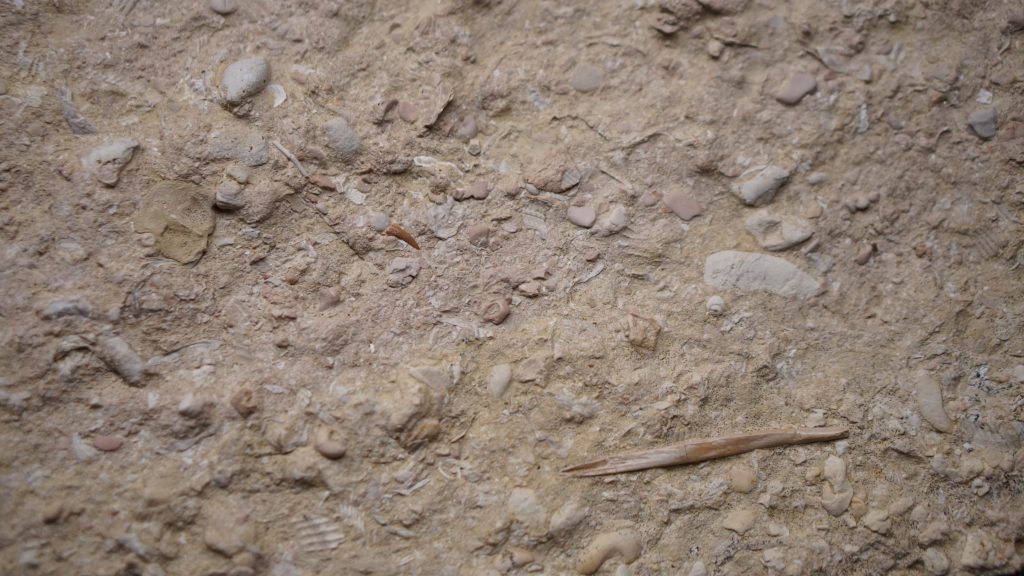
An isolated vertebral centrum corresponding to an unidentified placodont. The specimen shows heavy signs of abrasion – in situ it was completely covered with matrix.
The centrum is elongated and exhibit constriction at mid-length, resembling an hourglass-like shape in lateral and ventral views. The surface of the vertebral centum is rather smooth, with small pits, likely foramina, visible on the lateral surfaces. The cortical bone is thin and damaged in places, revealing a cancellous structure.
Both articular surfaces are deeply concave (deep amphicoely). The neural arch is not preserved; the exposed floor of the neural canal is deeply excavated. No transverse processes are visible.
While the shape of the vertebral body itself provides little information—it varies greatly depending on its position in the vertebral column—the deep amphicoelicity of the articular surfaces is not typical of Eosauropterygian vertebral bodies. This feature suggests possible referral to Placodontia indet.
References:
- Rieppel, O. (1995). The Genus Placodus: Systematics, Morphology, Paleobiogeography, and Paleobiology. Fieldiana: Geology, New Series, No. 31: 1–44.
- Diedrich, C.G. & Gradinaru, E. (2013). Distribution of basal Middle Triassic fossil reptile placodonts in the Germanic Basin and northern Tethys. — New Mexico Museum of Natural History and Science Bulletin 61: 216–227.
- Gere, K., Scheyer, T.M., Makádi, L. et al. Placodont remains (Sauropsida, Sauropterygia) from the Triassic of Hungary (Transdanubian Range and Villány Mountains). Palaeobio Palaeoenv 100, 1047–1063 (2020). https://doi.org/10.1007/s12549-020-00432-5
Leave a Reply