
Category: Lower Muschelkalk
-

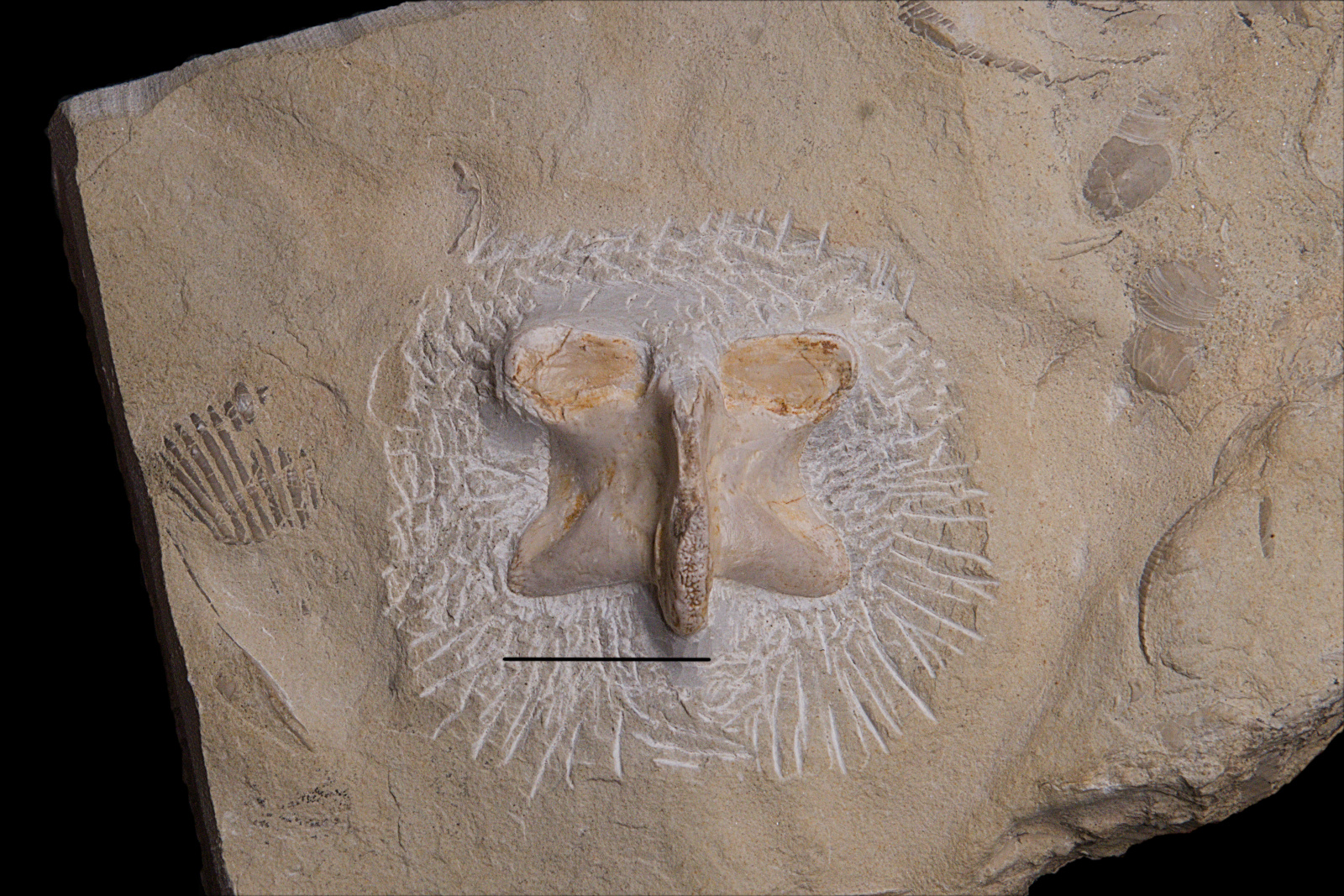
Nothosaurus sp., vertebral neural arch, 17/LMK
—
Nothosaurus sp. Neural arch. Gogolin Beds. Upper Silesia. Poland – The specimen is a beautifully preserved neural arch (in dorsal view). Considering its shape and size, it can be fairly safely assigned to the genus Nothosaurus.
-
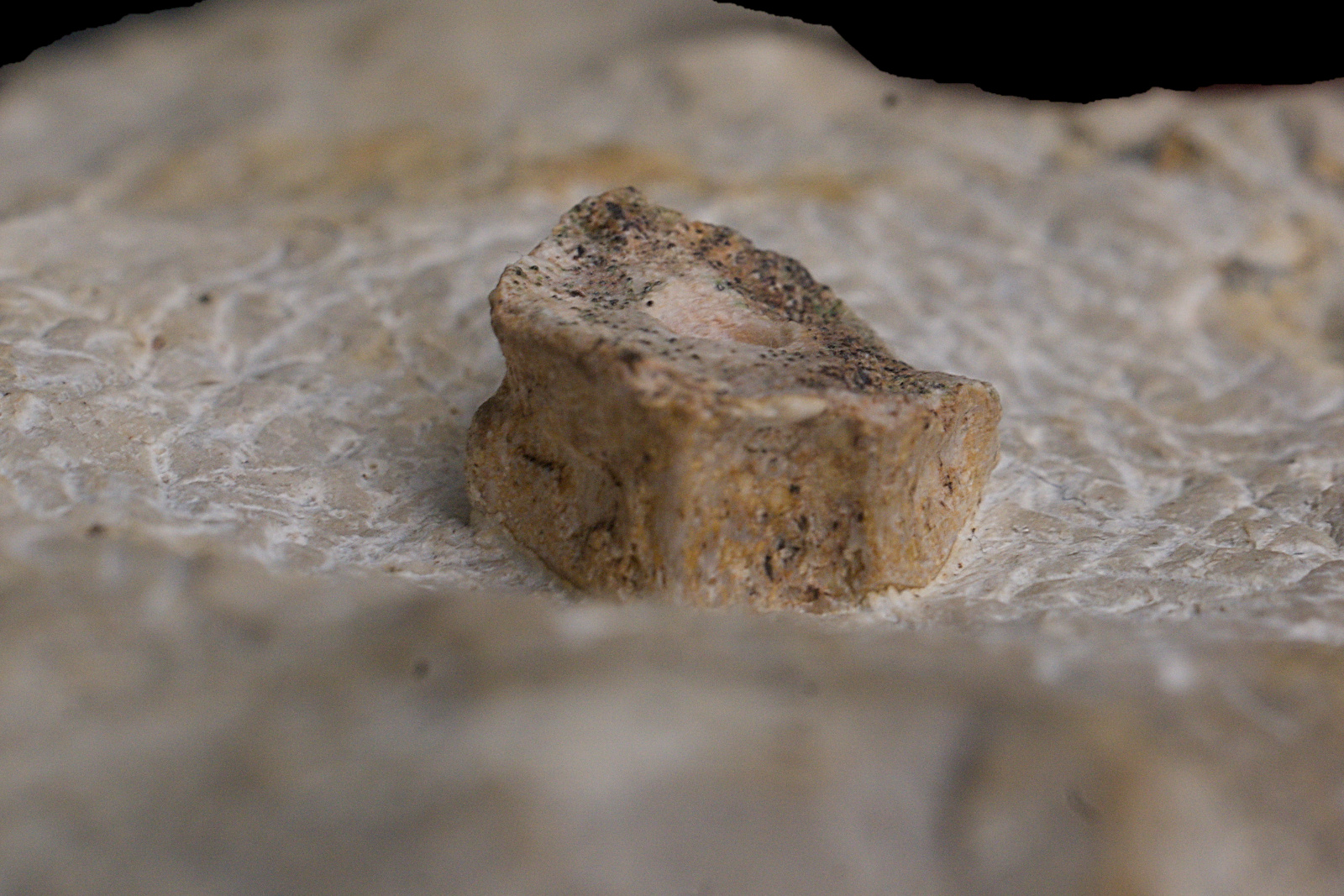
Ichthyosauria indet. (cf. Mixosaurus sp.), vertebra centrum, 16/LMK
Ichthyosauria indet. (cf. Mixosaurus sp.) Middle Triassic, Lower Gogolin Beds, Upper Silesia, Poland Ichthyosaur remains are extremely rare in the Muschelkalk deposits of Upper Silesia. The photos show a single vertebral centrum – though slightly damaged, it clearly displays the diagnostic features that allow for its assignment to this group of extinct marine reptiles (most…
-
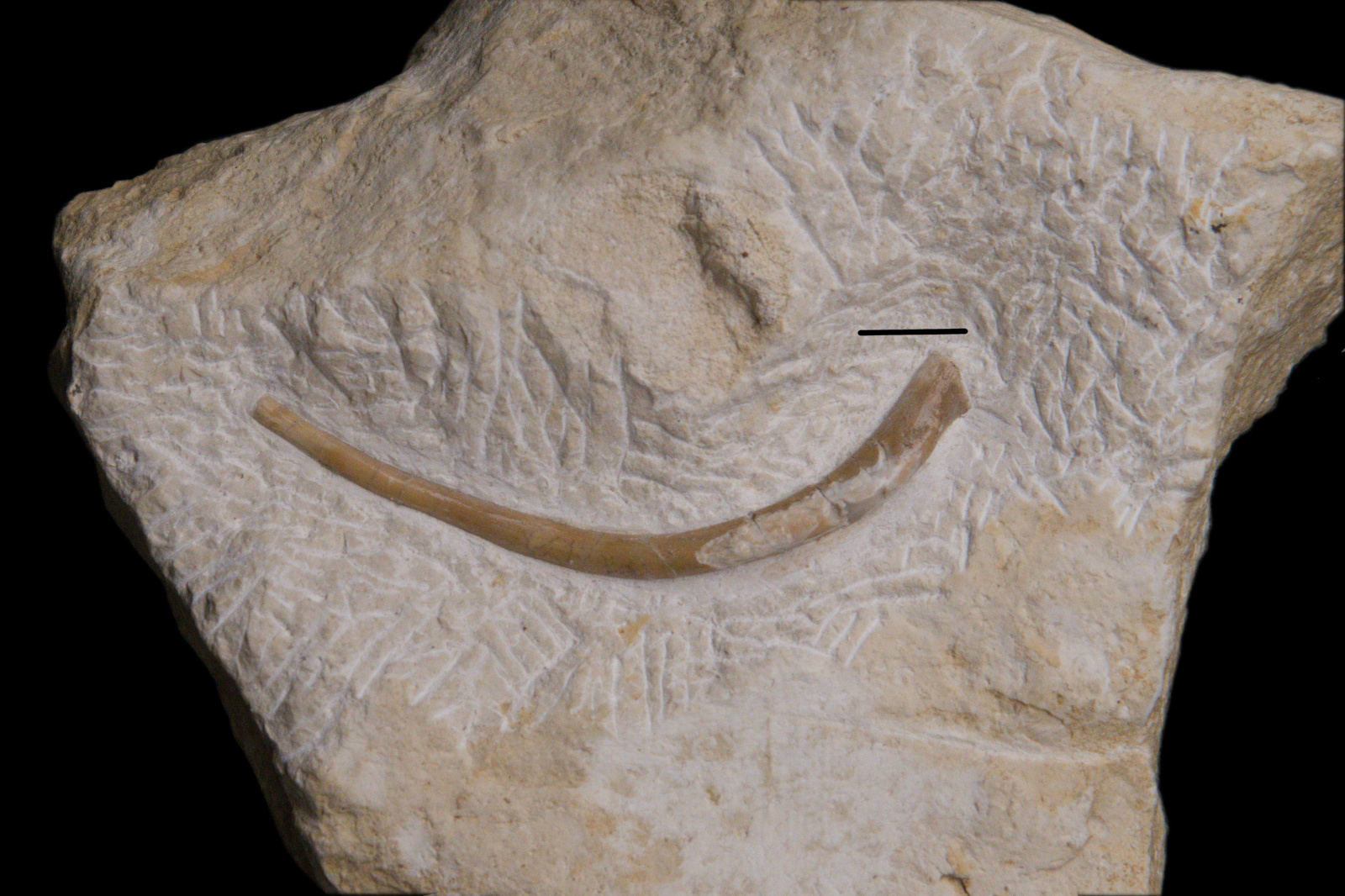
Sauropterygia cf. Nothosaurus, rib, 15/LMK
Sauropterygia cf. Nothosaurus Middle Triassic, Gogolin Beds, Upper Silesia, Poland A rare find of a complete rib of this size from Sauropterygia indet. (probably Nothosaurus). The bone structure is clearly pachystotic – the rib is massive and the tissue dense. This structure is a primitive adaptation to aquatic life – the heavy bones acted as ballast,…
-
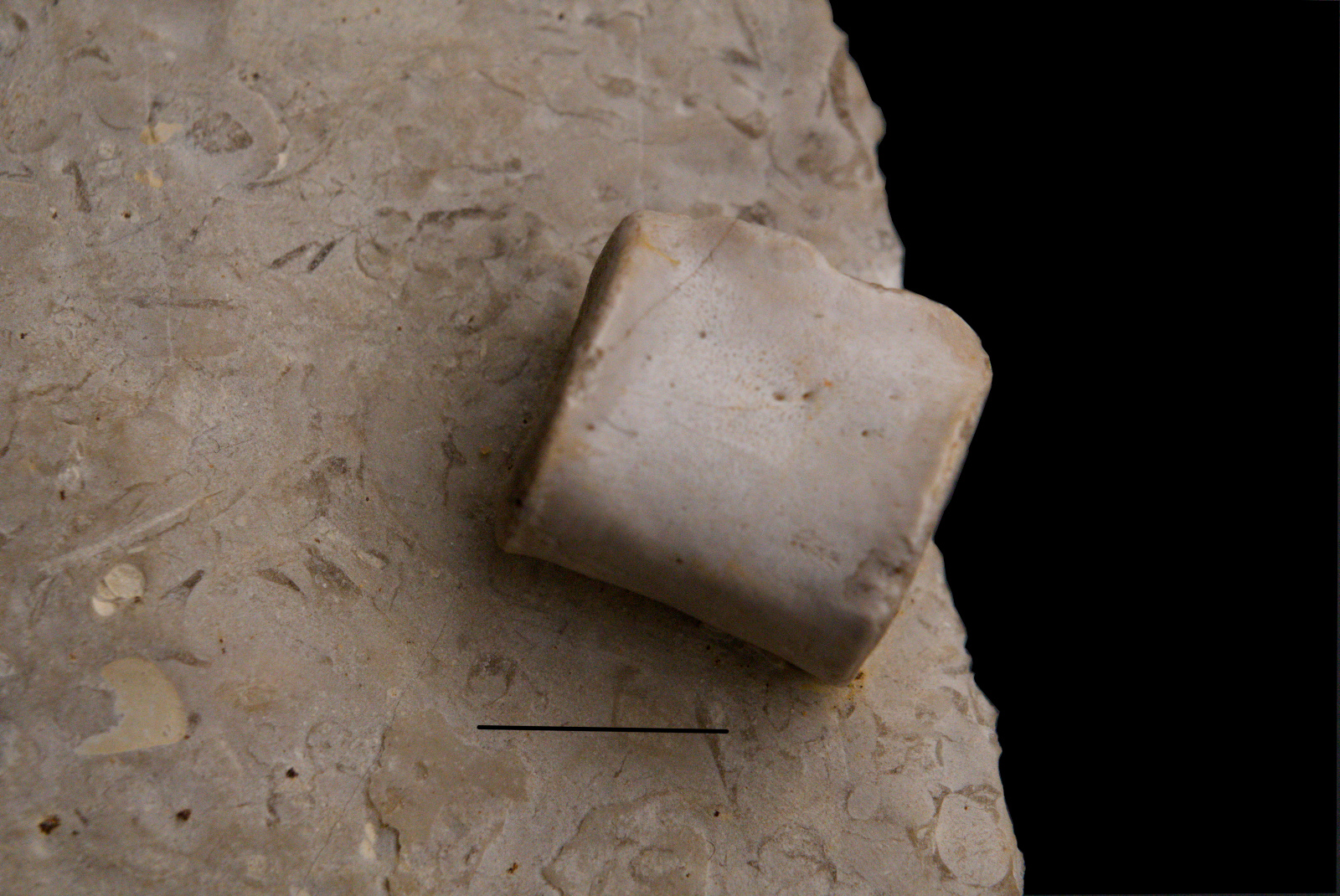
Sauropterygia cf. Nothosaurus, vertebra centrum, 14/LMK
Sauropterygia cf. Nothosaurus Middle Triassic, Lower Gogolin Beds, Upper Silesia, Poland An example of a Sauropterygian vertebra centrum (likely Nothosaurus sp.). This is a well-preserved, large specimen (for this region). The first photo shows the vertebra in lateral view. A nutrient foramen (vascular opening) through which blood vessels entered the bone is visible upon closer…
-
Palaeobates angustissimus, tooth, 13/LMK
Palaeobates angustissimus Middle Triassic, Lower Gogolin Beds, Upper Silesia, Poland A tooth from another common shark from the Middle Triassic – Palaeobates angustissimus. These teeth measure usually no more than a few millimeters. This specimen is one of the largest in my collection. Palaeobates is another durophagous shark with dentition adapted for crushing hard prey.…
-
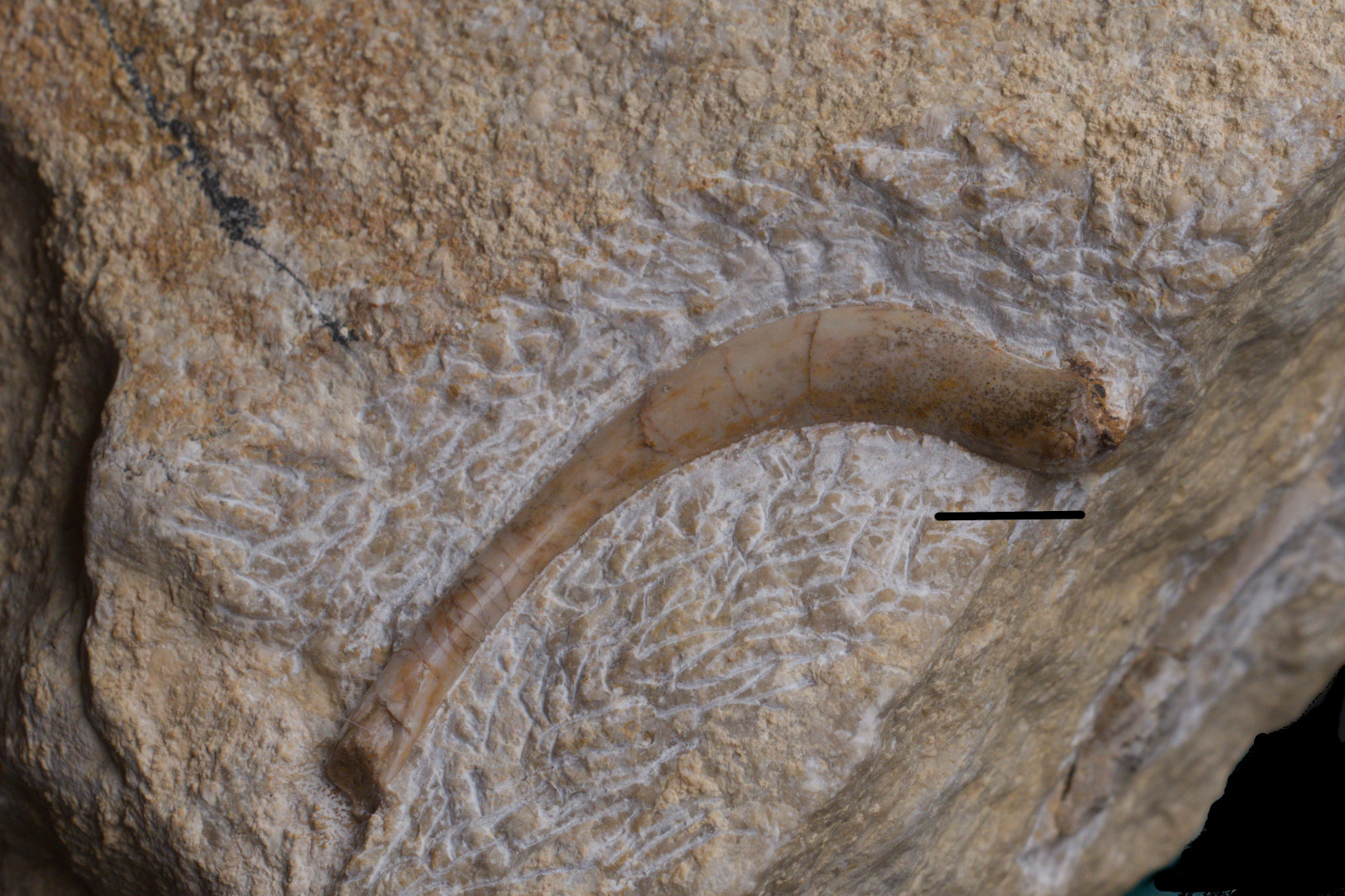
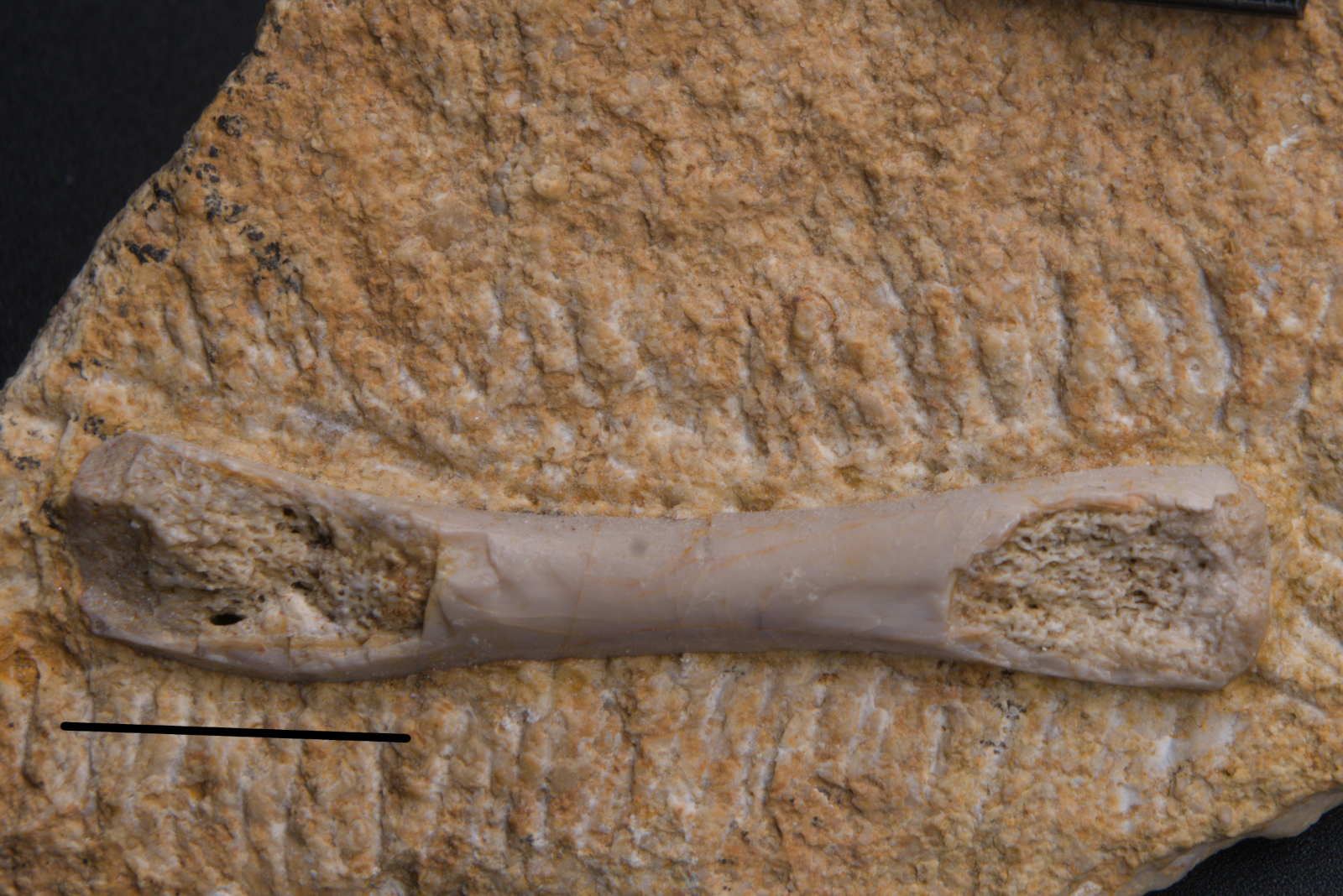
Sauropterygia cf. Nothosaurus, rib, 12/LMK
Sauropterygia cf. Nothosaurus, rib Middle Triassic, Lower Muschelkalk (Anisian), Gogolin Beds, Upper Silesia, Poland A rib fragment from a marine reptile from the Sauropterygian group. It very likely belongs to Nothosaurus. Ribs are a common find in Silesian Muschelkalk deposits; complete finds are a completely different story. In this case, I was lucky – it…
-
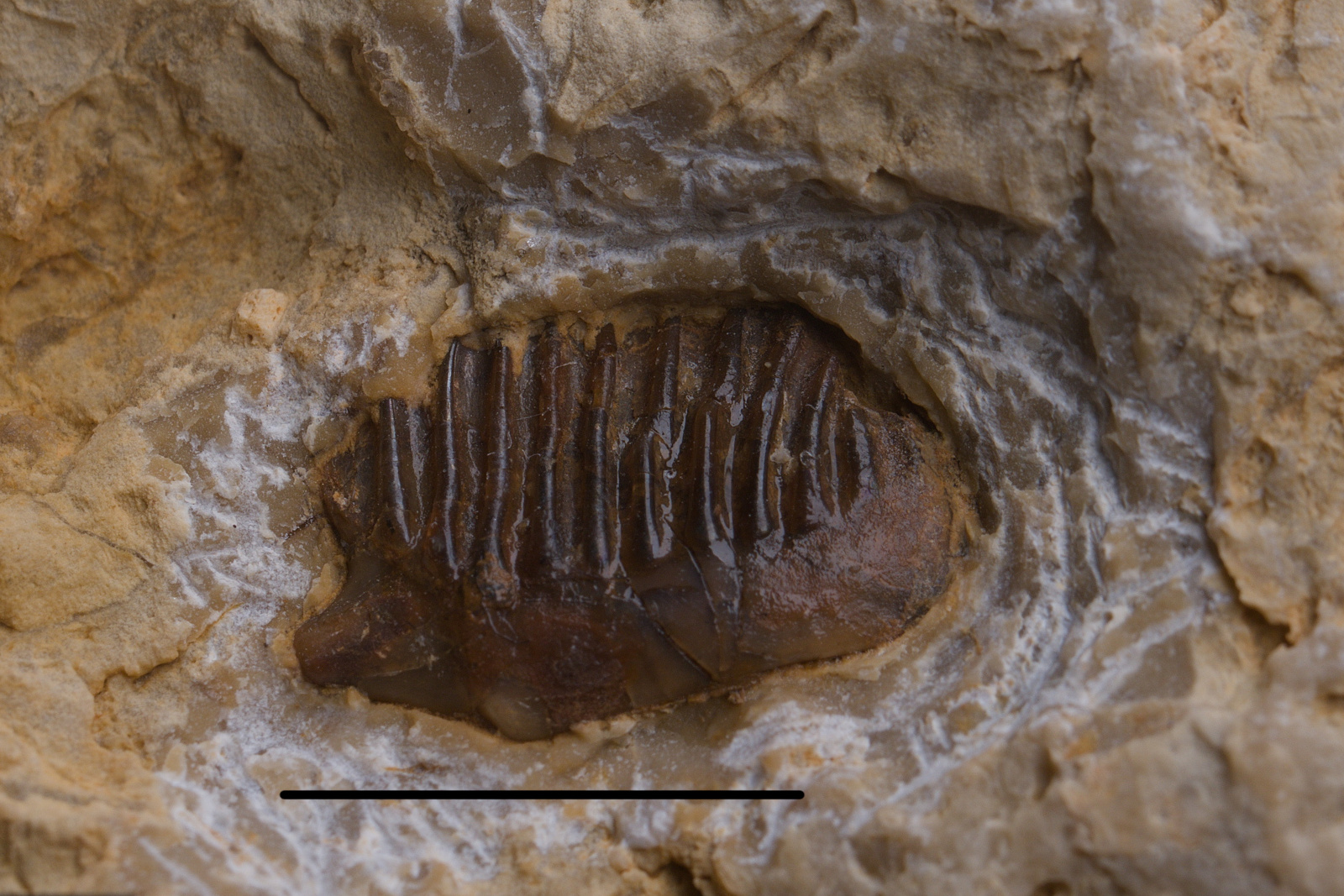
Acrodus sp. lateral tooth, 11/LMK
Acrodus sp. Middle Triassic, Lower Gogolin Beds, Upper Silesia, Poland A beautiful specimen of a shark tooth from the genus Acrodus, with its crown and root preserved. The dentition of these durophagous sharks was heterodont—meaning the teeth varied in shape depending on their position in the jaw. This specimen is an example of a lateral…
-
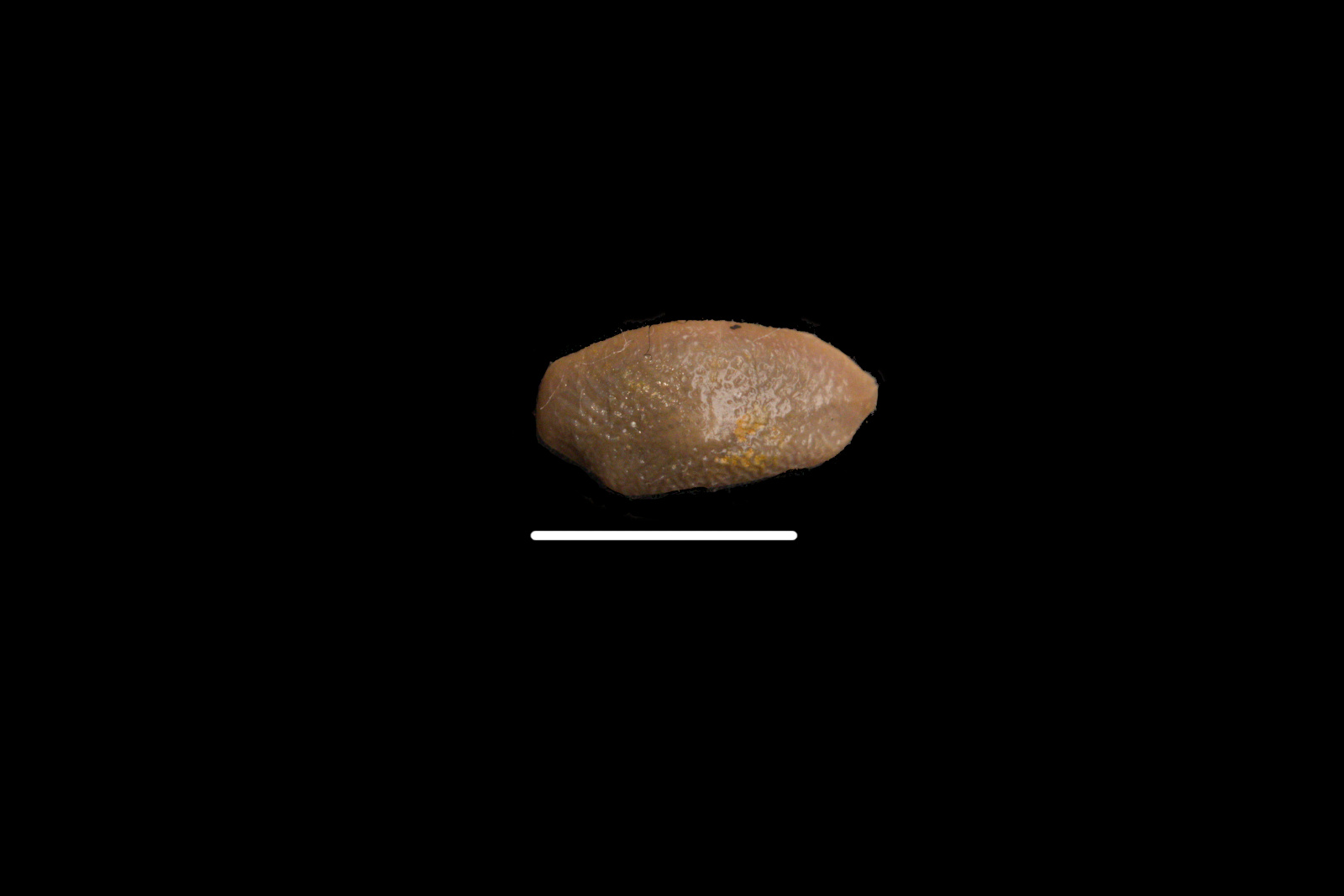
Colobodus sp. cf. chorzowiensis ganoid scale, 10/LMK
Colobodus sp. cf. chorzowiensis Middle Triassic, Lower Muschelkalk (anisian), Upper Silesia, Poland A beautiful, complete ganoid scale, likely belonging to Colobodus chorzowiensis (yes, Von Meyer described this species based on specimens from Chorzów in Upper Silesia!). It’s the finest specimen I’ve found. Fish equipped with this type of scales were covered in a complete, flexible…
-
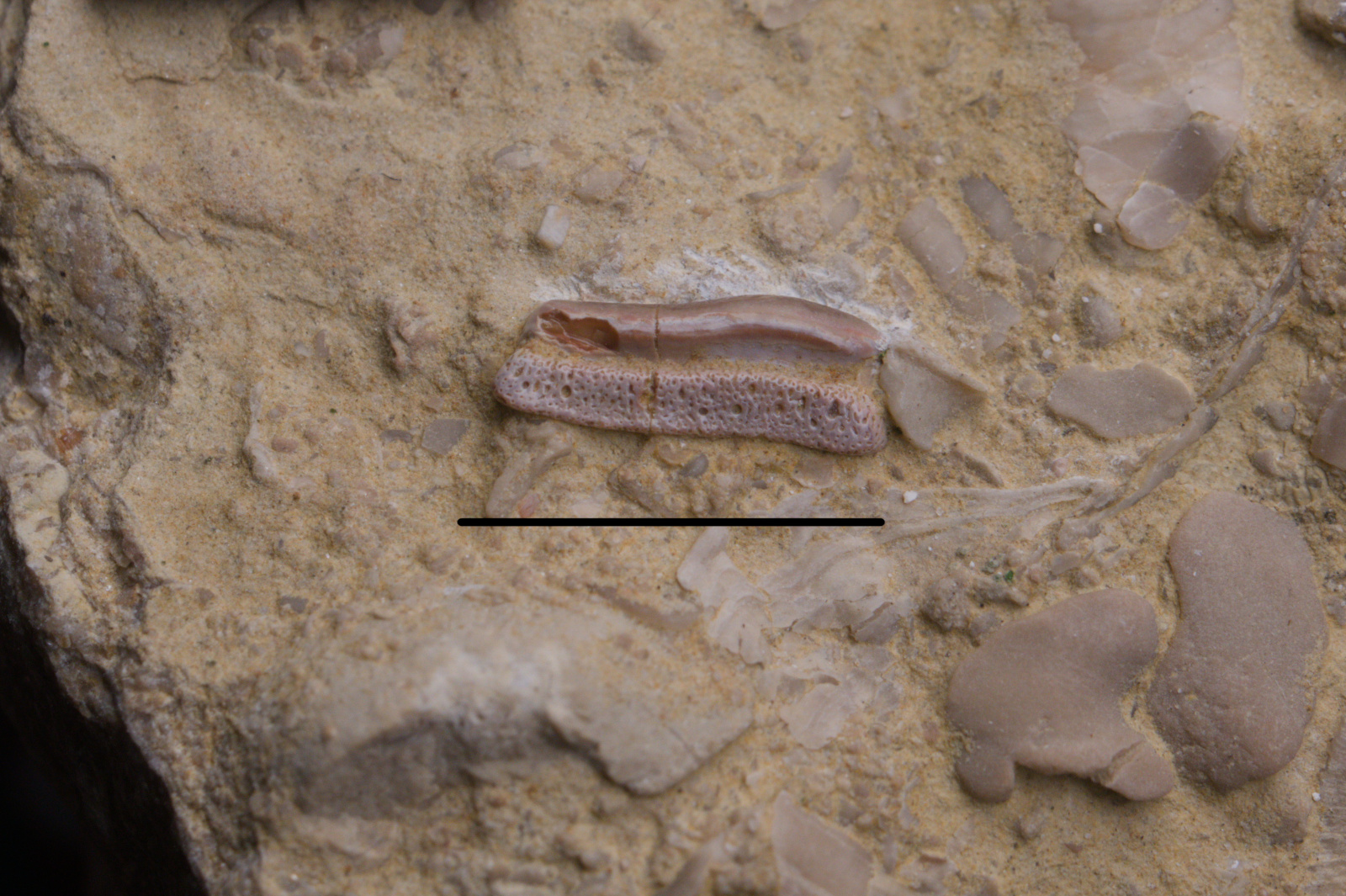
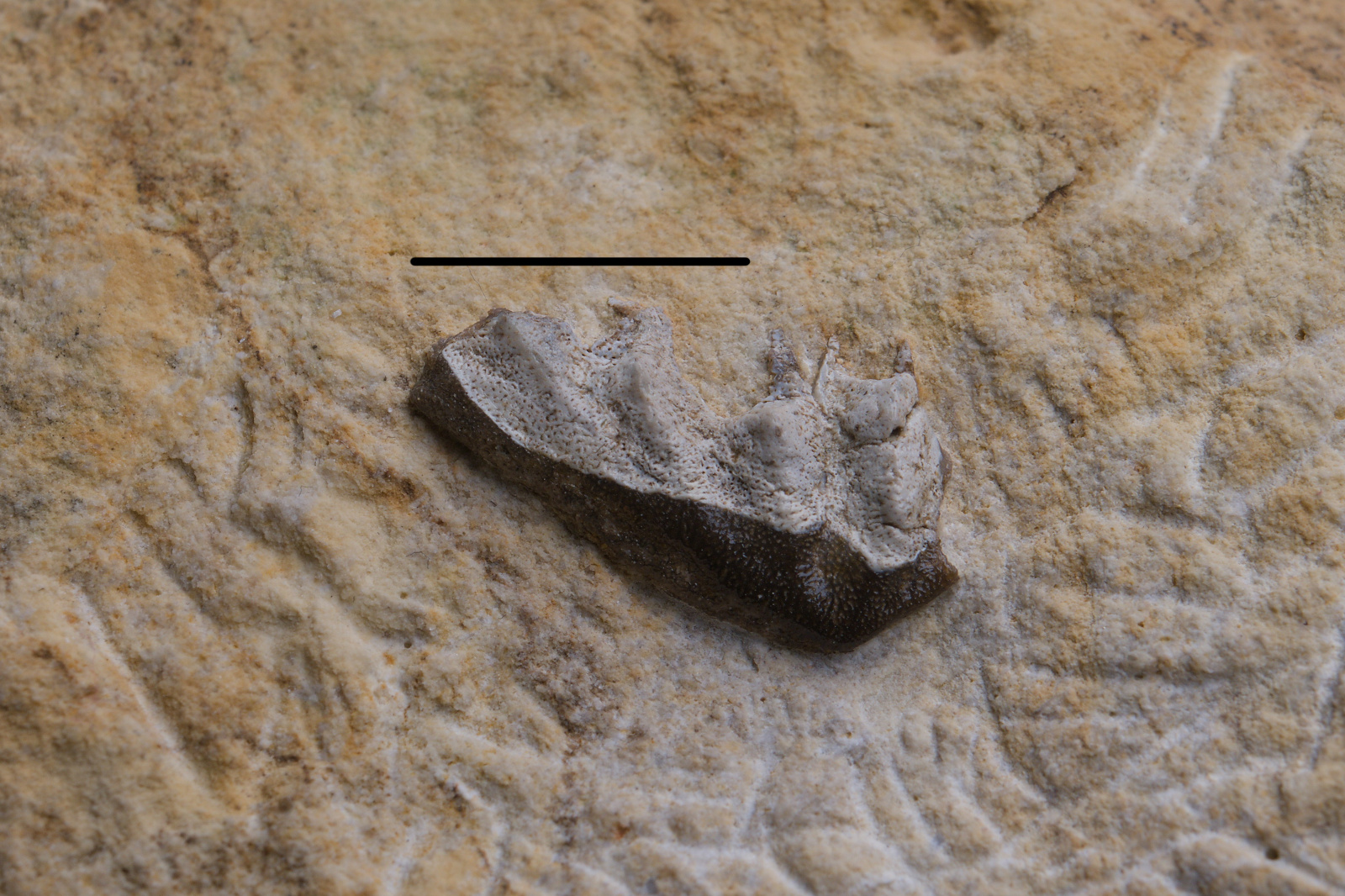
Ptychoceratodus cf. medelungi tooth plate 9/LMK
Ptychoceratodus sp. cf medelungi Middle Triassic, Lower Muschelkalk (anisian), Upper Silesia, Poland An extremely rare specimen from the Lower Muschelkalk. A dental plate of a lungfish (Dipnoi). Ptychoceratodus is an extinct genus of lungfish that occurred from the Early Triassic to the Middle Jurassic. The fossil record usualy preserves dental plates (the fish had two…
-
Pachypleurosauridae cf. Dactylosaurus, femur 8/LMK
Pachypleurosauridae cf. Dactylosaurus Middle Triassic, Lower Muschelkalk (Anisian), Gogolin Beds, Upper Silesia, Poland A beautiful specimen of a femur, probably from a Dactylosaurus. Dactylosaurus is the most abundant member of the Pachypleurosauridae in the Silesian Lower Muschelkalk. They were small, aquatic reptiles with basal, primitive adaptations to this environment I found the bone in the…