
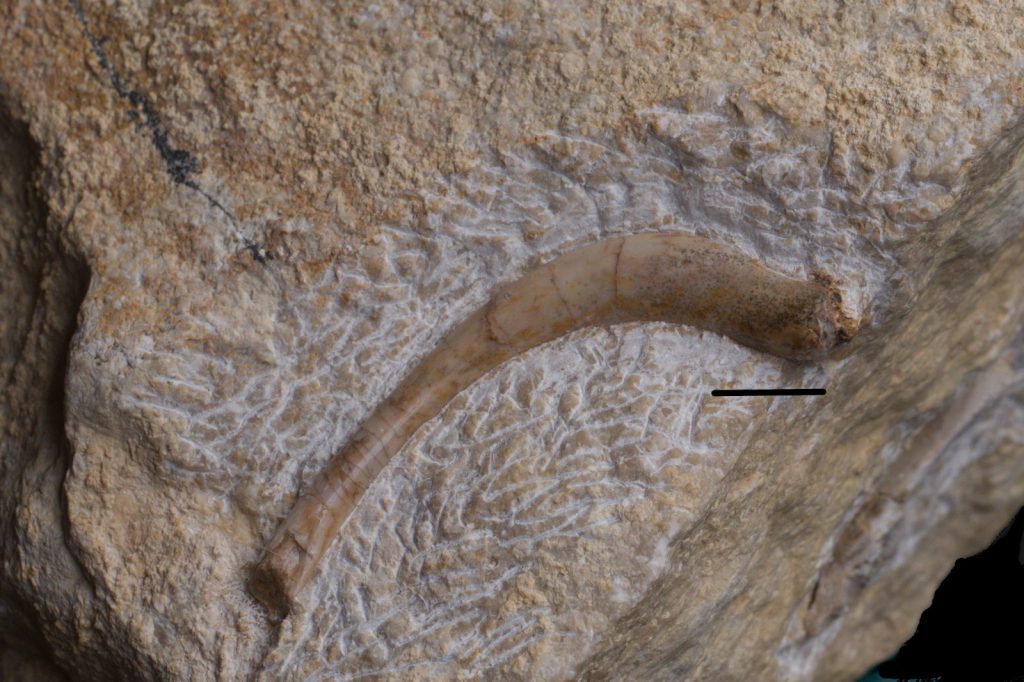
Sauropterygia cf. Nothosaurus, rib
Middle Triassic, Lower Muschelkalk (Anisian), Gogolin Beds, Upper Silesia, Poland
A dorsal rib proximal fragment from a marine reptile from the Sauropterygian group. It very likely belongs to cf. Nothosaurus. This is the most abundant taxa in the Silesian Muschelkalk deposits. Its size suggests an animal rather larger than Pachypleurosaurus. On the other hand, a single fragment does not allow for precise identification.
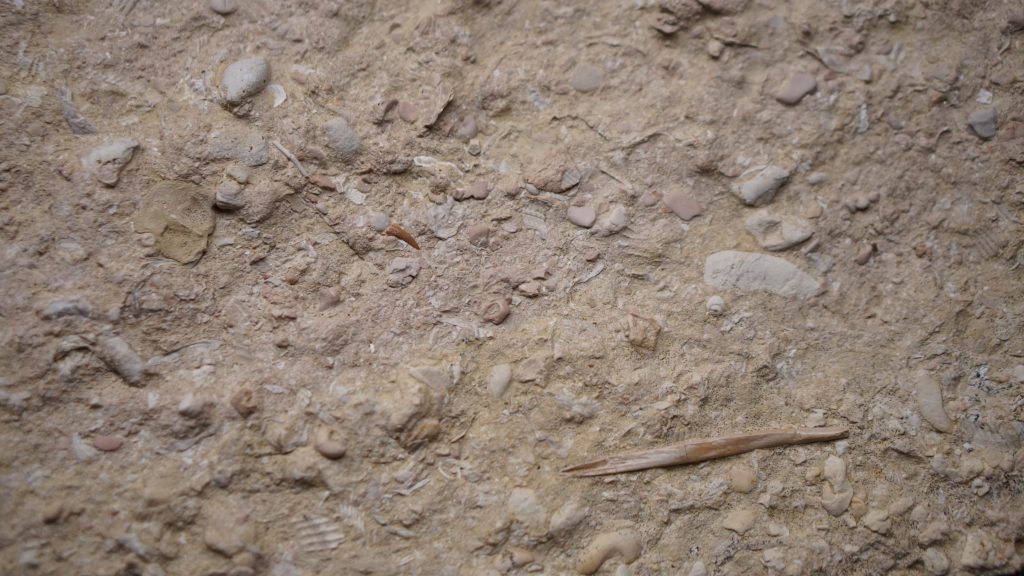
Ribs are a common find in Silesian Muschelkalk deposits; complete finds are a completely different story. In this case, I was lucky – it appears the rib retained its proximal head.
It’s worth noting that the rib is thick and massive. This phenomenon is called pachystosis – an increase in the density and volume of (at least some) bones. This is a common feature of many sauropterygians and, at the same time, a rather primitive adaptation to aquatic life. The increased mass acts as ballast and facilitates buoyancy underwater.
Sometimes, this pachystosis took quite extreme forms, as in placodonts.
P.S. This is a roadside find. While driving, I noticed a pile of rocks that someone had brought to level the ground. My family hates these sudden stops 😉
Leave a Reply