
Vertebrate
-
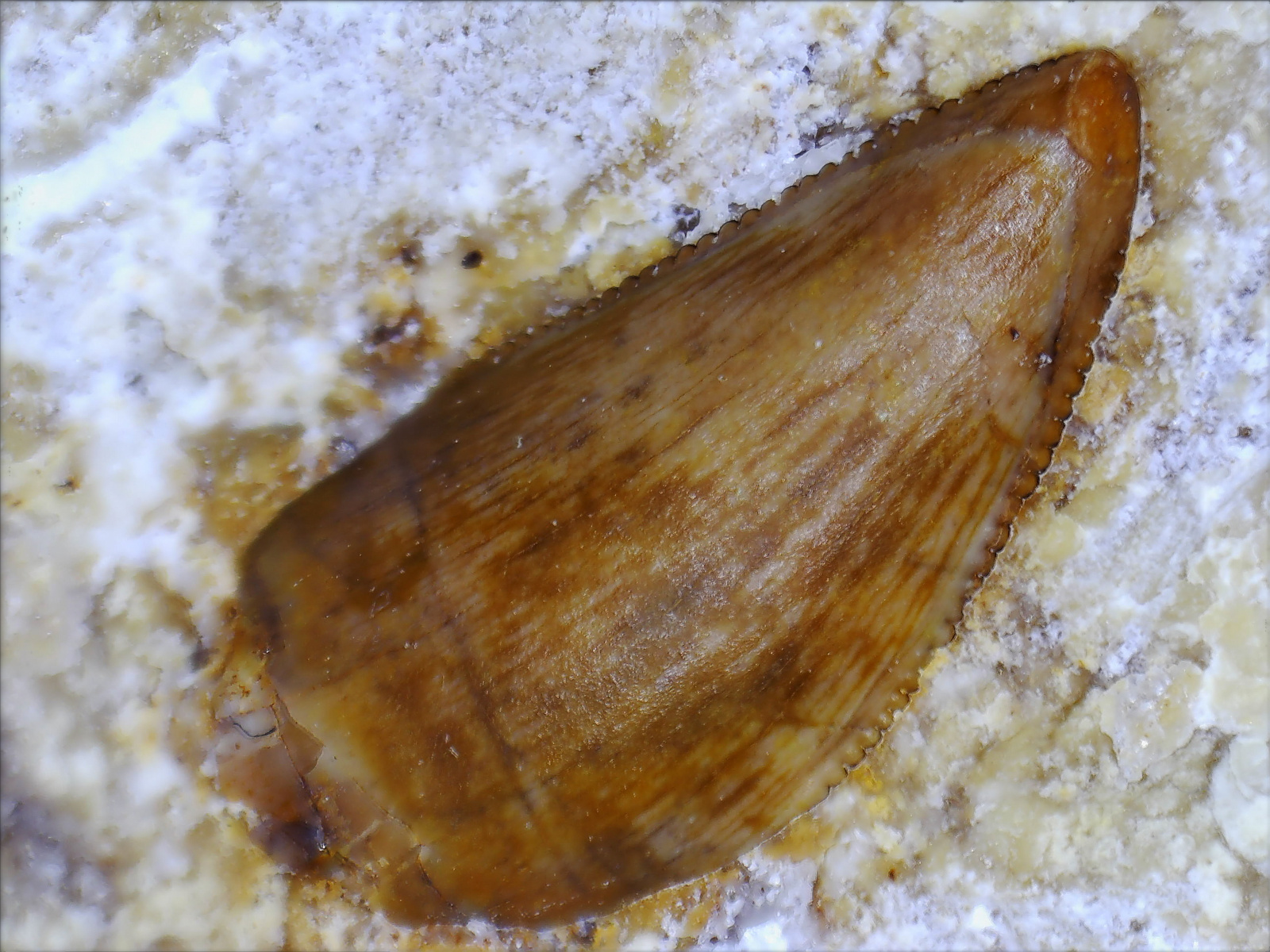
Archosauriformes indet., tooth, 27/LMK
—
Tooth crown of an indeterminate archosauromorph from the Middle Triassic of Upper Silesia, Poland. Serrated, ziphodont morphology consistent with terrestrial or semi-aquatic predatory reptiles.
-
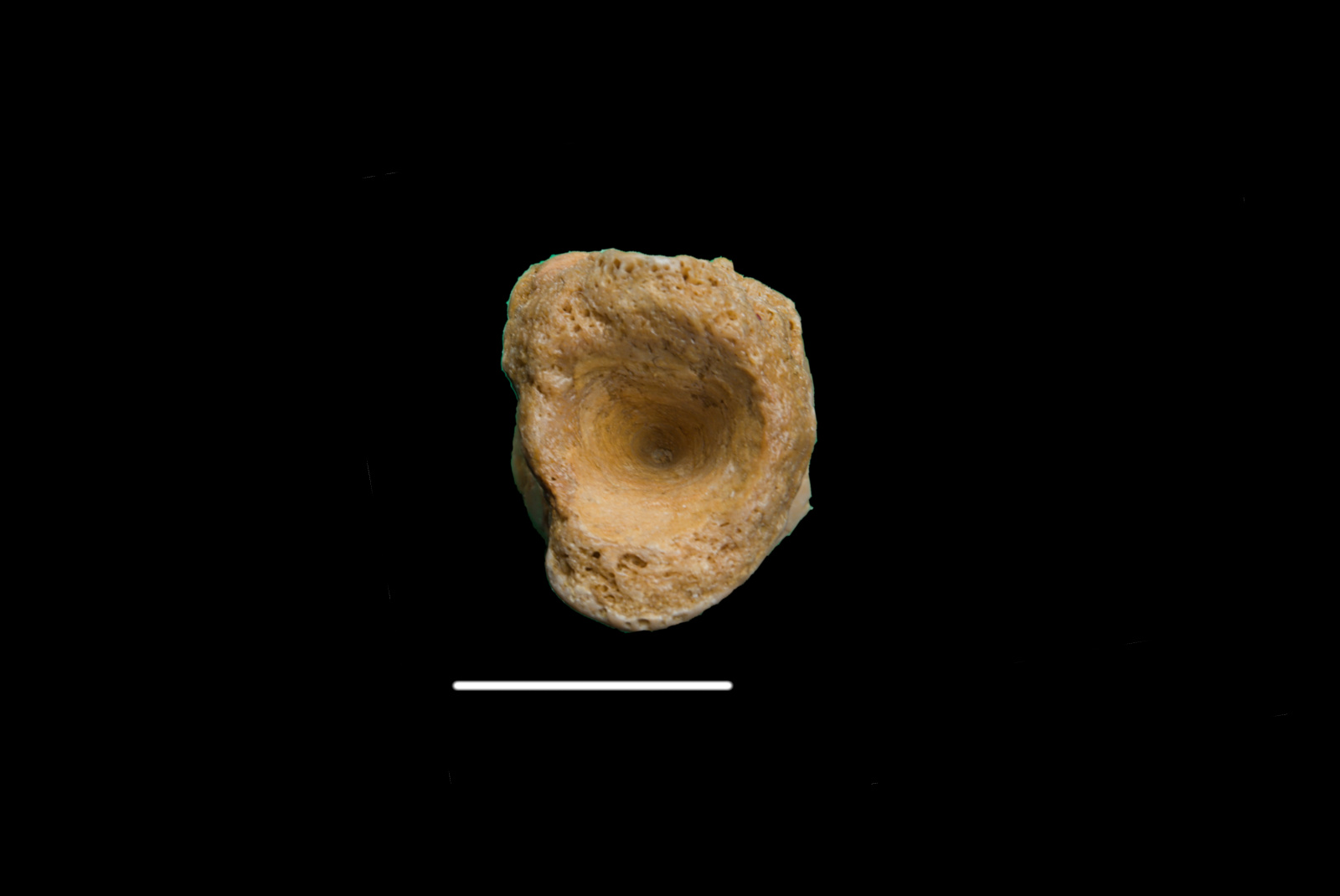
Placodontia indet., vertebra centrum, 26/LMK
Vertebral centrum of an indeterminate placodont from the Lower Muschelkalk (Middle Triassic) of Upper Silesia, Poland. Despite abrasion, the specimen preserves features typical of placodont vertebrae, including clearly amphicoelous articular surfaces.
-
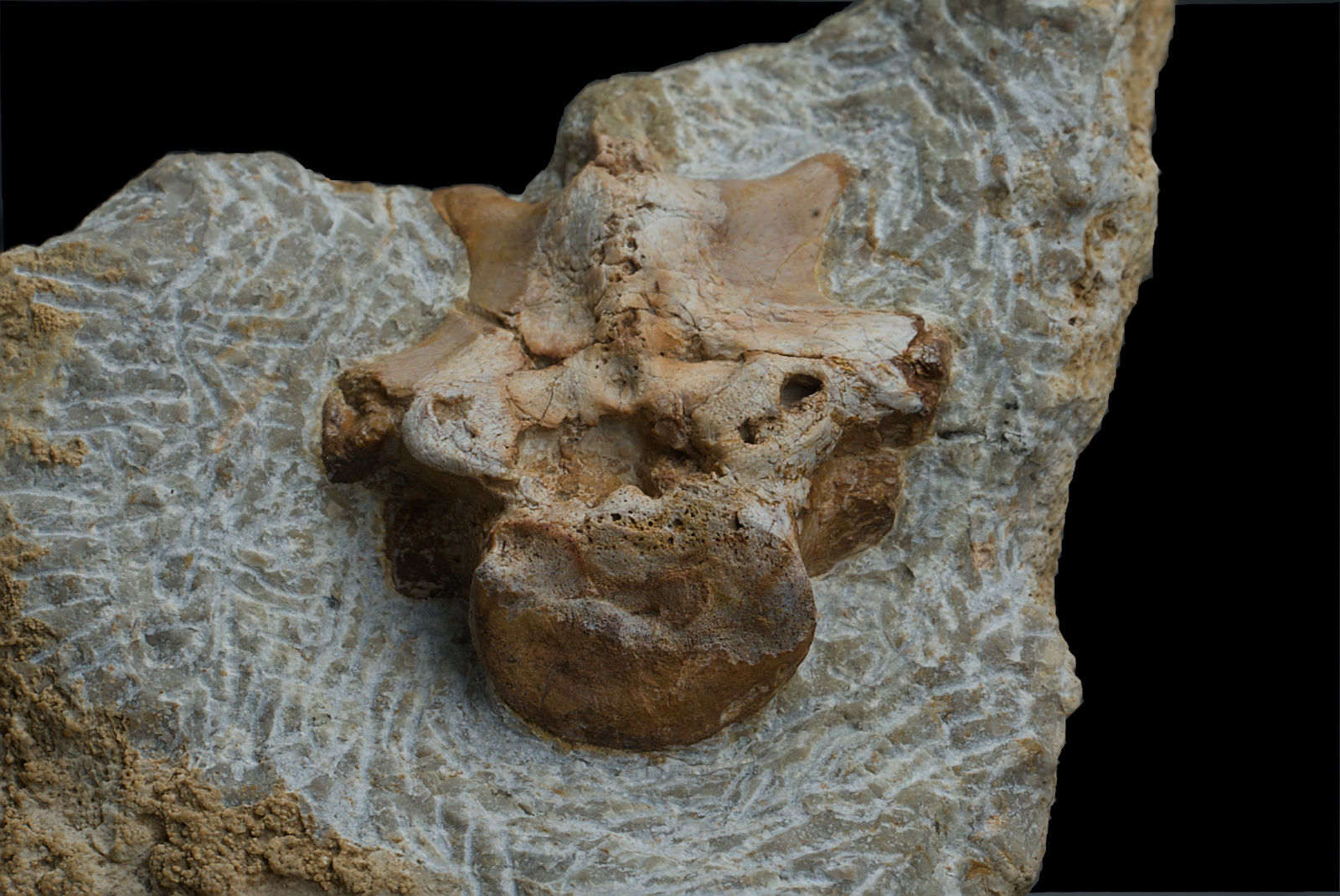
Sauropterygia indet., ?dorsal vertebra, 25/LMK?
Sauropterygia indet. Dating uncertain – Upper Röt or Lower Muschelkalk (Anisian) Upper Silesia, Poland This is a beautiful vertebral specimen, interesting for at least several reasons. Despite erosion, this nearly complete vertebra provides an excellent illustration of vertebral morphology. The preserved features and processes appear consistent with the general anatomy of Sauropterygia (Nothosaurus sp. for example).…
-
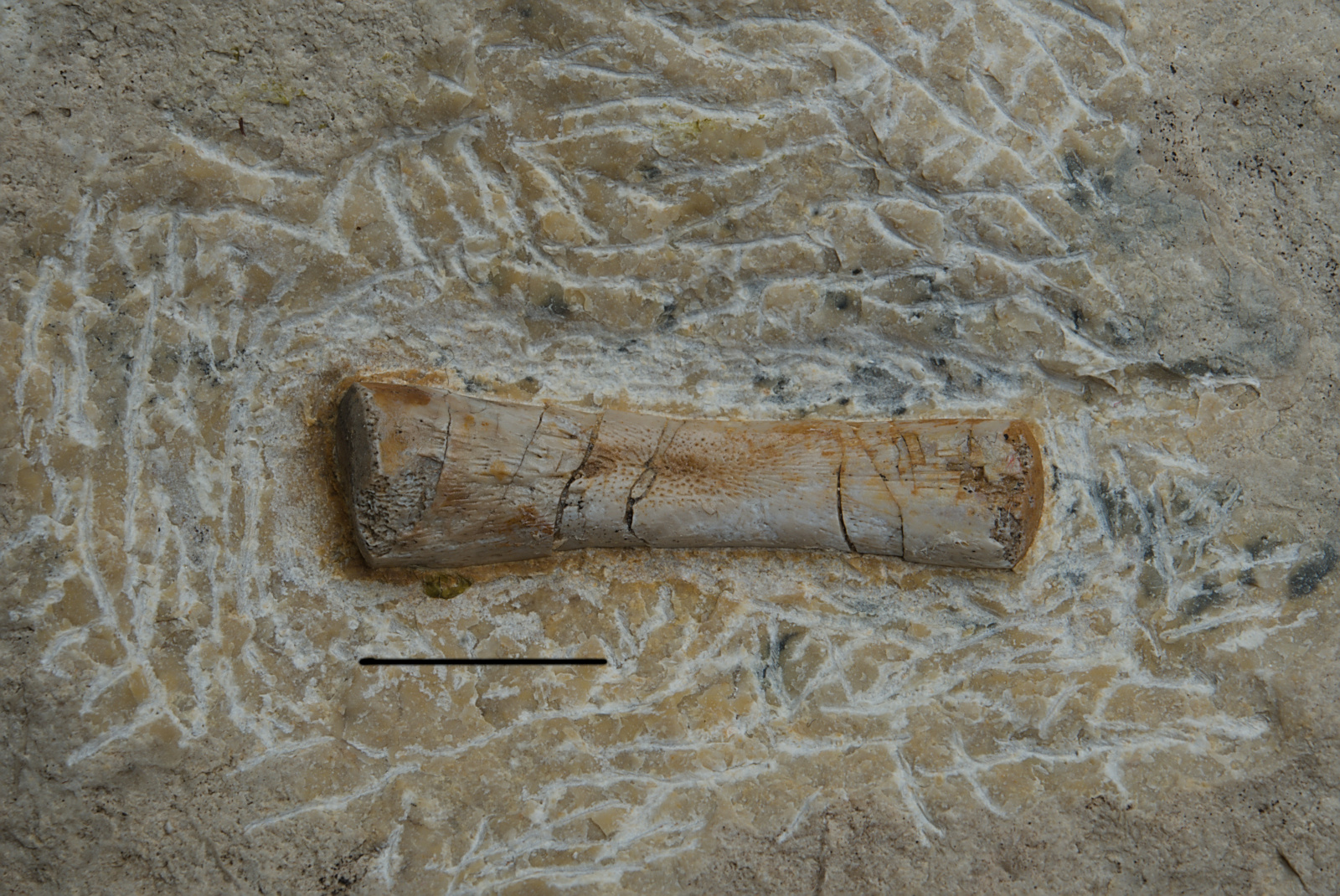
Sauropterygia indet., metapodial element, 24/LMK
—
Sauropterygia indet. (cf. Nothosaurus) Middle Triassic, Lower Muschelkalk (Anisian), Gogolin Beds Upper Silesia, Poland Probably isolated metacarpal or metatarsal bone of an unidentified Sauropterygia (most likely a medium-sized Nothosaurus). Due to the visible slight asymmetry, I think it is most likely one of the outer metacarpals or metatarsals – I or V. The bone is flattened…
-
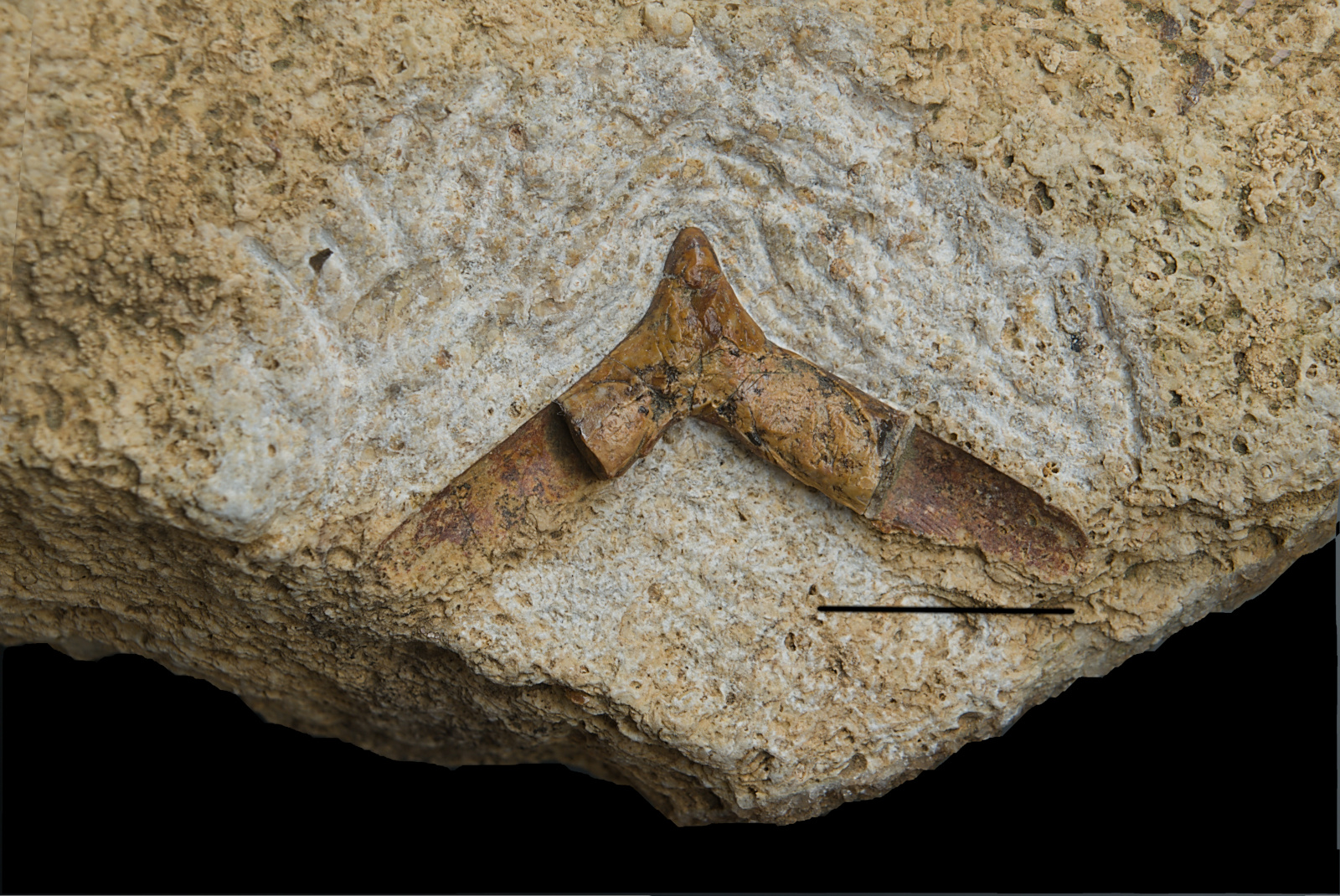
Reptilia indet., medial gastralium, 23/LMK?
—
Reptilia indet. Dating uncertain – Upper Röt or Lower Muschelkalk (Anisian) Upper Silesia, Poland The specimen is an incomplete, fragmentary medial gastralium (“abdominal rib”) of an unidentified reptile. As mentioned in another post, the gastralia are non-diagnostic and do not support taxonomic identification. The specimen, although incomplete, clearly illustrates the morphology of these dermal bones. The…
-
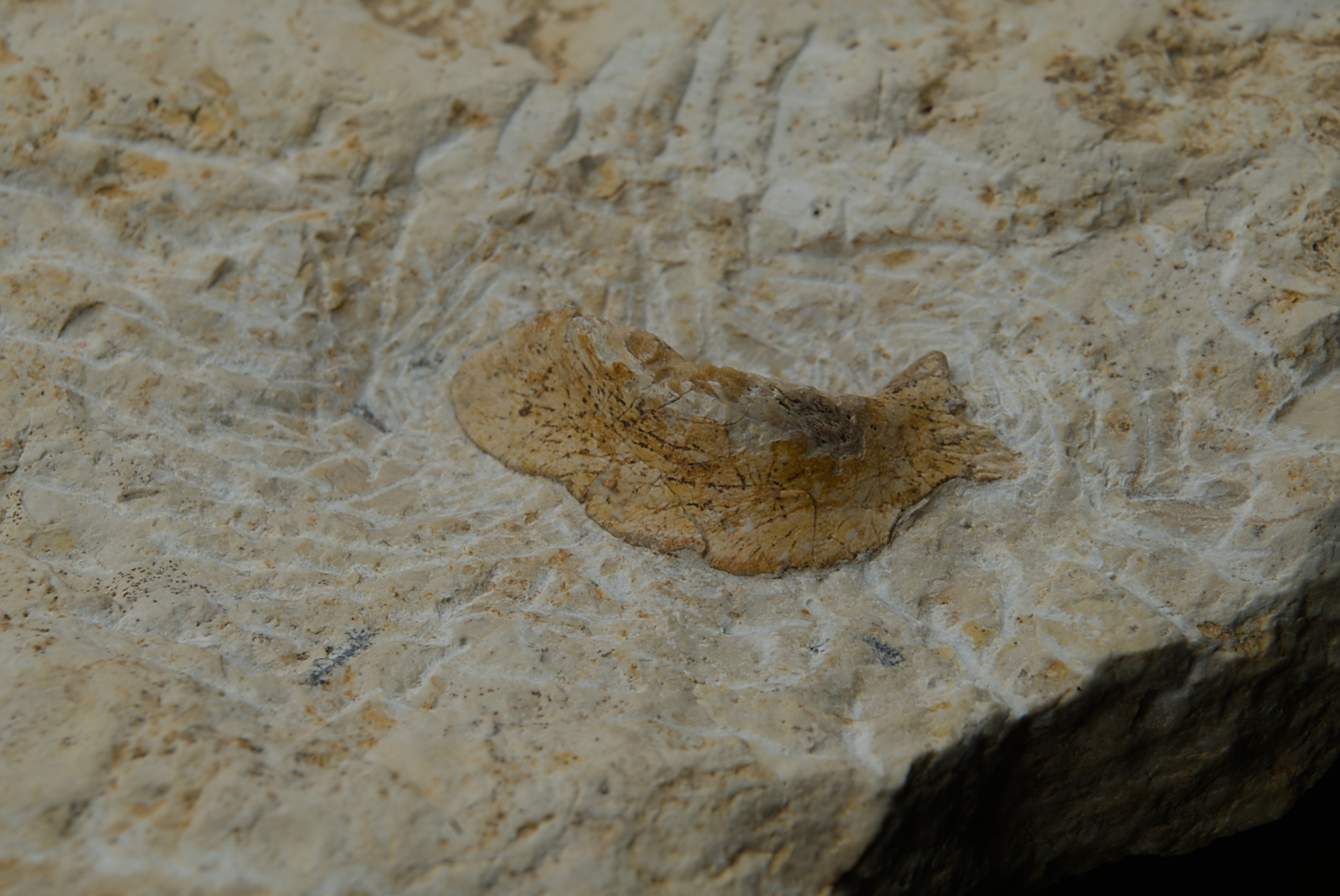
Reptilia indet., ?cranium element, 22/LMK
—
The specimen is a bone or bone fragment from an unidentified reptile. Structure of the bone and its robustness almost certainly rule out fish and amphibians (the lack of ornamentation typical of amphibians).
-
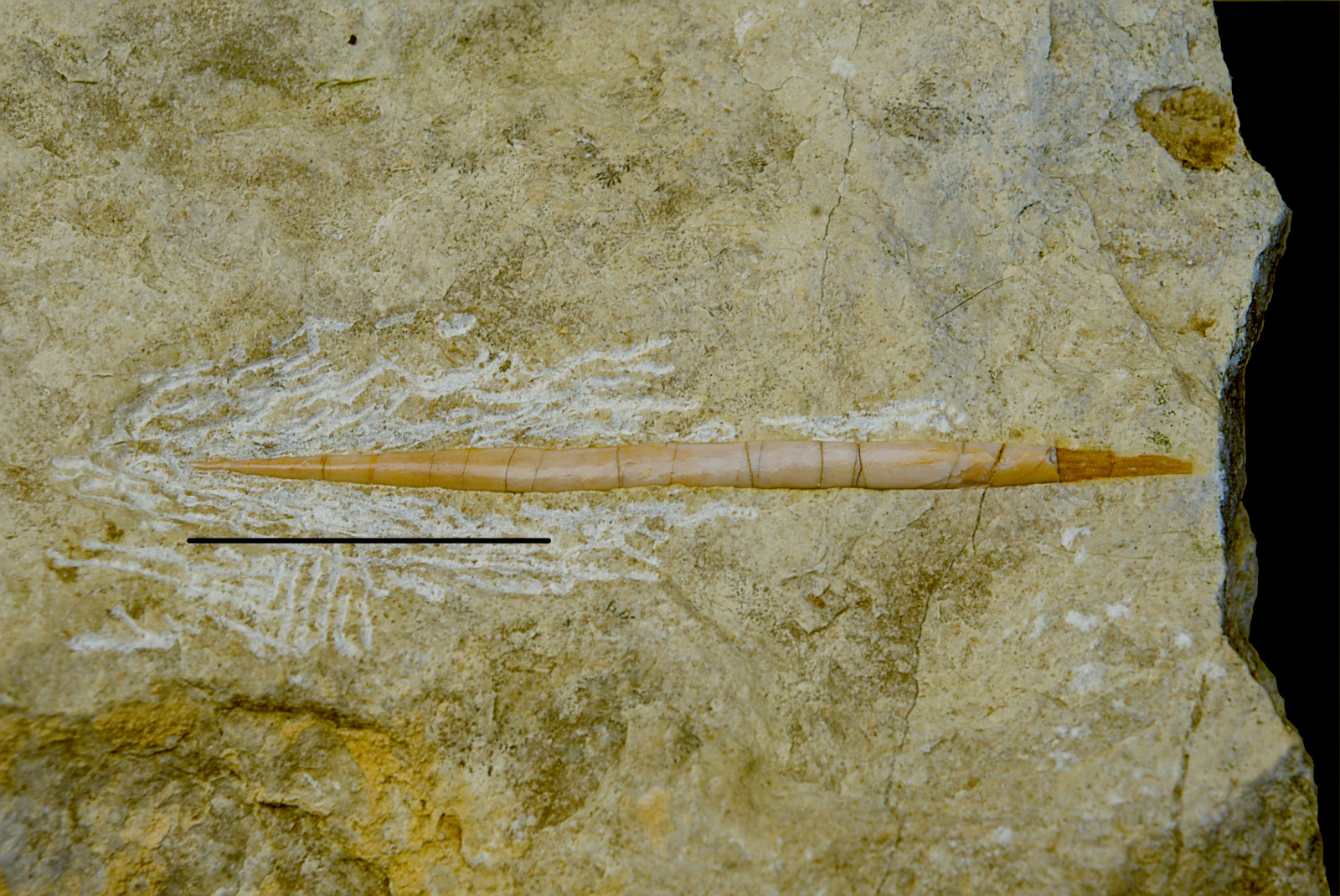
Reptilia indet., lateral gastralium, 21/LMK?
—
Reptilia indet. Dating uncertain – Upper Röt or Lower Muschelkalk (Anisian) Upper Silesia, Poland The specimen is the lateral gastralium (ventral rib) of an indeterminate reptile. Gastralia were present in almost all Triassic marine reptiles (the exception being Ichthyosauria). Their morphology is very similar, making such specimens non-diagnostic. The specimen is approximately 56 mm long and…
-
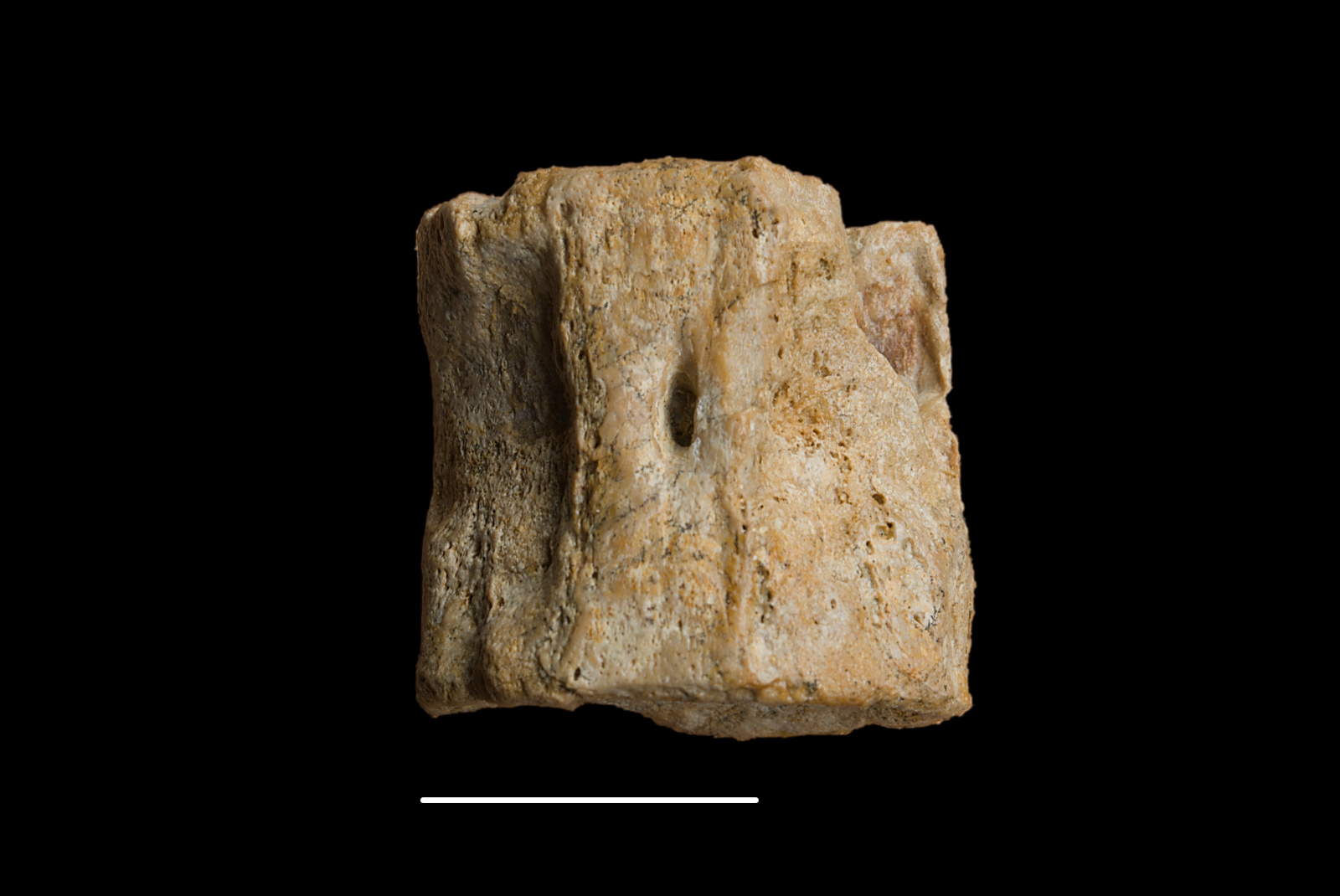
Pistosaurus cf. longaevus, cervical vertebra centrum, 10/UMK
Pistosaurus cf. longaevus Middle Triassic, Upper Muschelkalk (Ladinian), Upper Silesia, Poland Isolated vertebra centrum of Pistosaurus cf. longaevus. Despite abrasion and incompleteness (the neural arch is missing), the specimen’s features allow for a number of conclusions. The centrum is flattened. In dorsal view, the articulation surfaces (pedicular facets) of the missing arch are visible as…
-
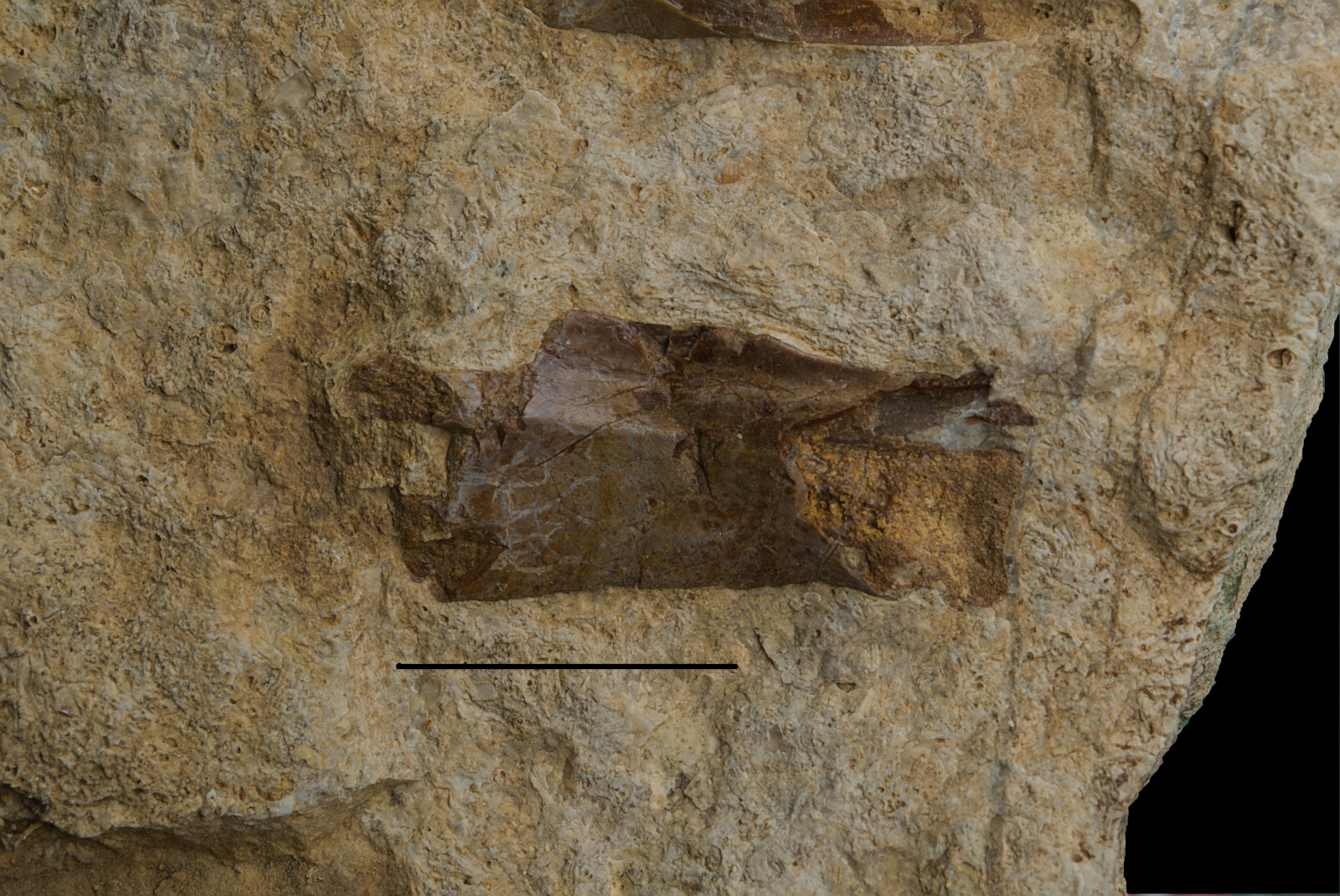
“Protanystropheus antiquus” cervical vertebra assoc. Reptilia indet. cervical rib, 20/LMK?
—
Protanystropheus antiquus (“Tanystropheus antiquus”) is an extremely rare find in Lower Muschelkalk sediments, whose systematic position is still uncertain.
-
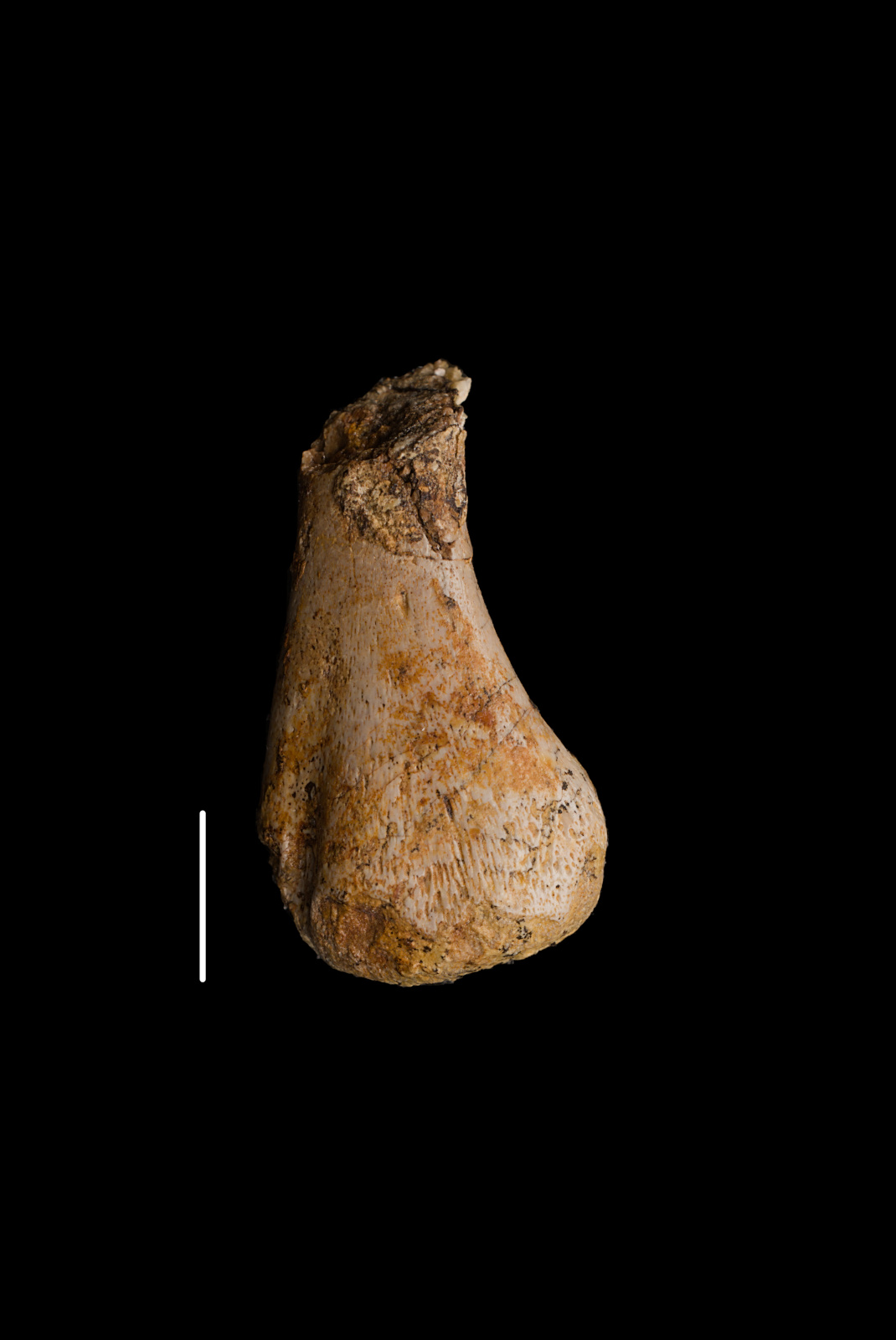
Placodontia indet., humerus fragment, 19/LMK
—
Placodontia indet. Middle Triassic, Lower Muschelkalk (Anisian), Gogolin Beds Upper Silesia, Poland The specimen is most likely a distal fragment of a humerus (upper arm bone). The broad, flattened head and the strongly pachyostotic bone structure indicate a placodont. A distinct groove is visible on the left side of the head, a feature noted by…