
Eosauropterygia indet. cf. Nothosaurus
Middle Triassic, Gogolin Beds, Upper Silesia, Poland
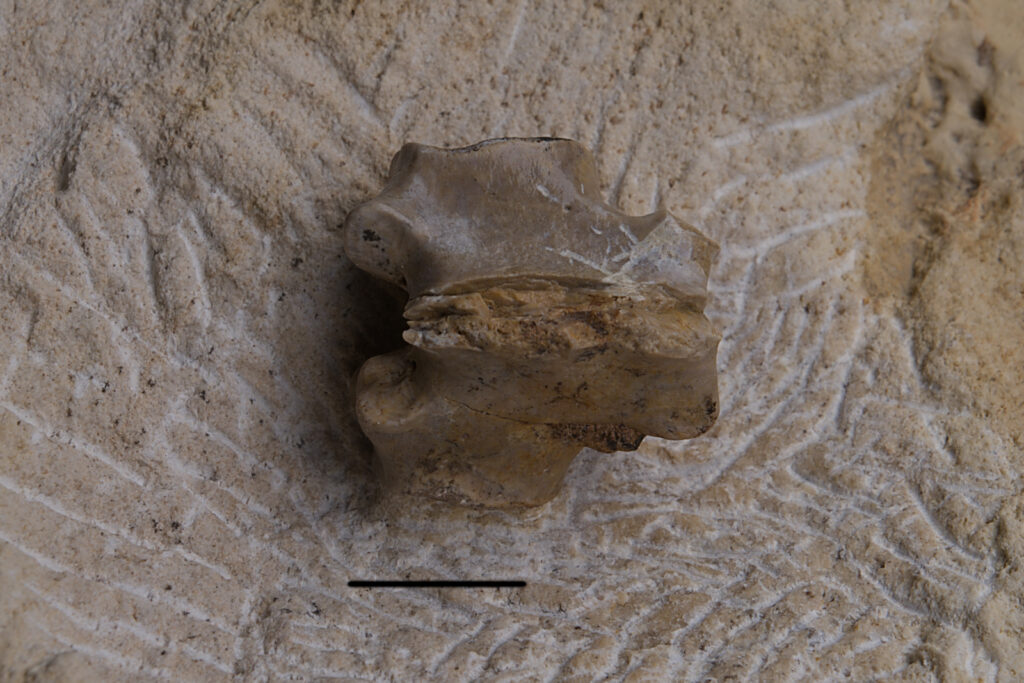
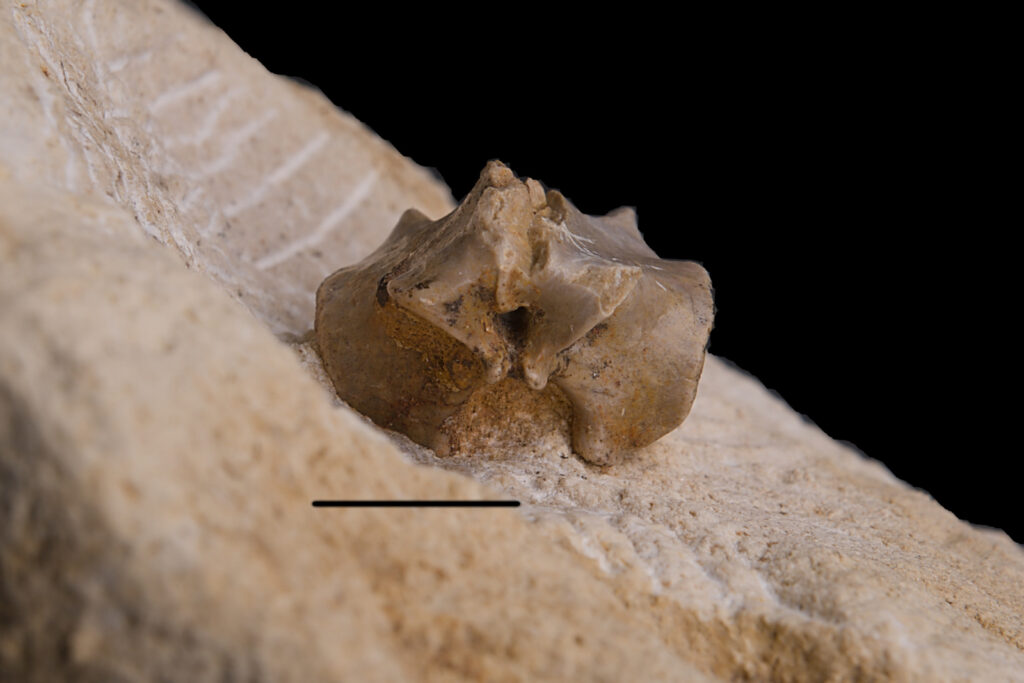
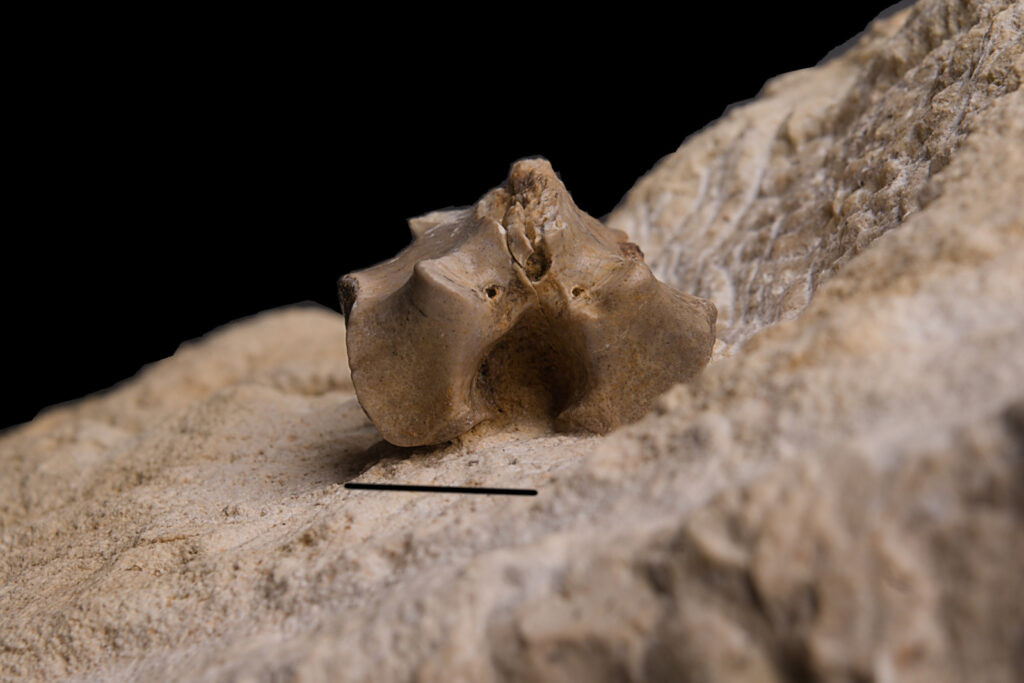
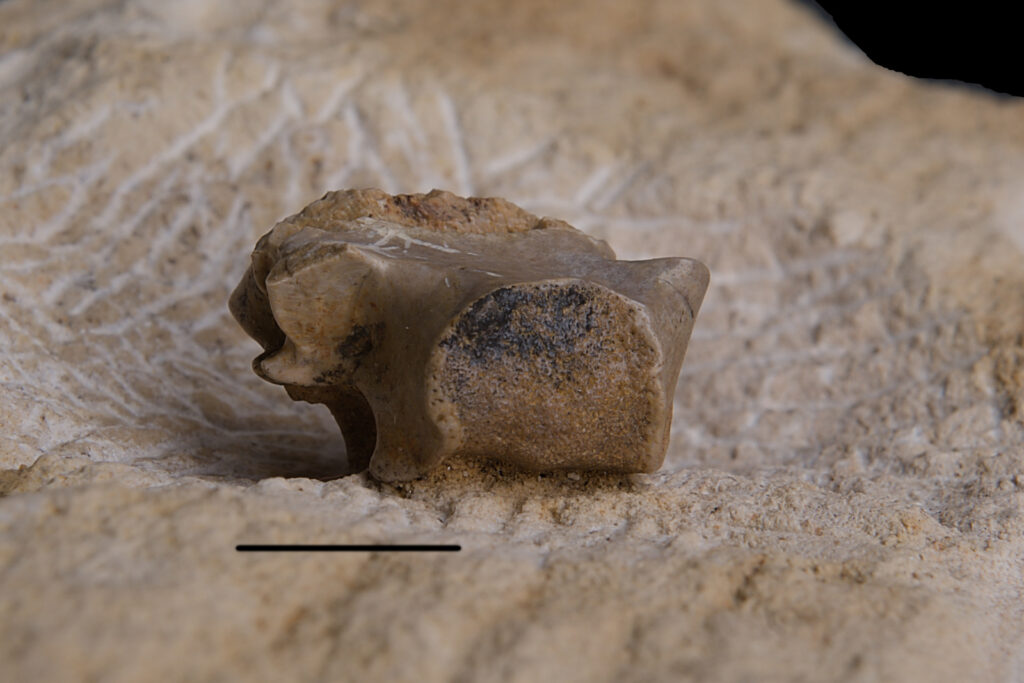
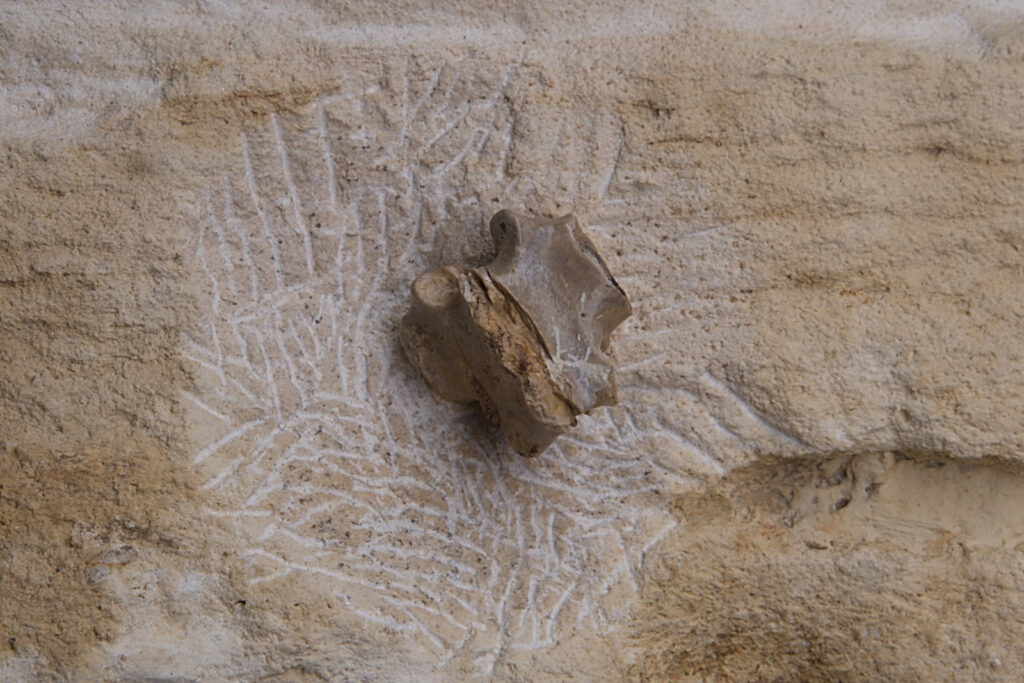
A well-preserved neural arch of an indeterminate member of Eosauropterygia from the Lower Muschelkalk (Middle Triassic–Anisian). Despite a damaged/missing neural spine, it clearly displays characteristic features of the dorsal vertebrae. The specimen also presents an interesting taphonomic puzzle.
The neural arch measures approximately 20 mm in length and 18 mm in width. It measures approximately 15 mm in height.
Preservation is generally excellent, with both prezygapophyses and postzygapophyses intact, as well as a complete zygosphene. The arch is notably robust and clearly exposes the roof of the large neural canal. The slightly kidney-shaped lateral articular processes measure approximately 10 x 10 mm and likely articulated with one of the massive dorsal ribs.
The overall morphology of the arch is consistent with that of eosauropterygian vertebrae. Its proportions, massiveness, and the size of the lateral articular surfaces strongly suggest that the specimen was part of a dorsal vertebra, if not a sacral vertebra. Due to the damaged neural spine, I am unable to say with certainty what region it comes from, but it appears that the neural spine has a relatively narrow base, which may indicate its short height, which could be consistent with sacral vertebra, but I will stick with the (based on my current knowledge) more conservative interpretation as a dorsal vertebra.
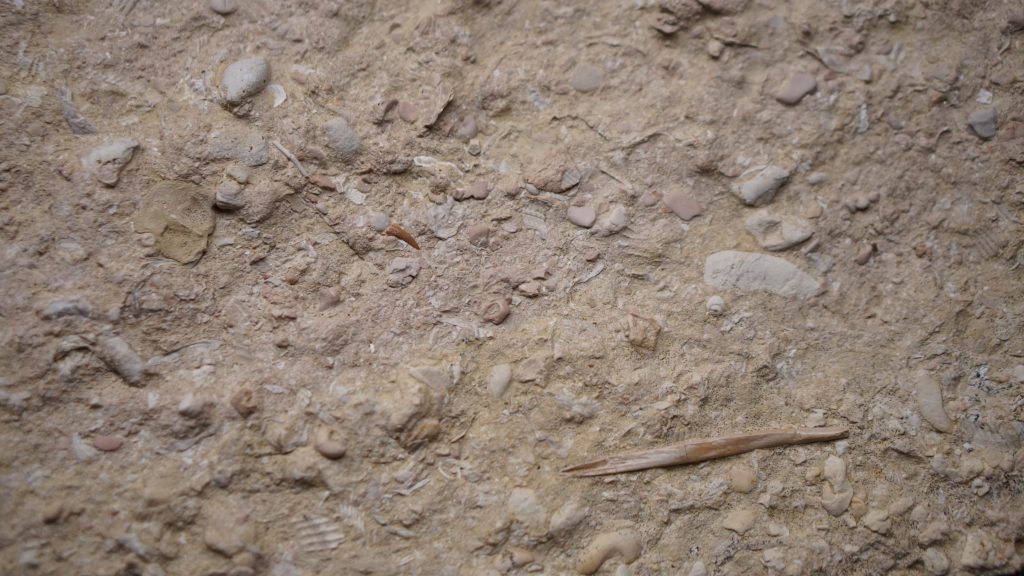
An interesting taphonomic observation related to the specimen is the vertebra’s position relative to the sediment layering. Most specimens I find are oriented according to their center of gravity. In the case of the presented neural arch, it was preserved in a nearly vertical position, perpendicular to the layers visible behind the surface of the weathered matrix. This may suggest some more dynamic circumstances surrounding its burial in the sediment. However, I will not venture any further interpretations.
Leave a Reply