
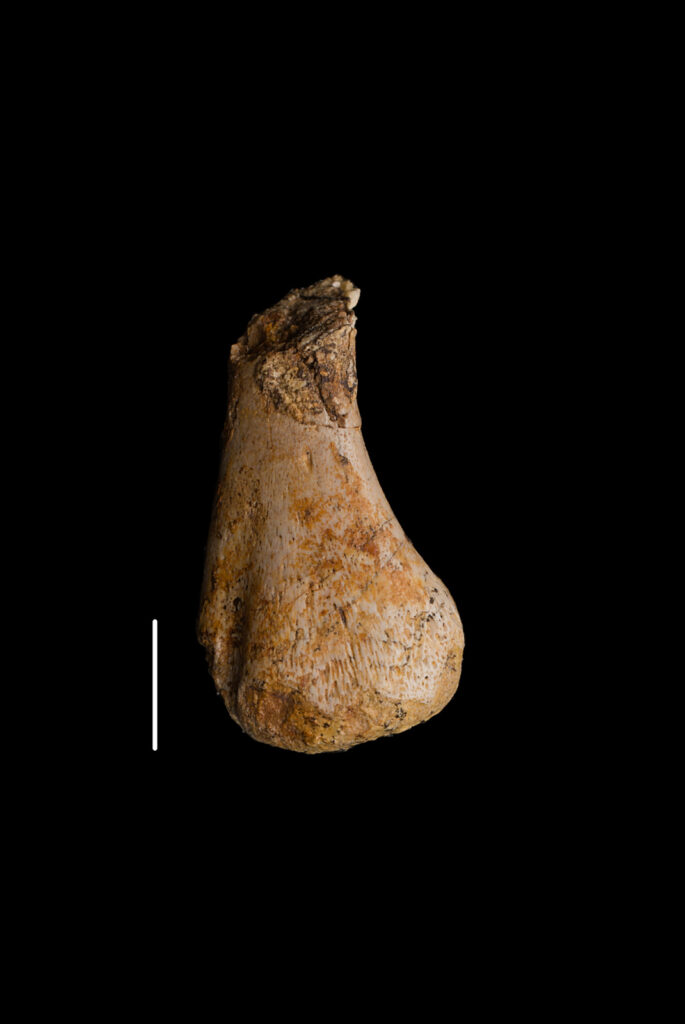
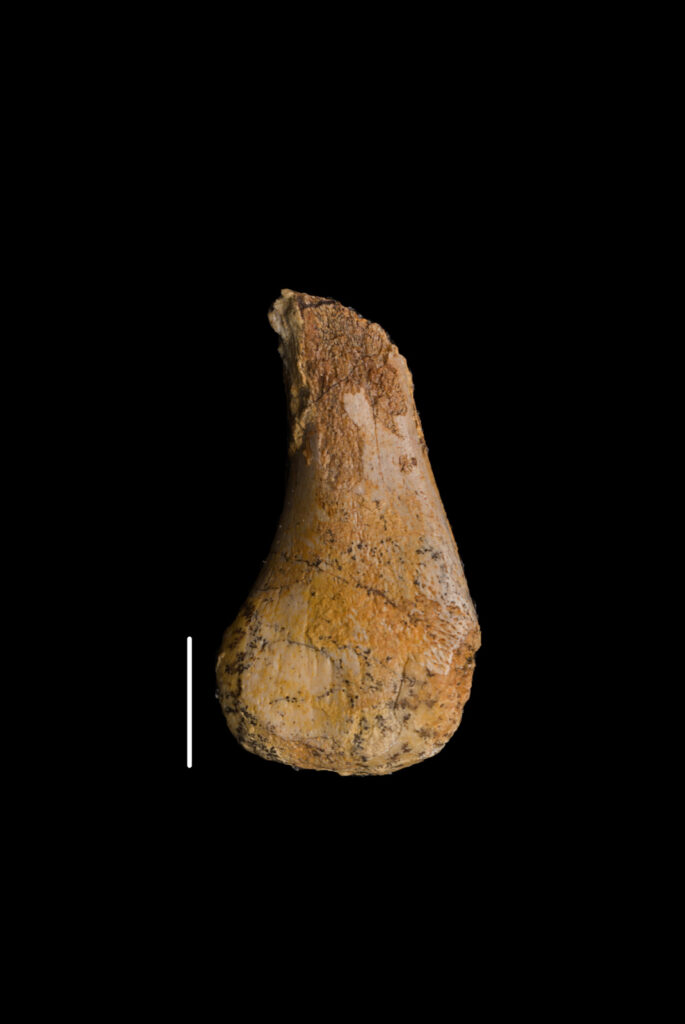
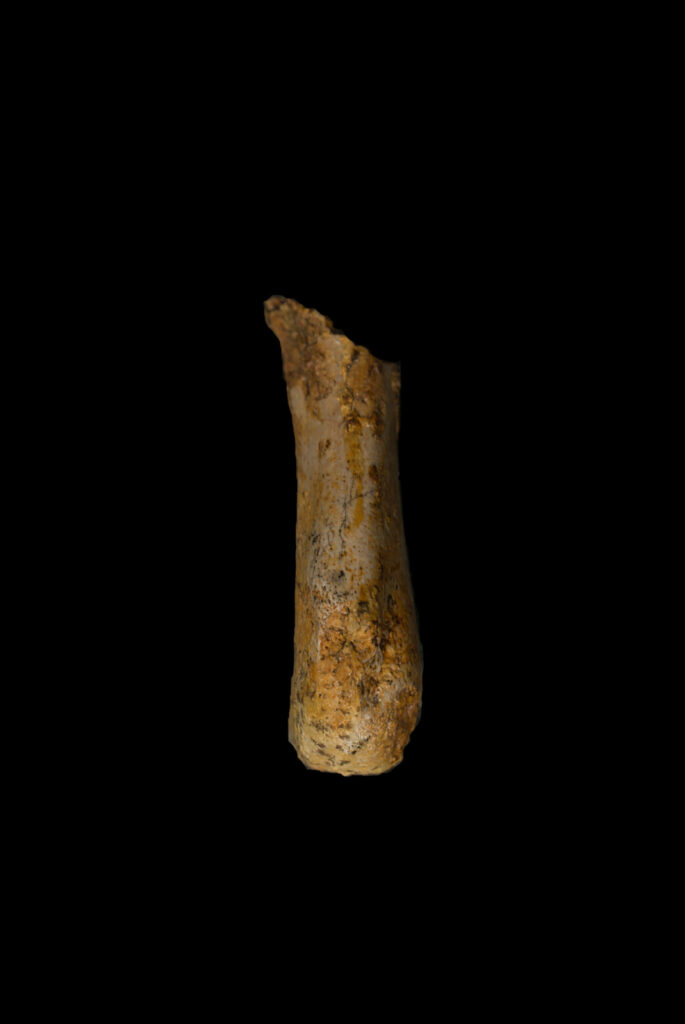
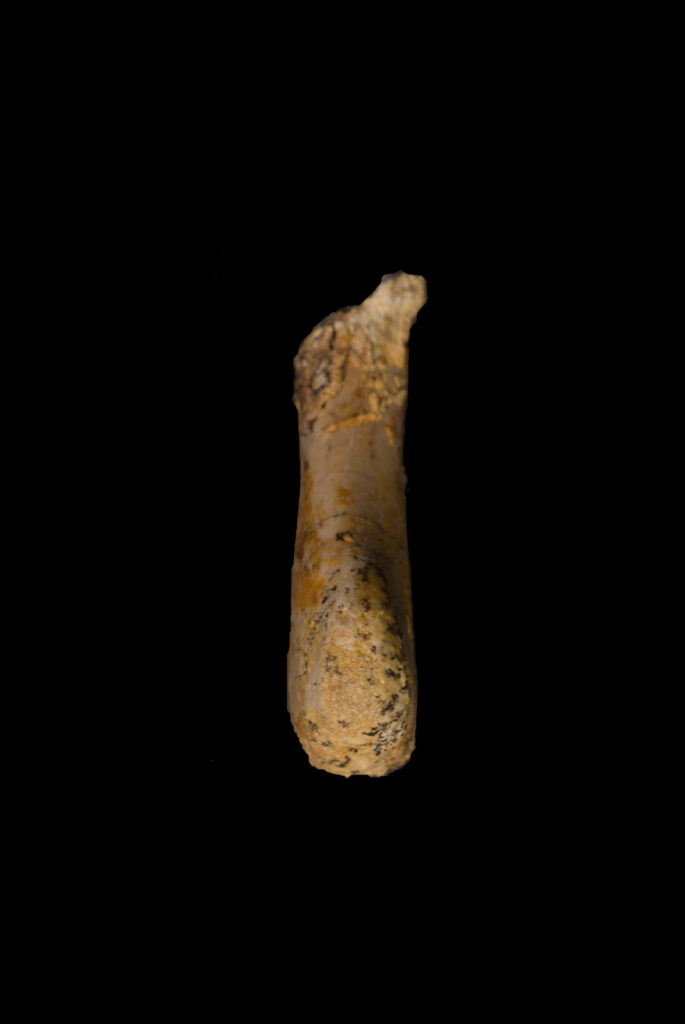
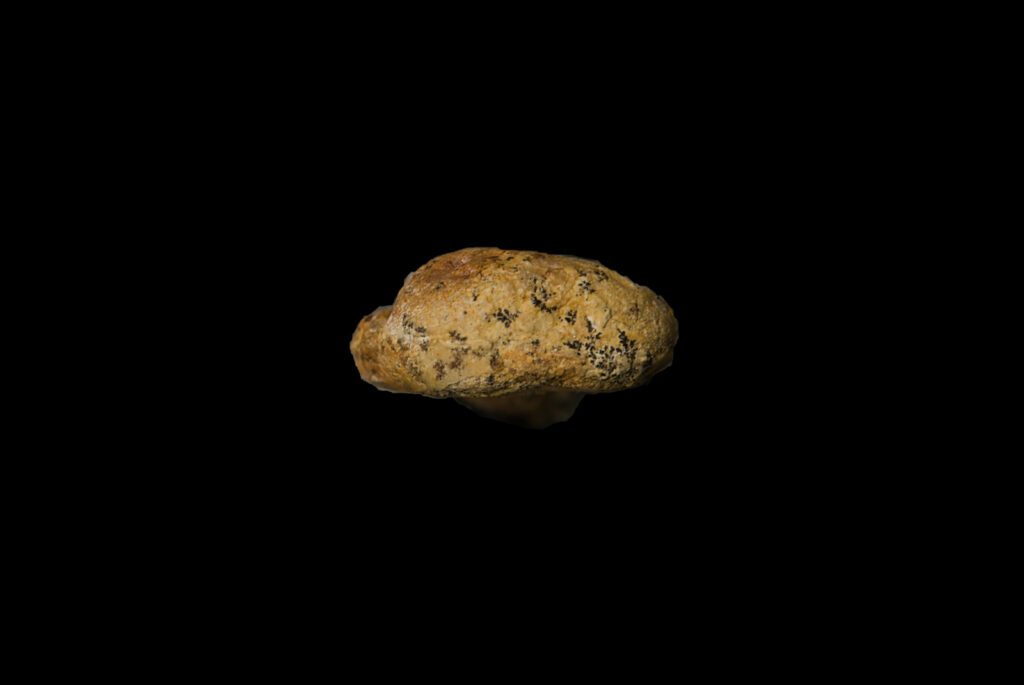
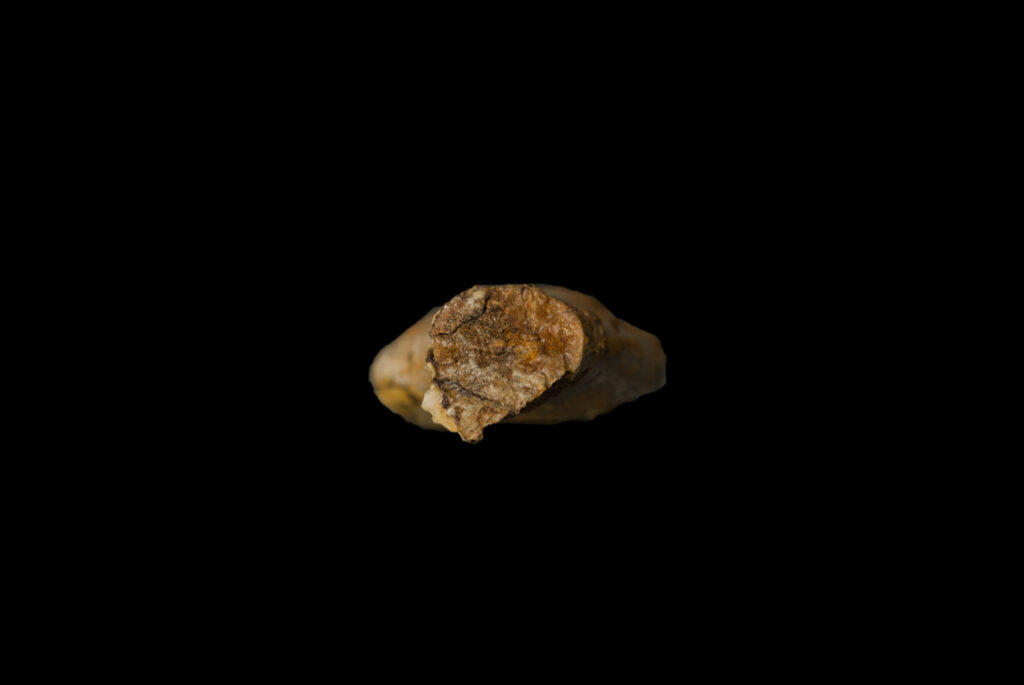
Placodontia indet.
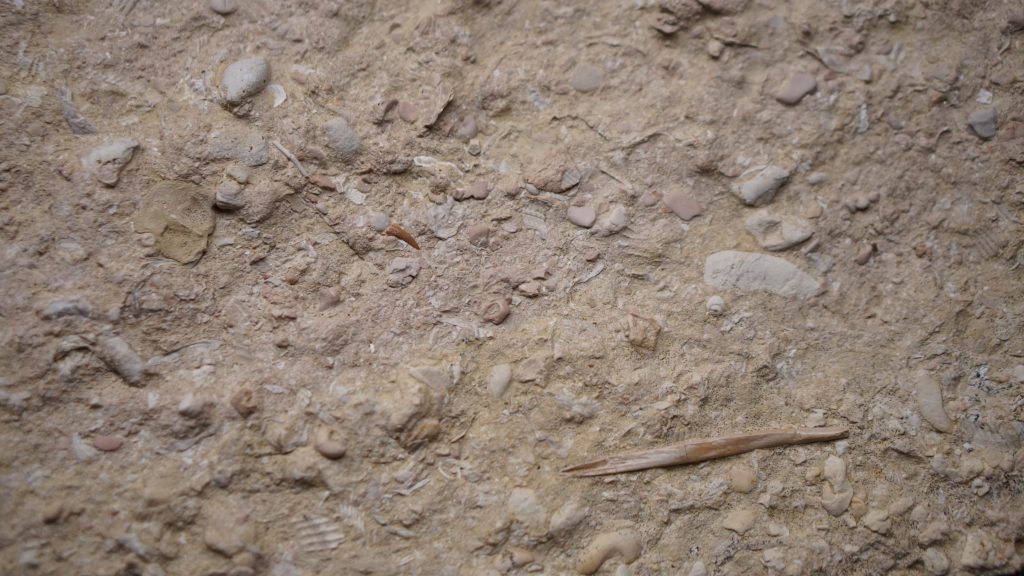
Middle Triassic, Lower Muschelkalk (Anisian), Gogolin Beds
Upper Silesia, Poland
The specimen is most likely a distal fragment of a humerus (upper arm bone). The broad, flattened head and the strongly pachyostotic bone structure indicate a placodont. A distinct groove is visible on the left side of the head, a feature noted by a paleontologist as a diagnostic character of placodont humeri. Based on the asymmetric expansion of the distal end and the position of the groove, it can be concluded that this is a fragment of a left humerus.
Reference:
Rieppel, O. (1995). The Genus Placodus: Systematics, Morphology, Paleobiogeography, and Paleobiology. Fieldiana: Geology, New Series, No. 31: 1–44.
Klein, N., & Hagdorn, H. (2014). Humerus morphology and histology of a new marine reptile (Diapsida) from the Muschelkalk-Keuper-Grenzbonebed (Middle Triassic, Ladinian) of Southwest Germany. Palaeodiversity, 7, 23–38.
Leave a Reply