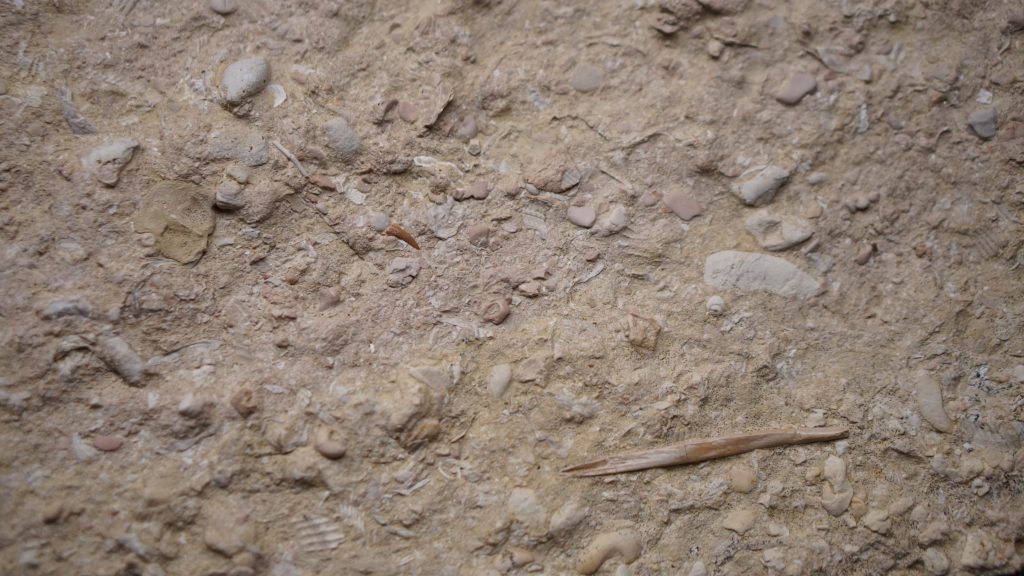

Tag: Tooth
-
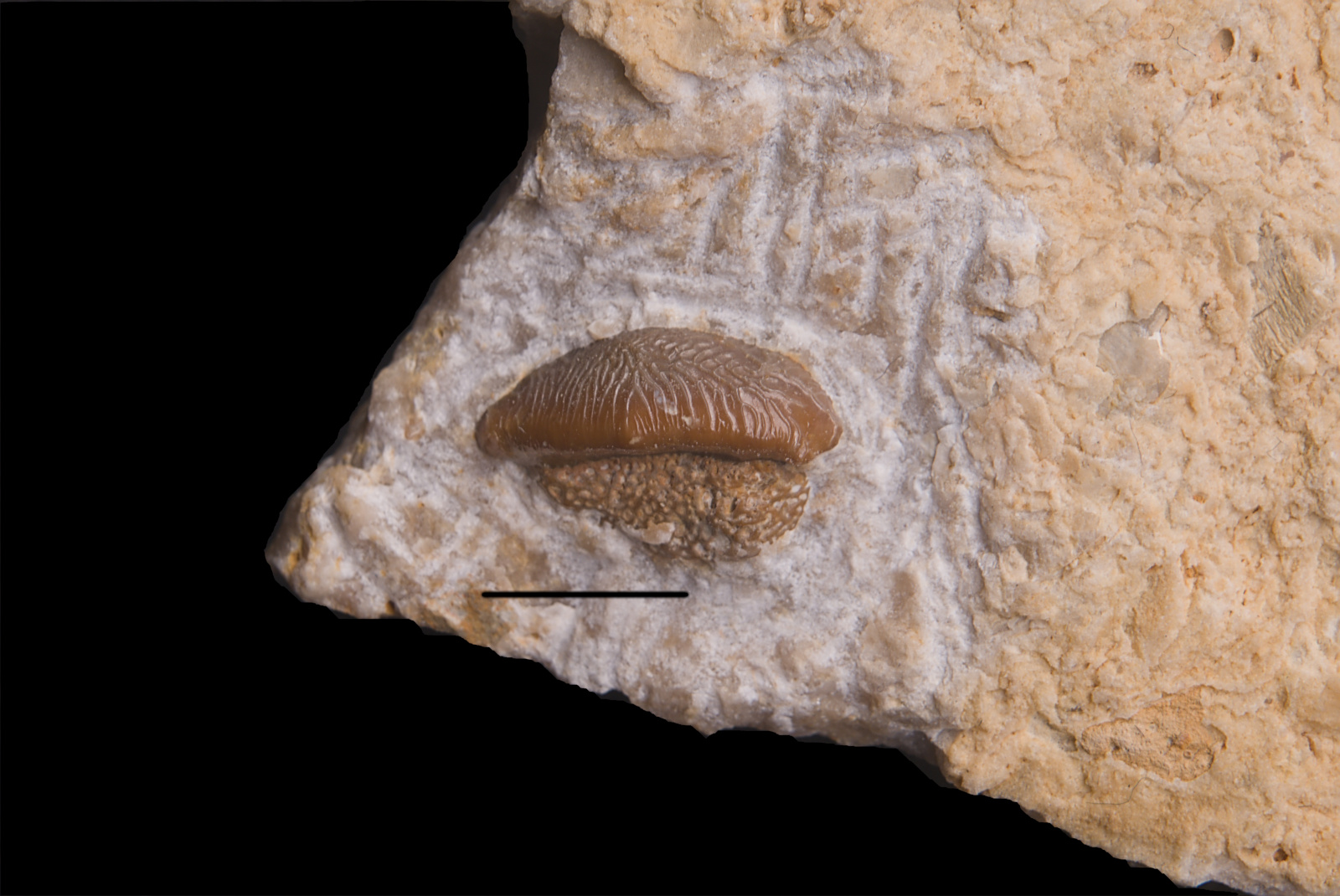
Acrodus cf. lateralis, tooth, 11/UMK
—
A specimen of a shark tooth from the genus Acrodus (Acrodus cf. lateralis). From the Upper Muschelkalk (Middle Triassic, Ladinian) deposits of Upper Silesia. Relatively unusually, the tooth has a preserved root.
-
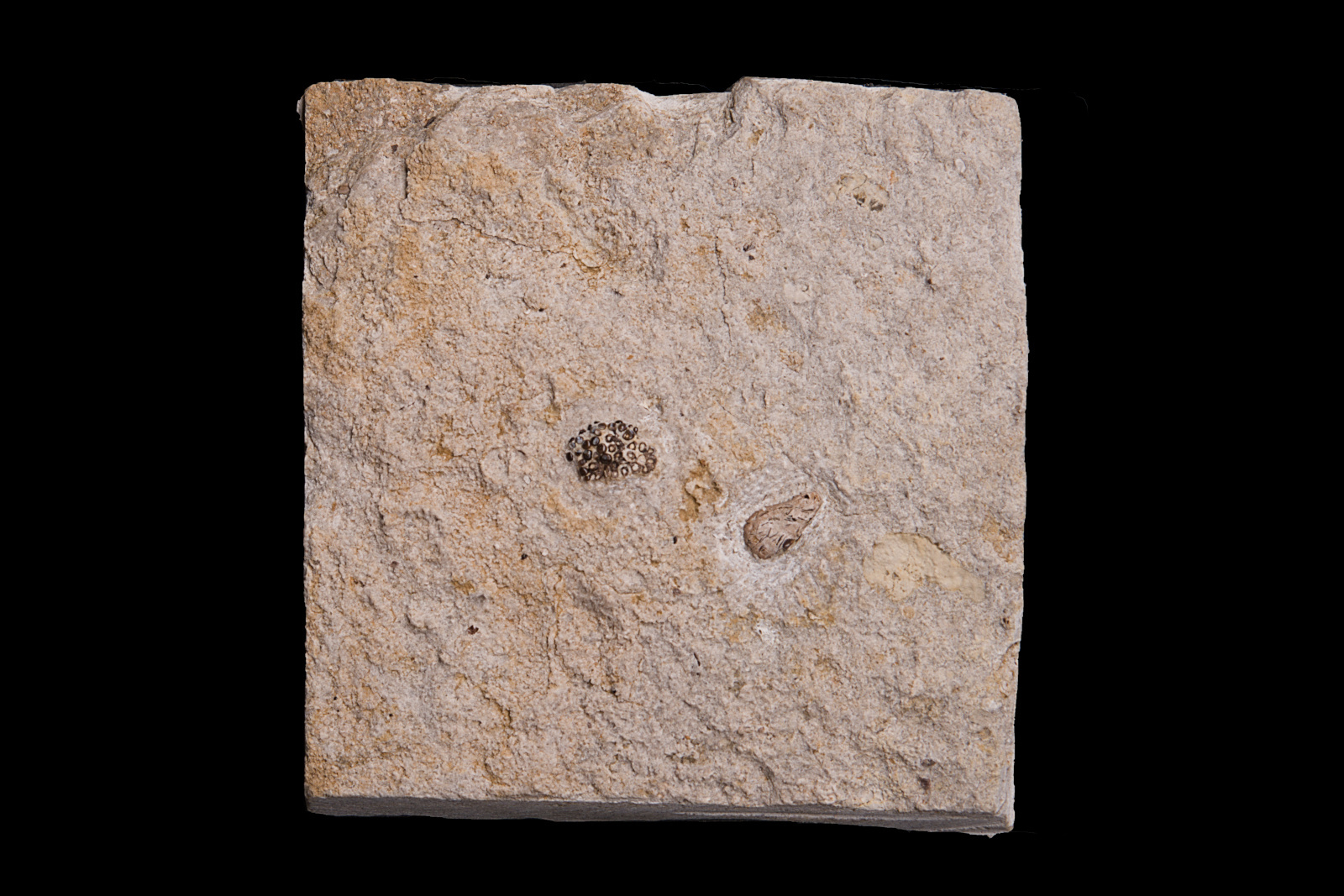
Bobasatrania scutata, upper dental plate fragment assoc. coprolite, 47/LMK 48/LMK
—
A limestone slab containing two fossils: a fragment of a crushing dental plate from a Triassic fish, probably Bobasatrania scutata, and a small coprolite of a marine predator containing undigested fish fragments.
-
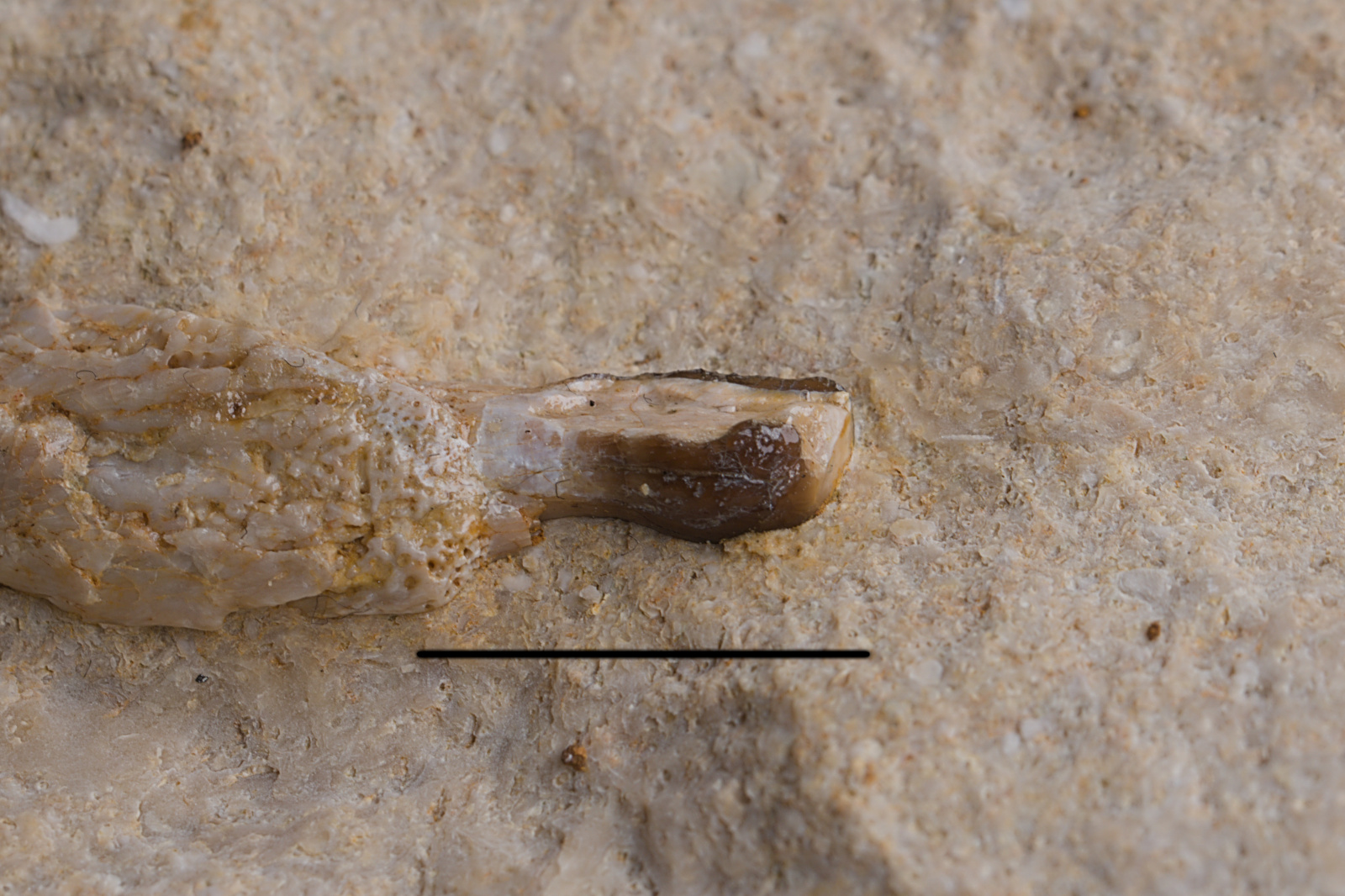
Placodontia indet., ?premaxilla fragment, LMK/34
—
The specimen is a probable fragment of the premaxilla with a preserved tooth belonging to an indeterminate reptile of the Placodontia.
-
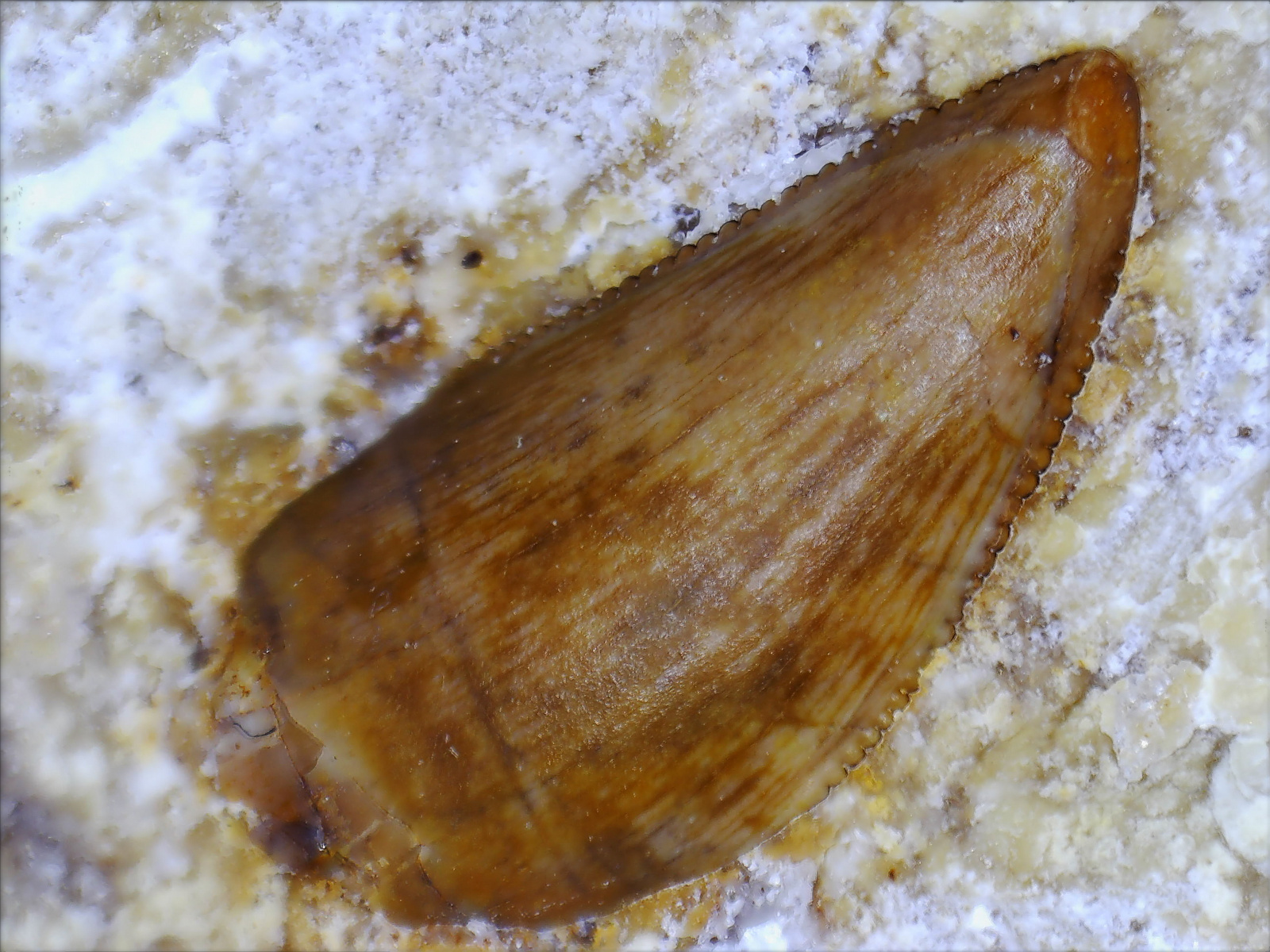
Archosauriformes indet., tooth, 27/LMK
—
Tooth crown of an indeterminate archosauromorph from the Middle Triassic of Upper Silesia, Poland. Serrated, ziphodont morphology consistent with terrestrial or semi-aquatic predatory reptiles.
-
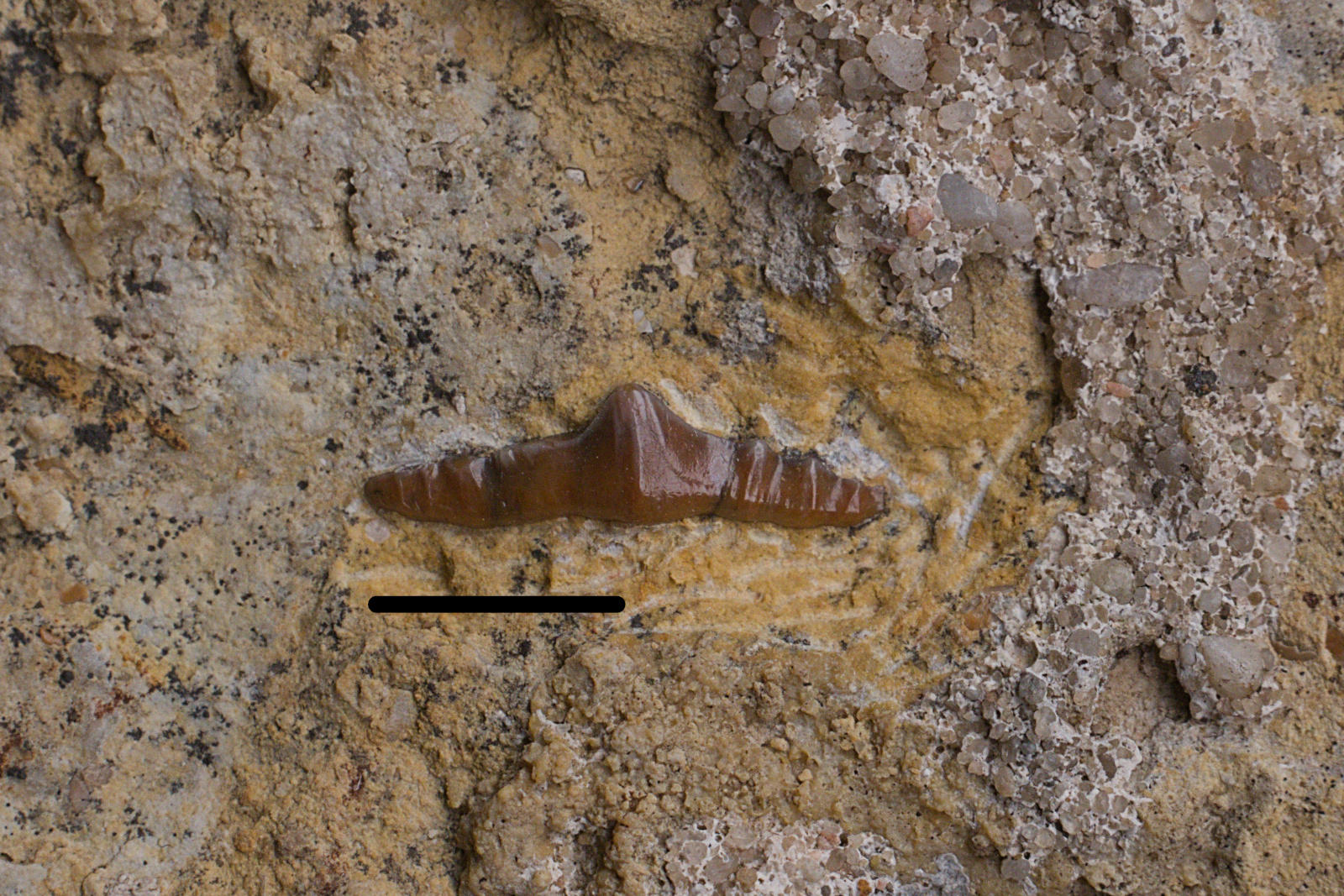
Polyacrodus sp., tooth, 9/UMK
—
Polyacrodus sp. Middle Triassic, Upper Muschelkalk (Ladinian), Upper Silesia, Poland A beautifully preserved specimen of a shark tooth crown, Polyacrodus sp., belonging to the order Hybodontiformes. My observations indicate that the teeth of these sharks are significantly less numerous in the Ladinian sediments of Upper Silesia than those of other hybodonts. This is the only…
-
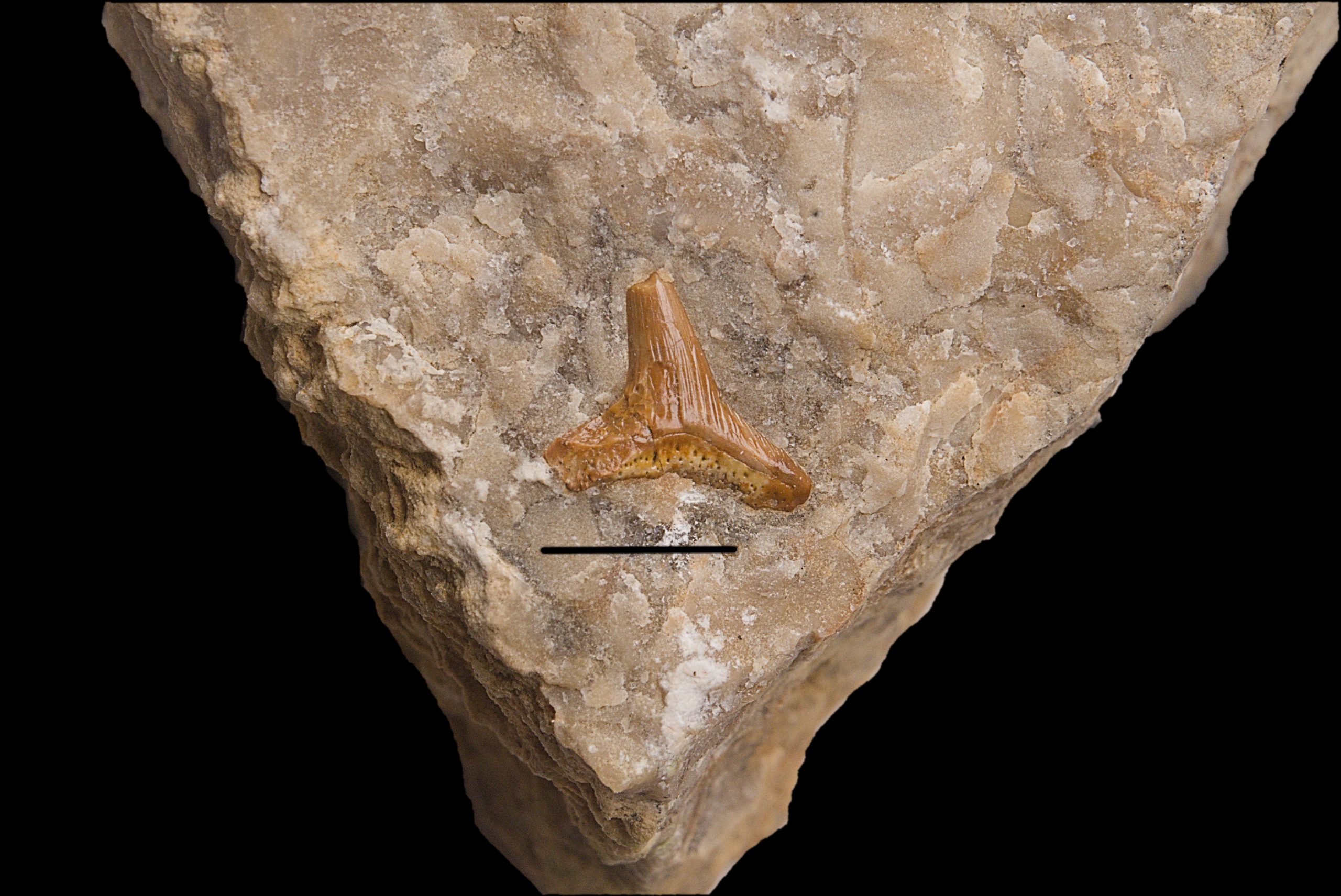
Parhybodus plicatilis, anterior tooth, 8/UMK
—
A well-preserved specimen of the anterior slender tooth of the hybodont shark Parhybodus plicatilis.
-
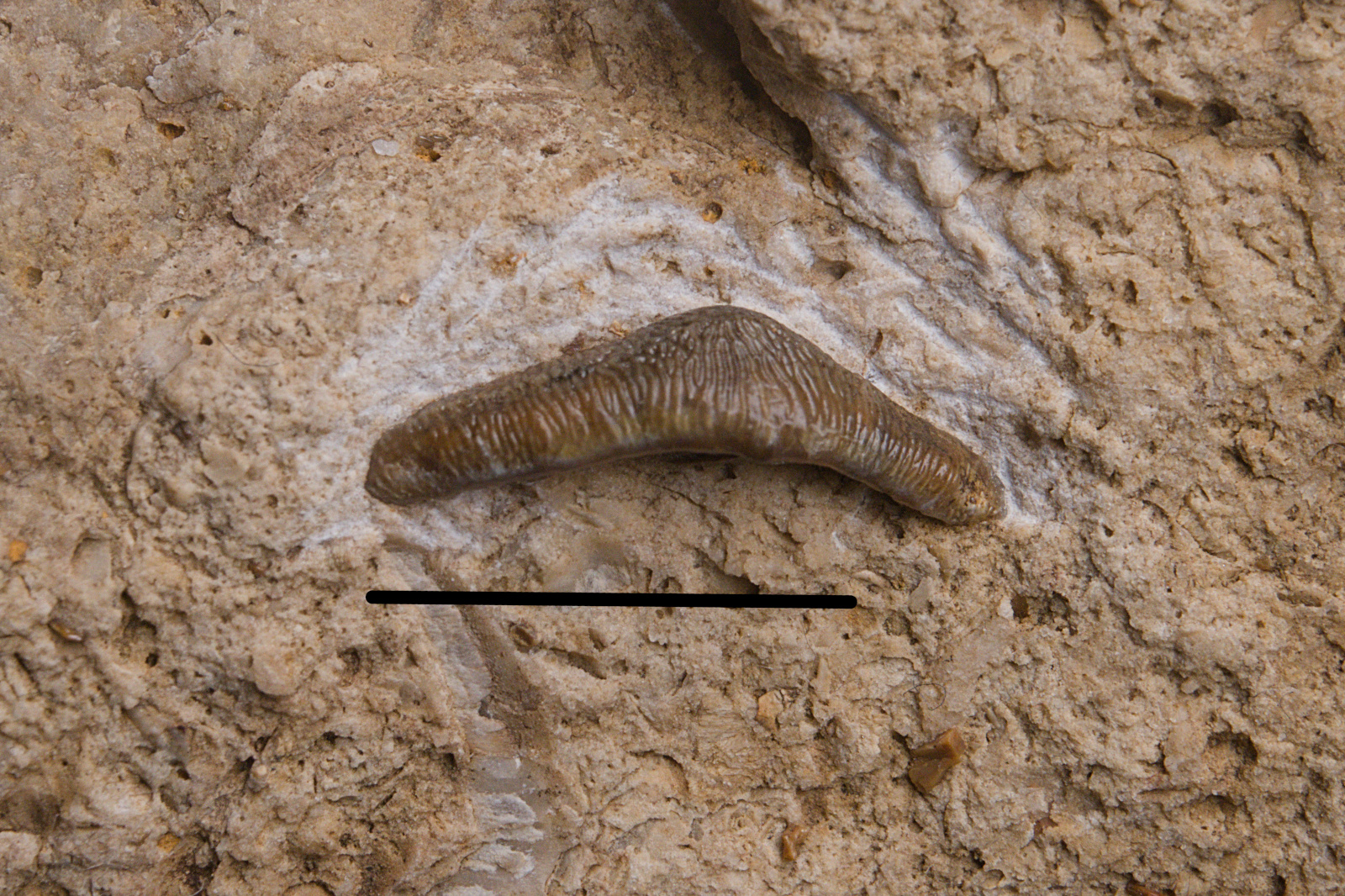
Acrodus sp, tooth, 7/UMK
—
A beautifully preserved tooth crown from Acrodus sp.. The root is missing, suggesting it was much less durable than the crown itself. In fact, these occasionally broken (though still recognizable) crowns are often the only identifiable elements in the “fishy mess” of vertebrate remains I encounter.
-
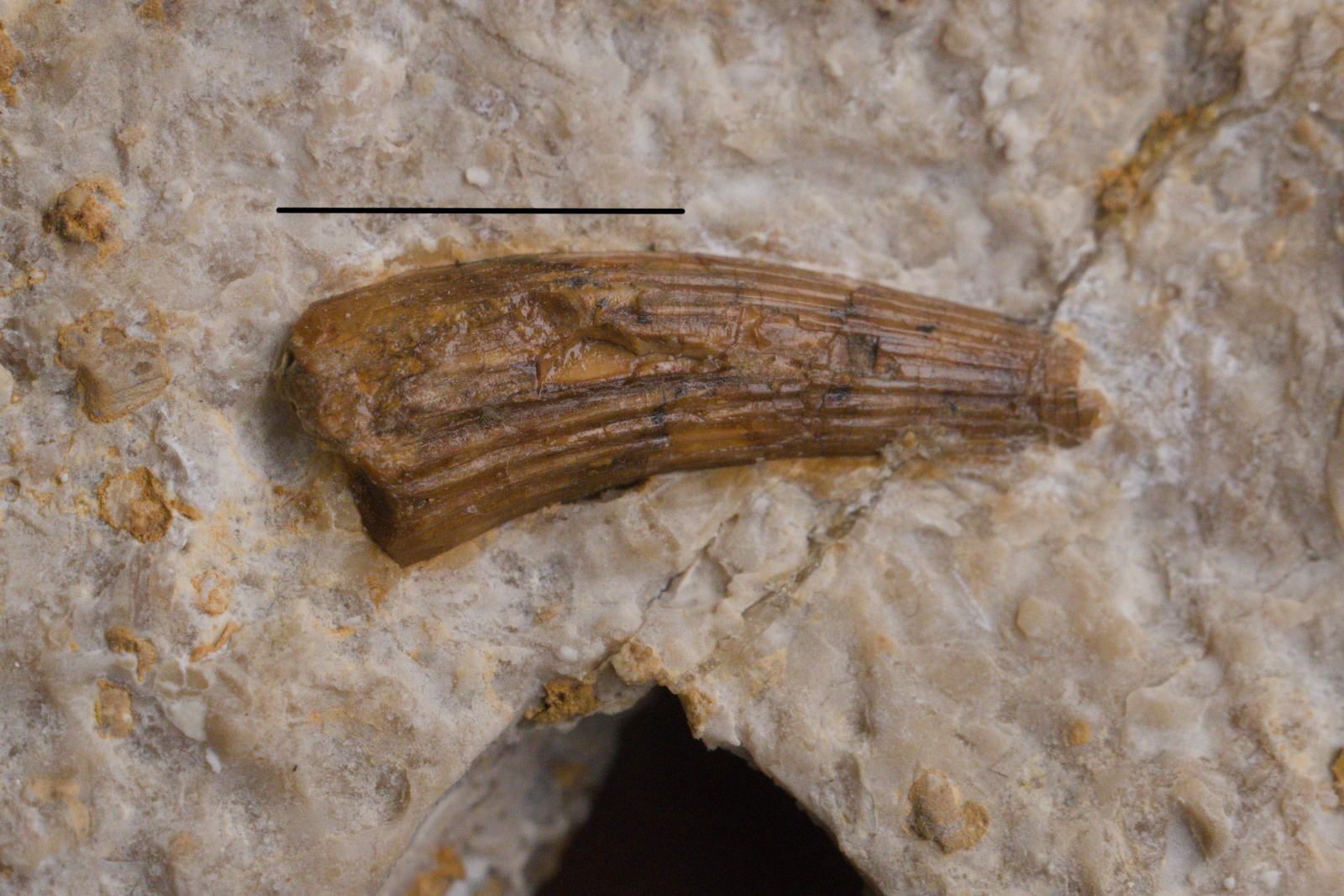
Sauropterygia cf. Nothosaurus, tooth, 5/UMK
—
Sauropterygia cf. Nothosaurus Middle Triassic, Upper Muschelkalk (Ladinian), Upper Silesia, Poland The largest Sauropterygian tooth in my collection. Unfortunately, the specimen’s preservation leaves something to be desired, especially since the apex of the tooth is missing. In any case, a tooth of this size must have belonged to a large individual. Obtaining it required considerable…
-
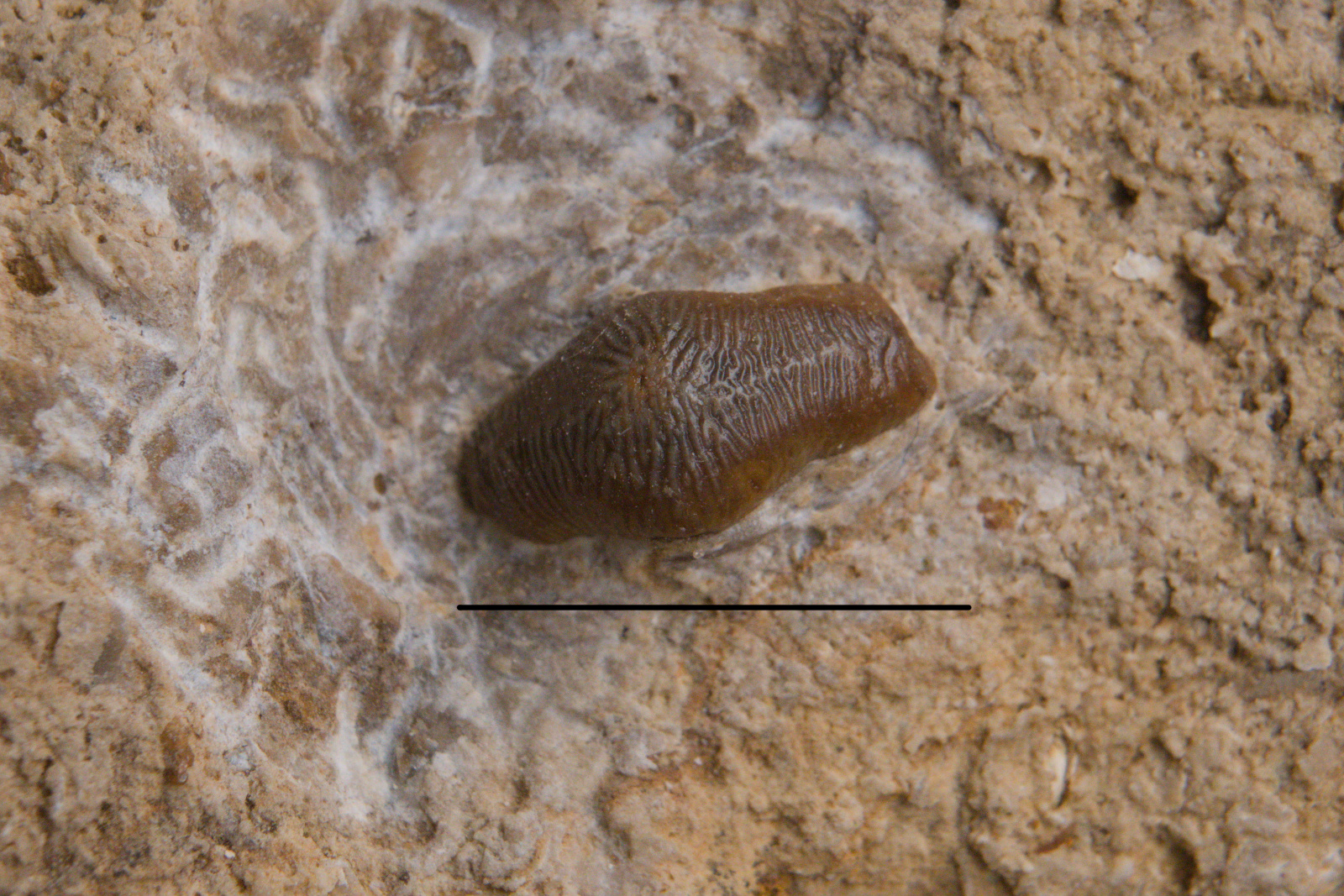
Acrodus lateralis, tooth, 4/UMK
—
Acrodus lateralis Middle Triassic, Upper Muschelkalk (Ladinian), Upper Silesia, Poland A beautifully preserved tooth crown from the hybodont shark Acrodus lateralis. The teeth of this species are smaller than those of Acrodus gaillardoti, with more refined ornamentation. The delicate, yet distinct, branching ridges converge to a keel that runs the entire length of the tooth.…
-
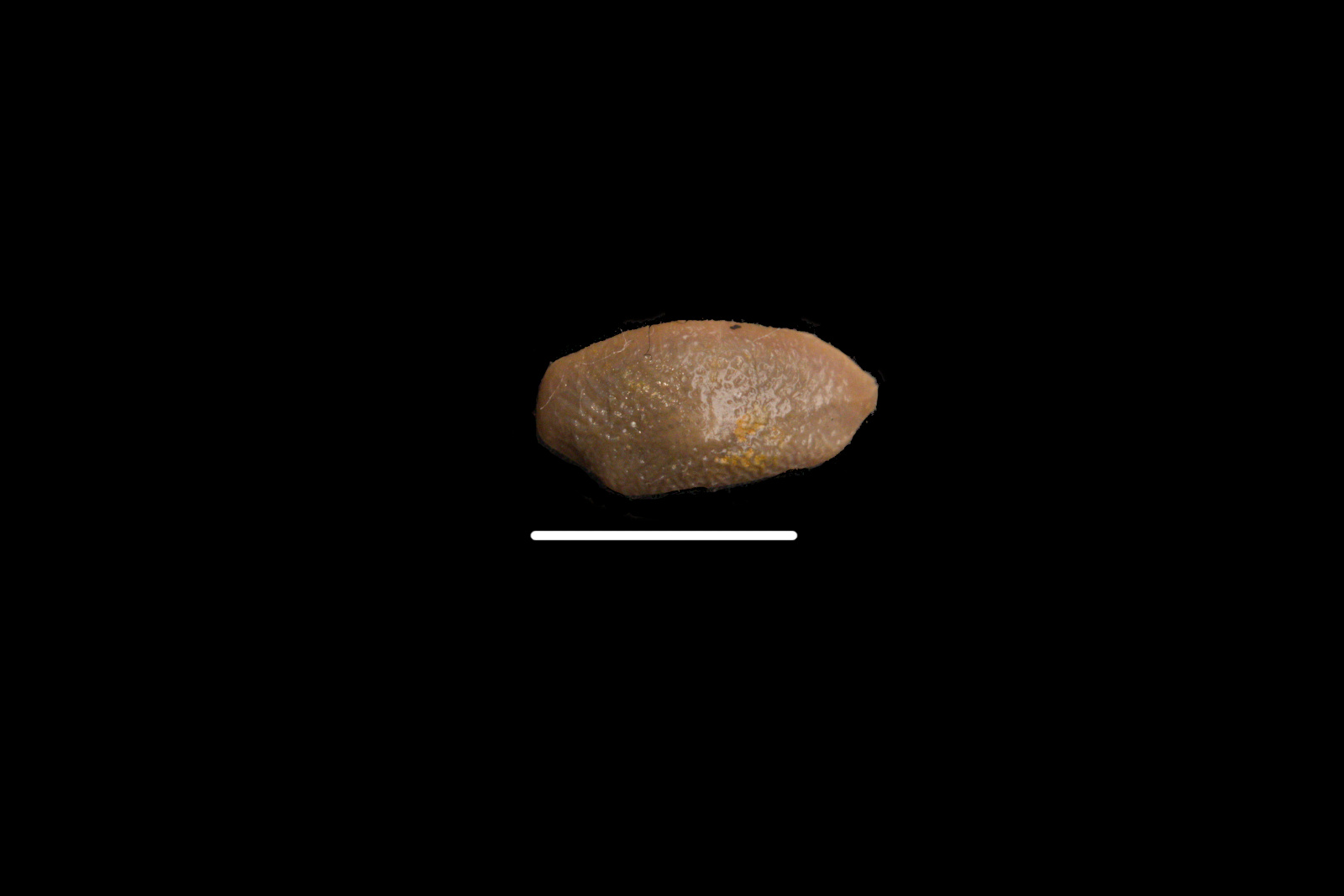
Palaeobates angustissimus, tooth, 13/LMK
—
Palaeobates angustissimus Middle Triassic, Lower Gogolin Beds, Upper Silesia, Poland A tooth from another common shark from the Middle Triassic – Palaeobates angustissimus. These teeth measure usually no more than a few millimeters. This specimen is one of the largest in my collection. Palaeobates is another durophagous shark with dentition adapted for crushing hard prey.…