
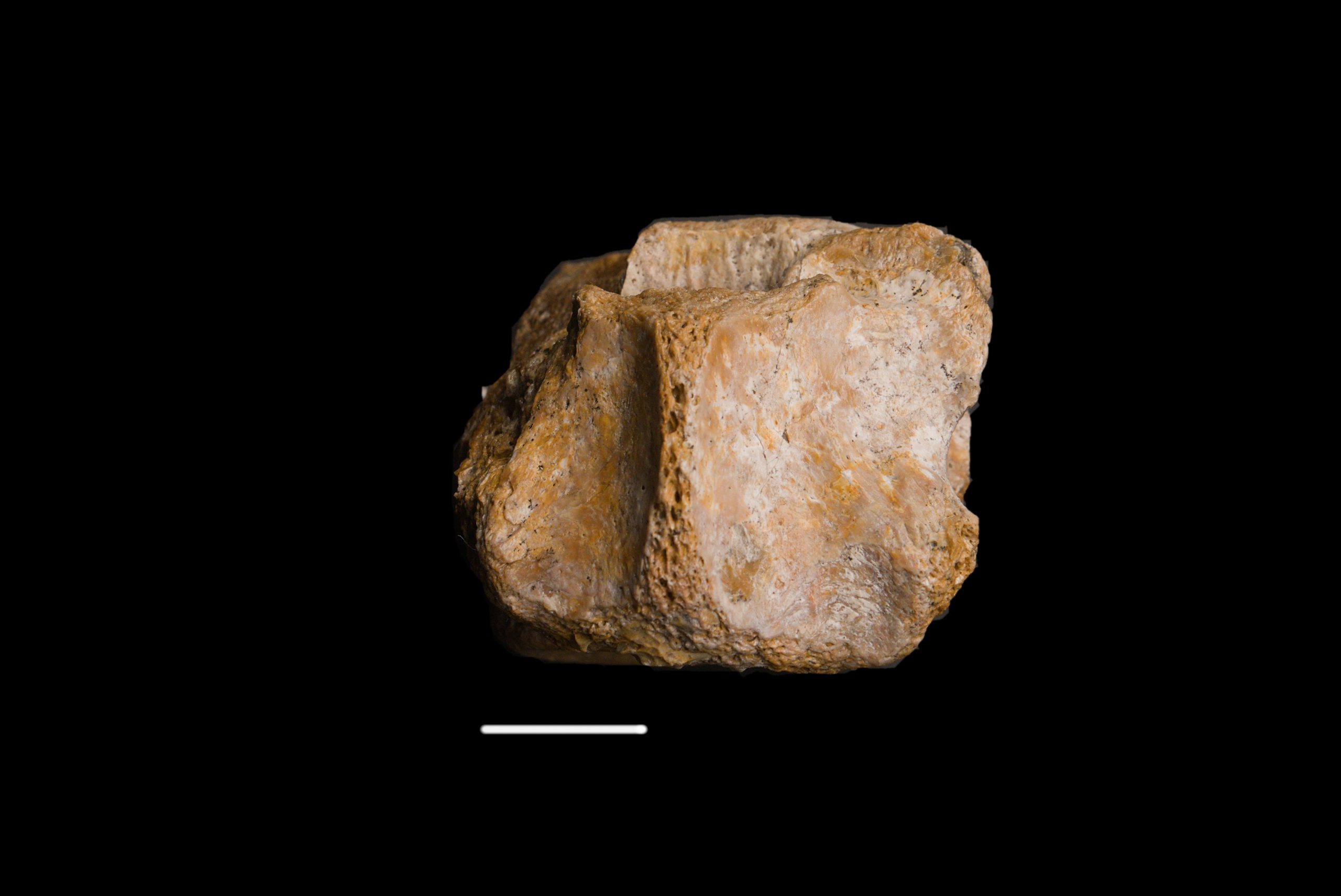
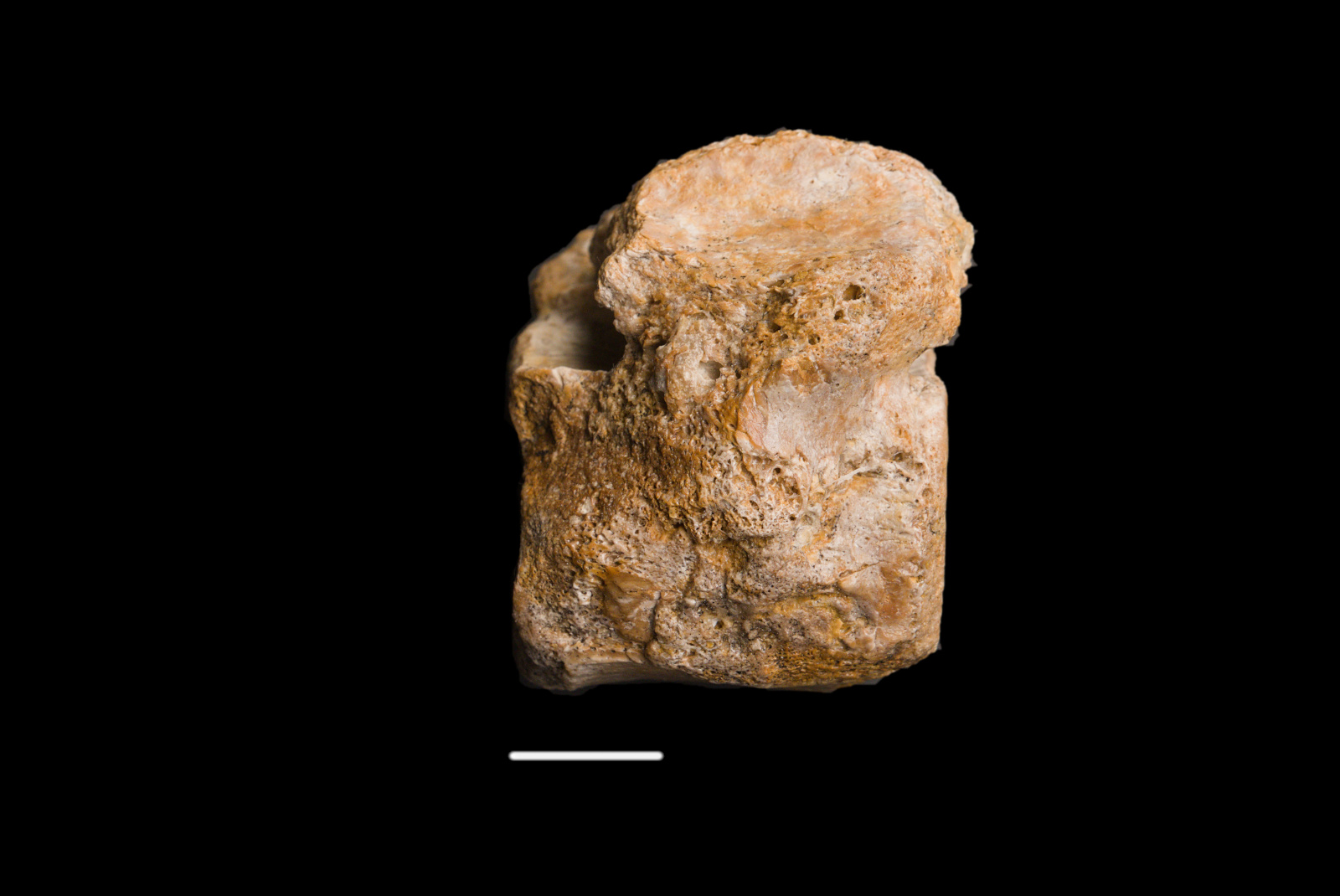
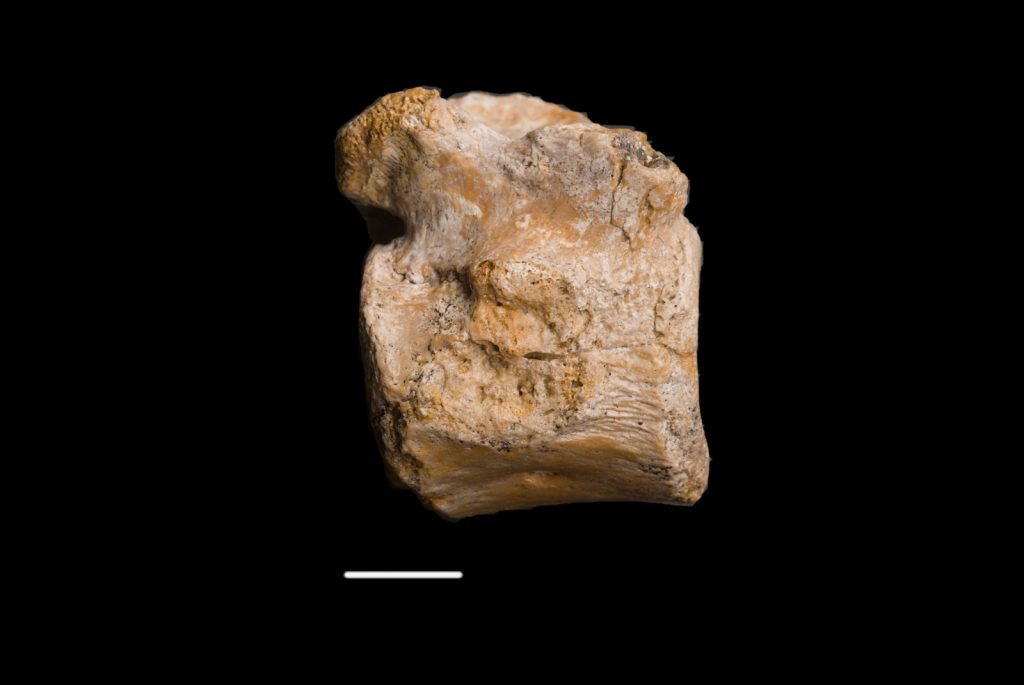
Pistosaurus longaevus
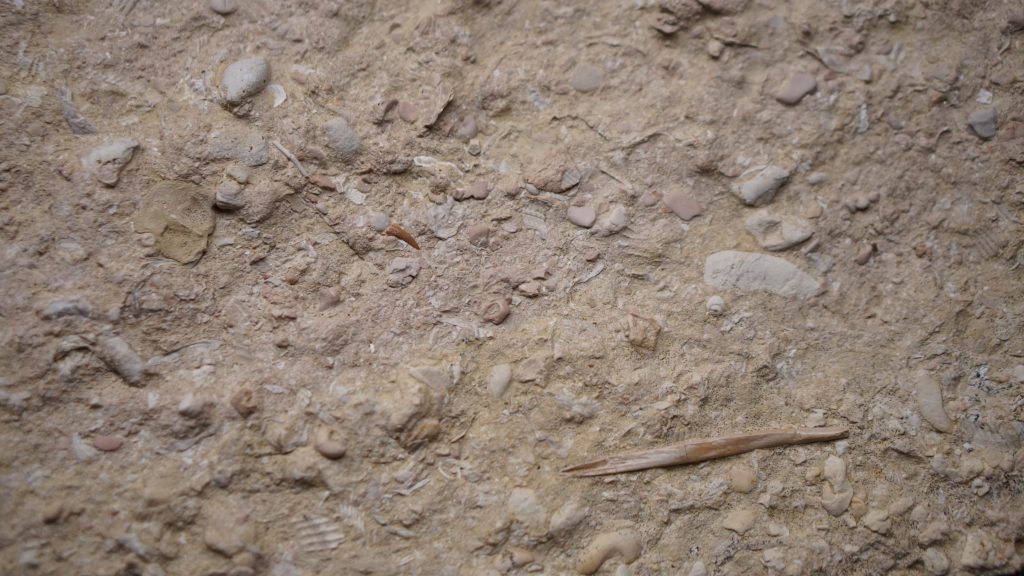
Middle Triassic, Upper Muschelkalk (Ladinian), Upper Silesia, Poland
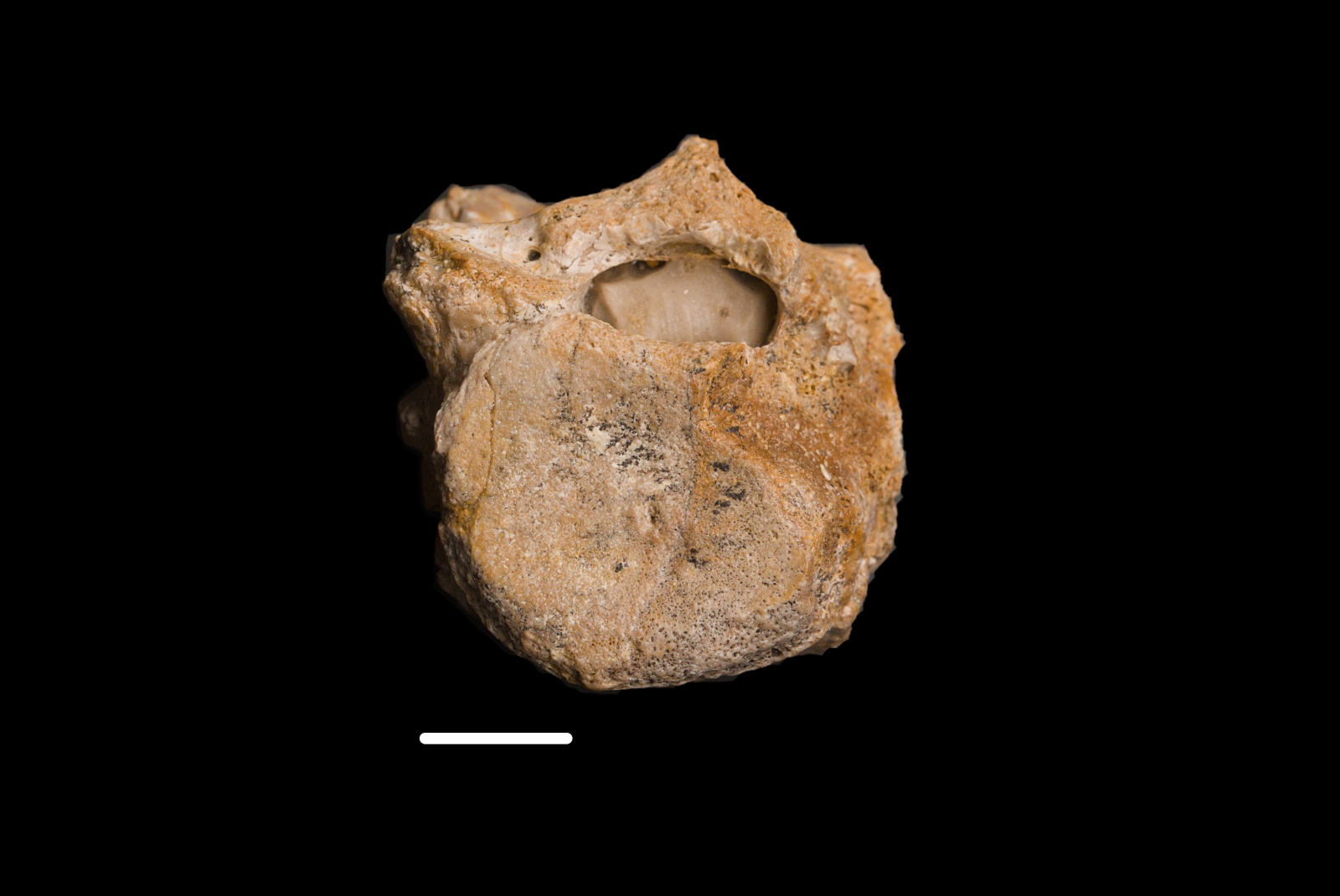
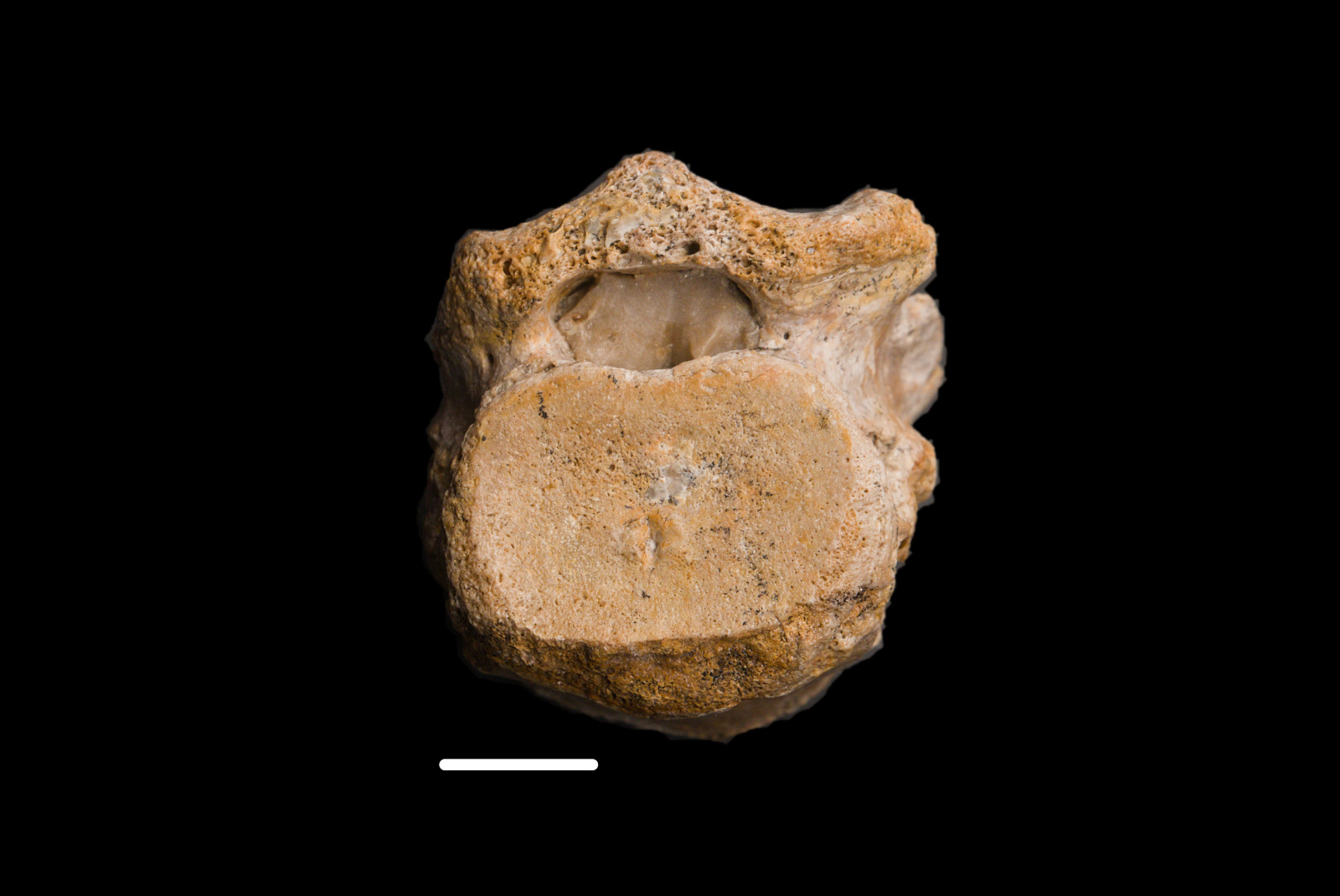
A beautiful specimen of a nearly complete vertebra of Pistosaurus longaevus. Interestingly, and extremely rarely, despite signs of mechanical erosion, the neural arch is preserved. The first two photos clearly show the neural canal filled with gray matrix.
The well-preserved articular surfaces (facets) are slightly amphicoelic – the concavity is slight. This feature indicates a significantly stiffer spine than in Nothosaurus, which is related to their mode of locomotion. Pistosaurs primarily used their limbs modified into flippers, which required a stiff spine.
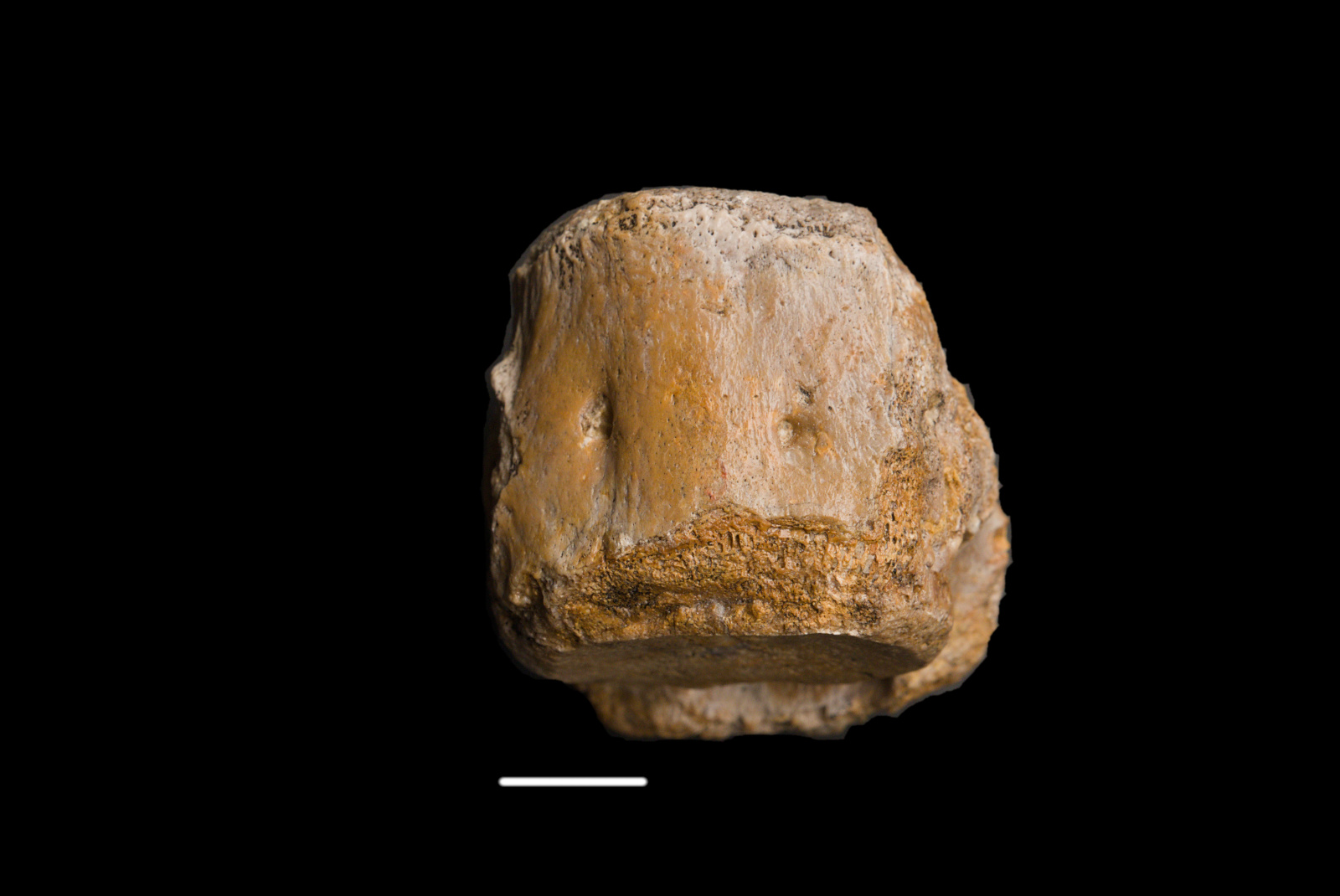
An important diagnostic feature is the foramina – openings through which blood vessels entered the vertebra. In Pistosaurus vertebrae, these are prominent and deep, forming a distinct pair on the ventral side of the vertebra (photo 3).
Leave a Reply