
“Protanystropheus antiquus“
Reptilia indet.
Dating uncertain – Upper Röt or Lower Muschelkalk (Anisian)
Upper Silesia, Poland
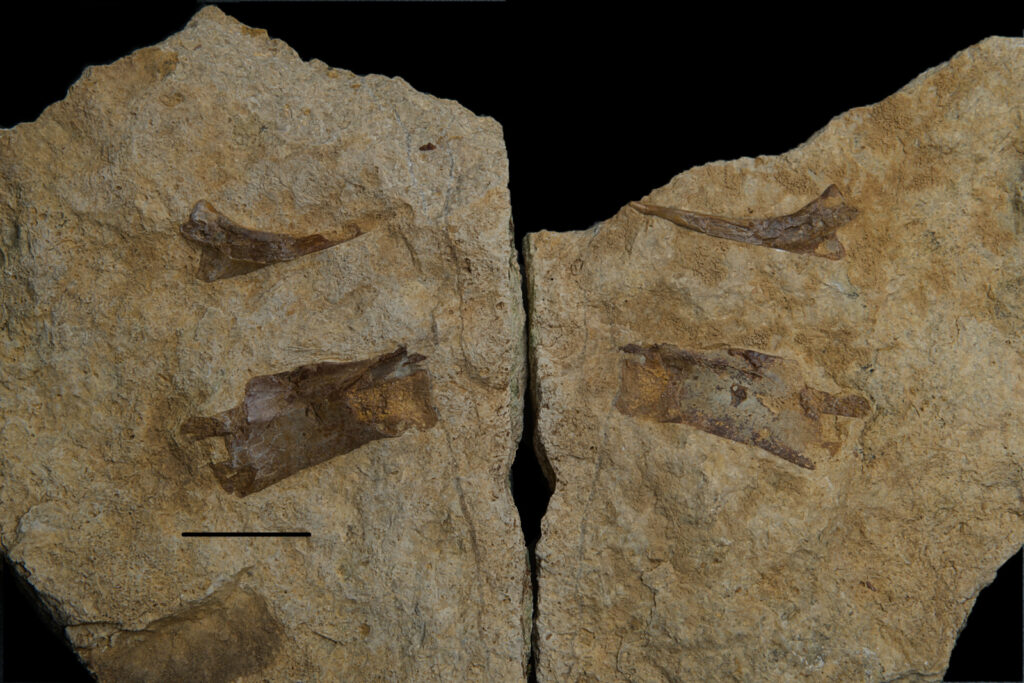
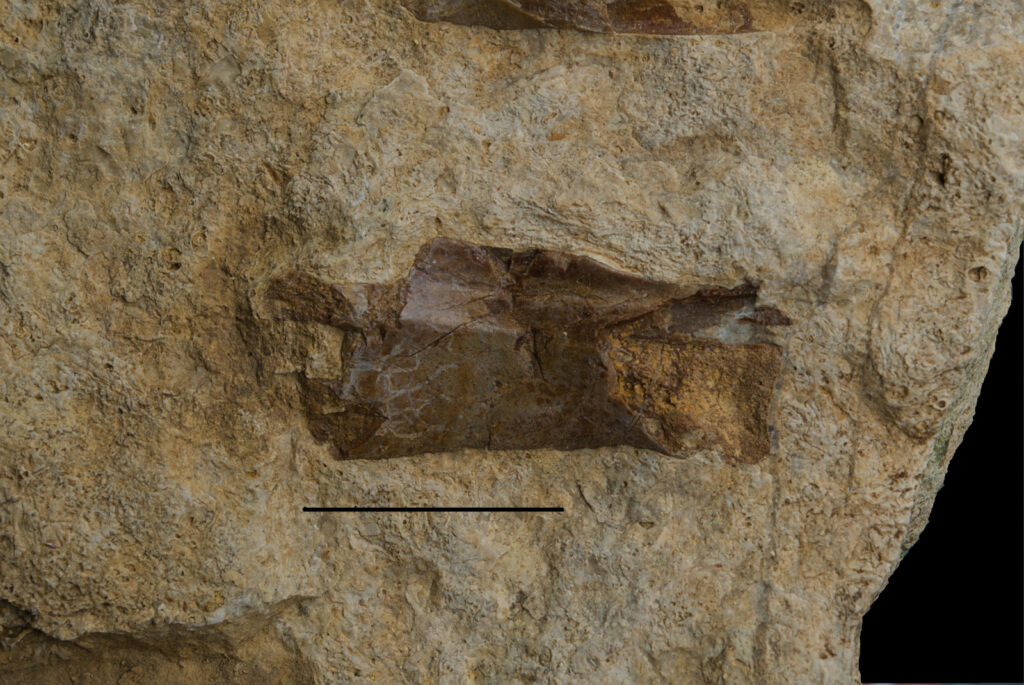
“Protanystropheus antiquus” cervical vertebra
“Protanystropheus antiquus” (“Tanystropheus antiquus“) is an extremely rare find in Lower Muschelkalk sediments, whose systematic position is still uncertain. Both P. antiquus and T. antiquus can be found in the literature (the age of this specimen is also uncertain – it is either Roethian, Lower Muschelkalk, or the boundary between the two).
Tanystropheids are among the major “oddities” of the Triassic. They are characterized by extremely long necks, but instead of increasing the number of cervical vertebrae, nature chose to elongate them. Regardless of whether Protanystropheus antiquus is classified as a tanystropheid or a trachelosaurid, they share this trait with their later relatives, albeit to a less extreme extent.
As can be seen in the second photo, the vertebral length-to-diameter ratio is quite unusual. The vertebra is seen in lateral view, with the anterior portion of the vertebra directed to the right. The process visible on the left is the postzygapophysis, while the prezygapophysis on the right is much less prominent. The low ridge visible at the top of the vertebra is the neural spine. Considering these features and the length-to-diameter ratio, we are dealing with a complete cervical vertebra.
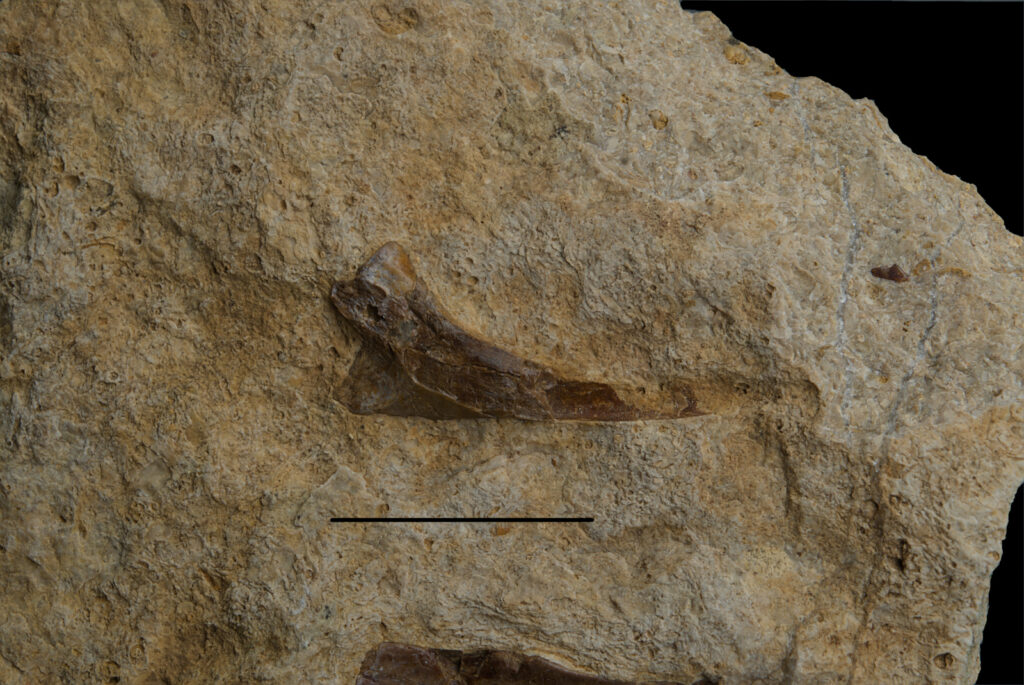
Reptilia indet. cervical rib
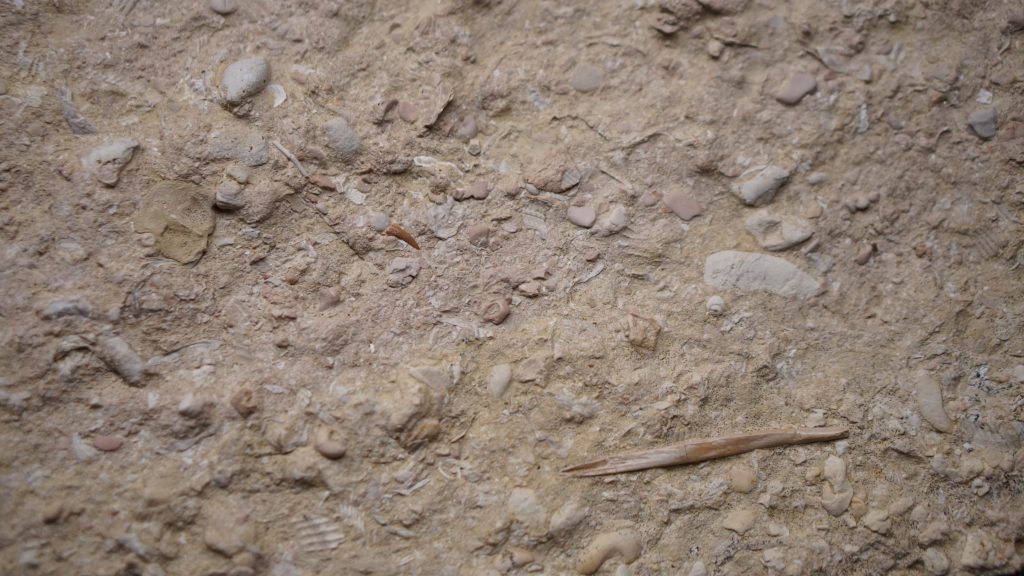
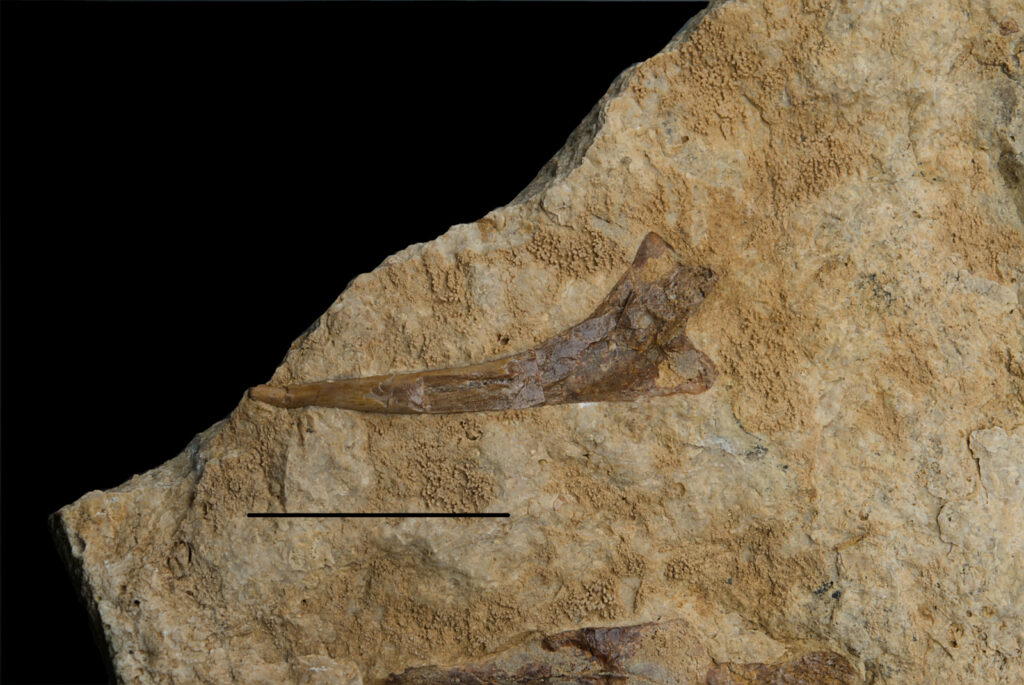
Although we do not have a complete skeleton of P. antiquus, we can almost certainly state that the associated cervical rib did not belong to this individual (or even the genus). Cervical ribs attributed to “Tanystropheus antiquus” typically possess a significantly longer, needle-like shaft, similar to those of their later relatives.
This rib is short and more reminiscent of those belonging to typical sauropterygians. Although preserved in two pieces, the specimen displays all the characteristic features of a cervical rib of those animals: a robust proximal portion where the head is divided into two distinct articulated surfaces (dichocephalous).
Association with P. antiquus vertebra is a coincidence and the result of sorting bones on the seabed.
ps. I decided to publish photos before the specimens were prepared, as they will be transferred to the Polish Academy of Sciences (PAN) collection, where they will be handled by professionals. I was promised photos after cleaning, so an update will likely appear at some point.
Reference:
N. F. Spiekman, S., Bleeker, R., Dorst, M., de Haan, R., Winkelhorst, H., & F. A.E. Voeten, D. (2019). Tanystropheids from the Winterswijk quarry—Rare but recurring elements. Staringia, 16(1), 208–215.
Sennikov, A. (2011). New Tanystropheids (Reptilia: Archosauromorpha) from the Triassic of Europe. Paleontological Journal, 45, 90–104. https://doi.org/10.1134/S0031030111010151
T. Skawiński, M. Ziegler , T. Czepiński, M. Szermański, M. Tałanda, D. Surmik & G. Niedźwiedzki (2017).A re-evaluation of the historical ‘dinosaur’ remains from the Middle-Upper Triassic of Poland. Historical Biology 29(4): 442-472
Rytel, A., Surmik, D., Szczygielski, T., Spiekman, S., Zuber, M., van de Kamp, T., & Scheyer, T. (2024). Unique internal anatomy of vertebrae as a key factor for neck elongation in Triassic archosauromorphs. Zoological Journal of the Linnean Society, 202. https://doi.org/10.1093/zoolinnean/zlae126
Leave a Reply