
Pistosaurus cf. longaevus
Middle Triassic, Upper Muschelkalk (Ladinian), Upper Silesia, Poland
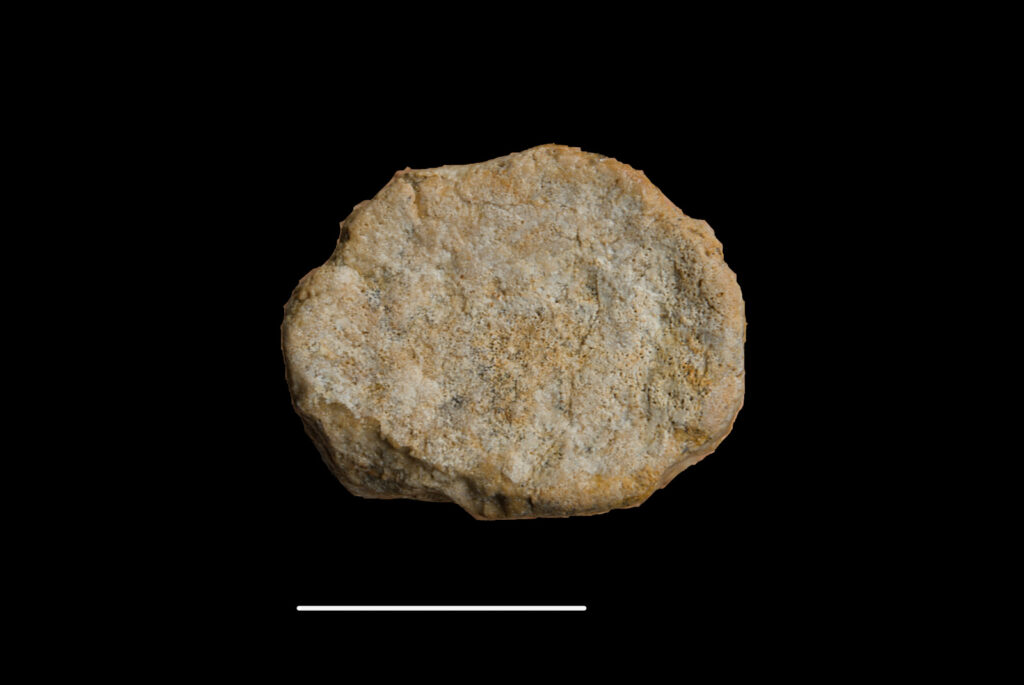
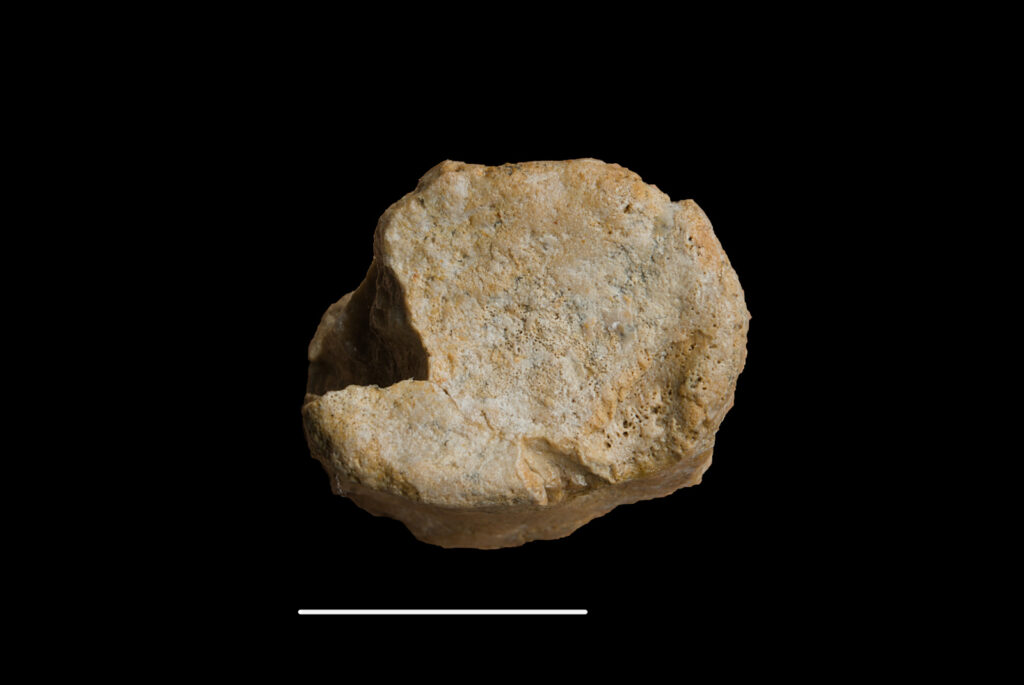
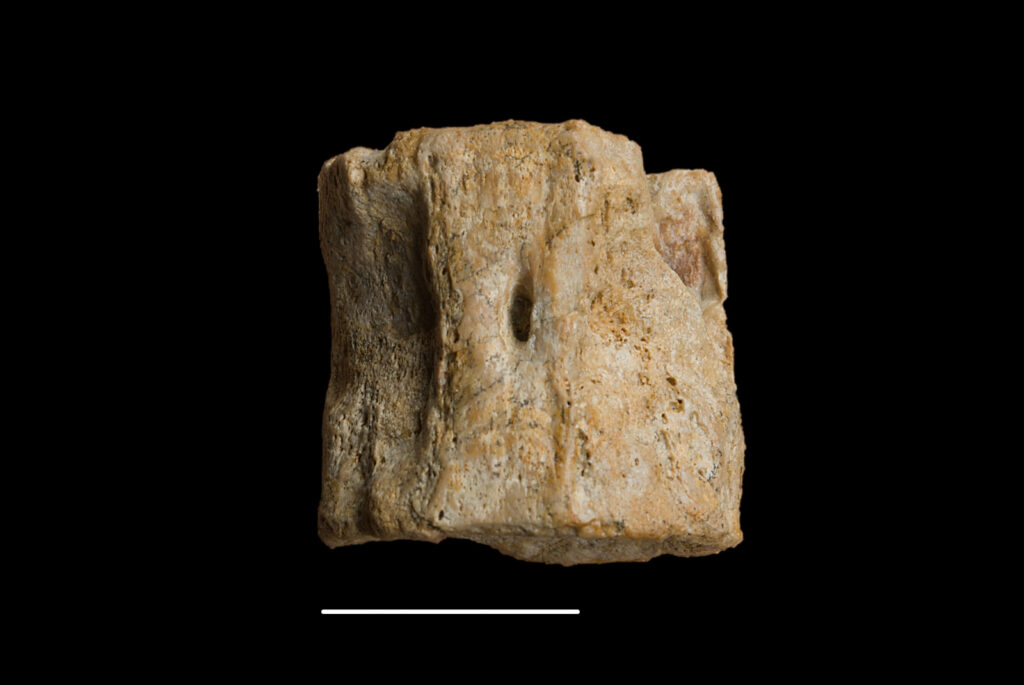
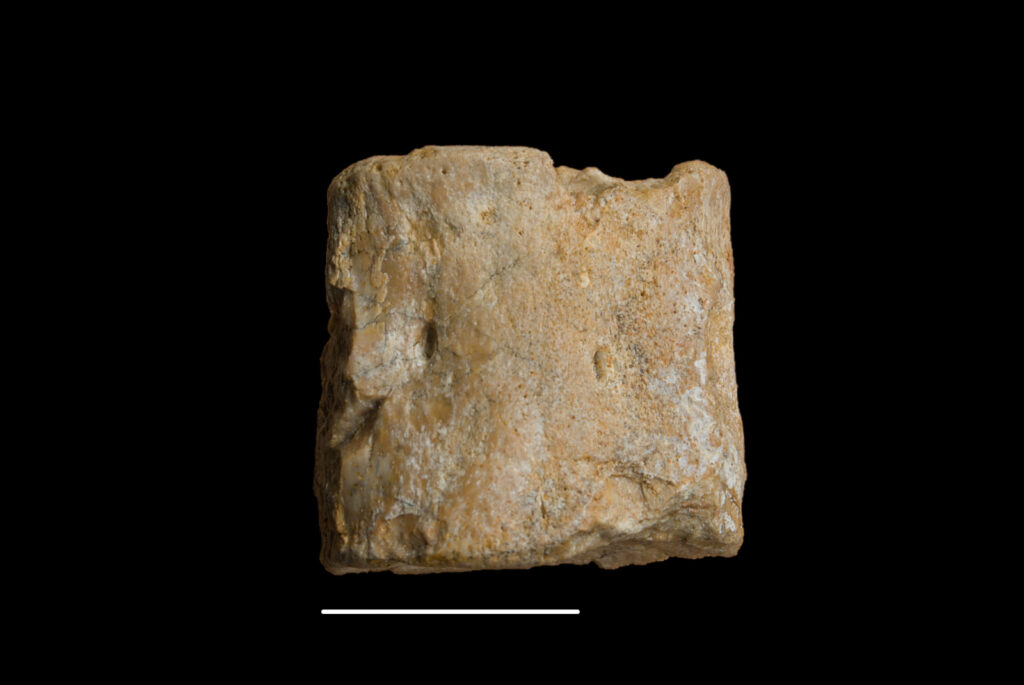
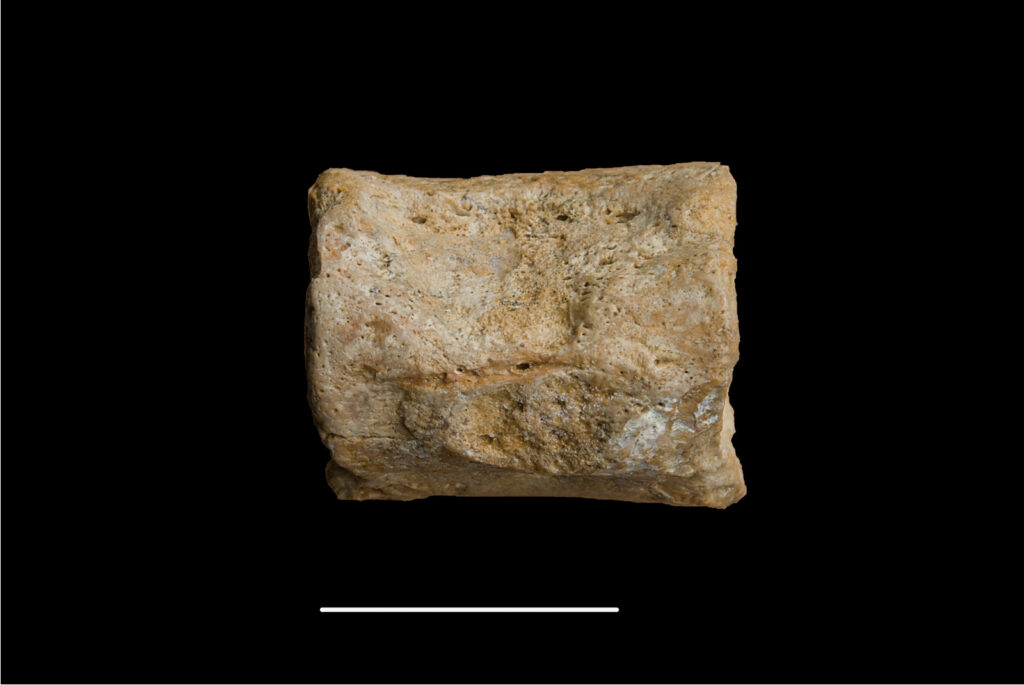
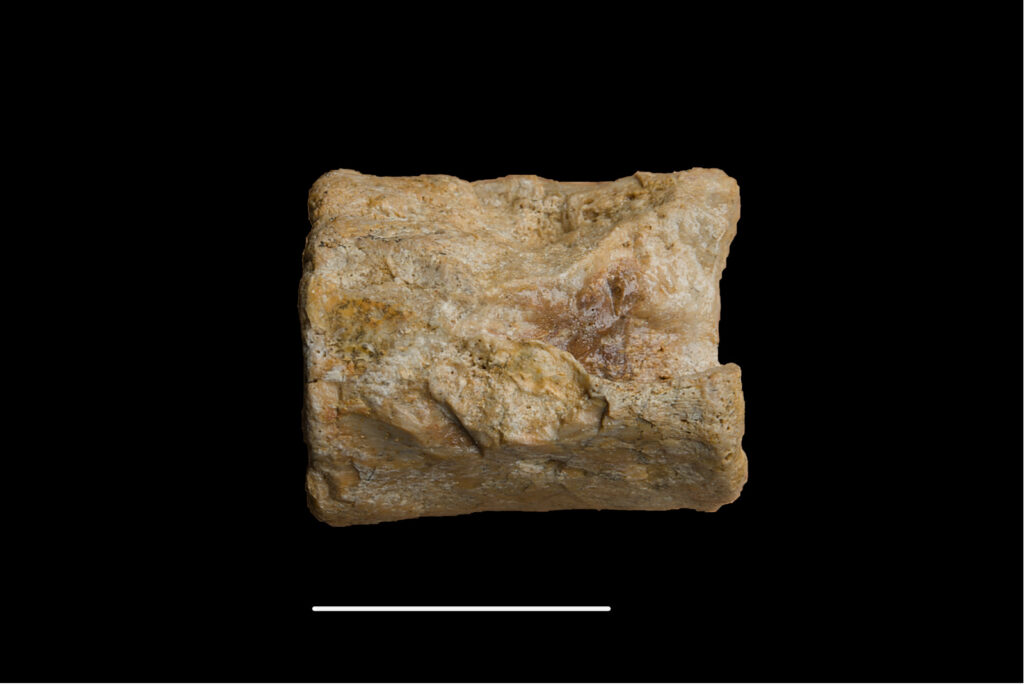
Isolated vertebra centrum of Pistosaurus cf. longaevus. Despite abrasion and incompleteness (the neural arch is missing), the specimen’s features allow for a number of conclusions.
The centrum is flattened. In dorsal view, the articulation surfaces (pedicular facets) of the missing arch are visible as depressions on the sides of the neural canal floor. A distinct nutritive foramen is visible in the center of the neural canal floor.
In ventral view, the centrum displays symmetrical foramina subcentralia – a diagnostic feature of Pistosaurus.
On the lateral surfaces, close to the ventral margin, remnants of the parapophyses (to which the cervical ribs were attached) are preserved.
The specimen is most likely an anterior cervical vertebra (cf. Diedrich, 2013, fig. 11A-B).
Reference:
Diedrich, C. (2013). The earliest “subaquatic flying” reptile—Pistosaurus longaevus Meyer 1839 (Sauropterygia)—From the Middle Triassic of the Germanic Basin of Central Europe. – New Mexico Museum of Natural History and Science, 61, 169-215.
Leave a Reply