
Acrodus sp.
Middle Triassic, Upper Muschelkalk (Ladinian), Upper Silesia, Poland
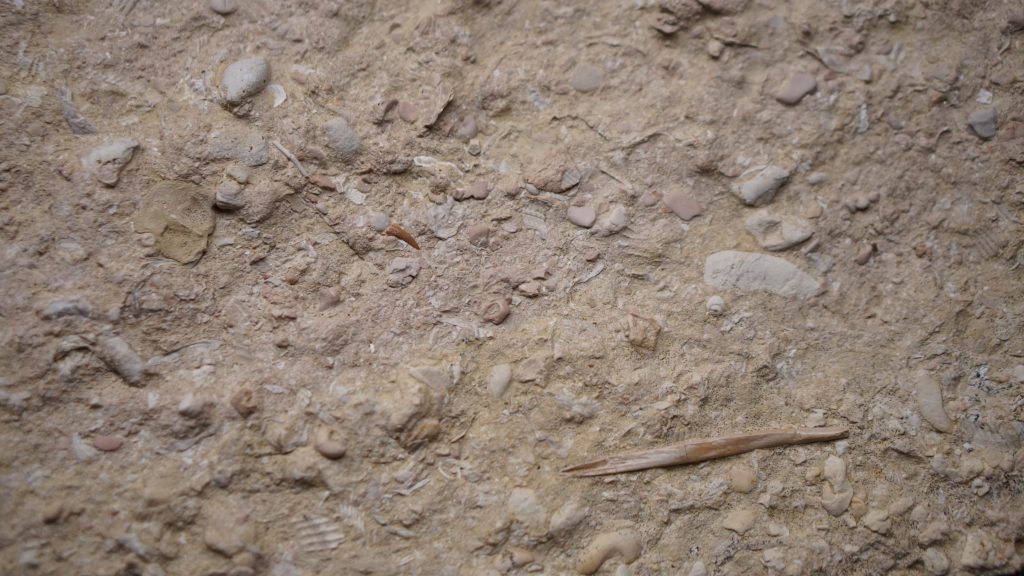
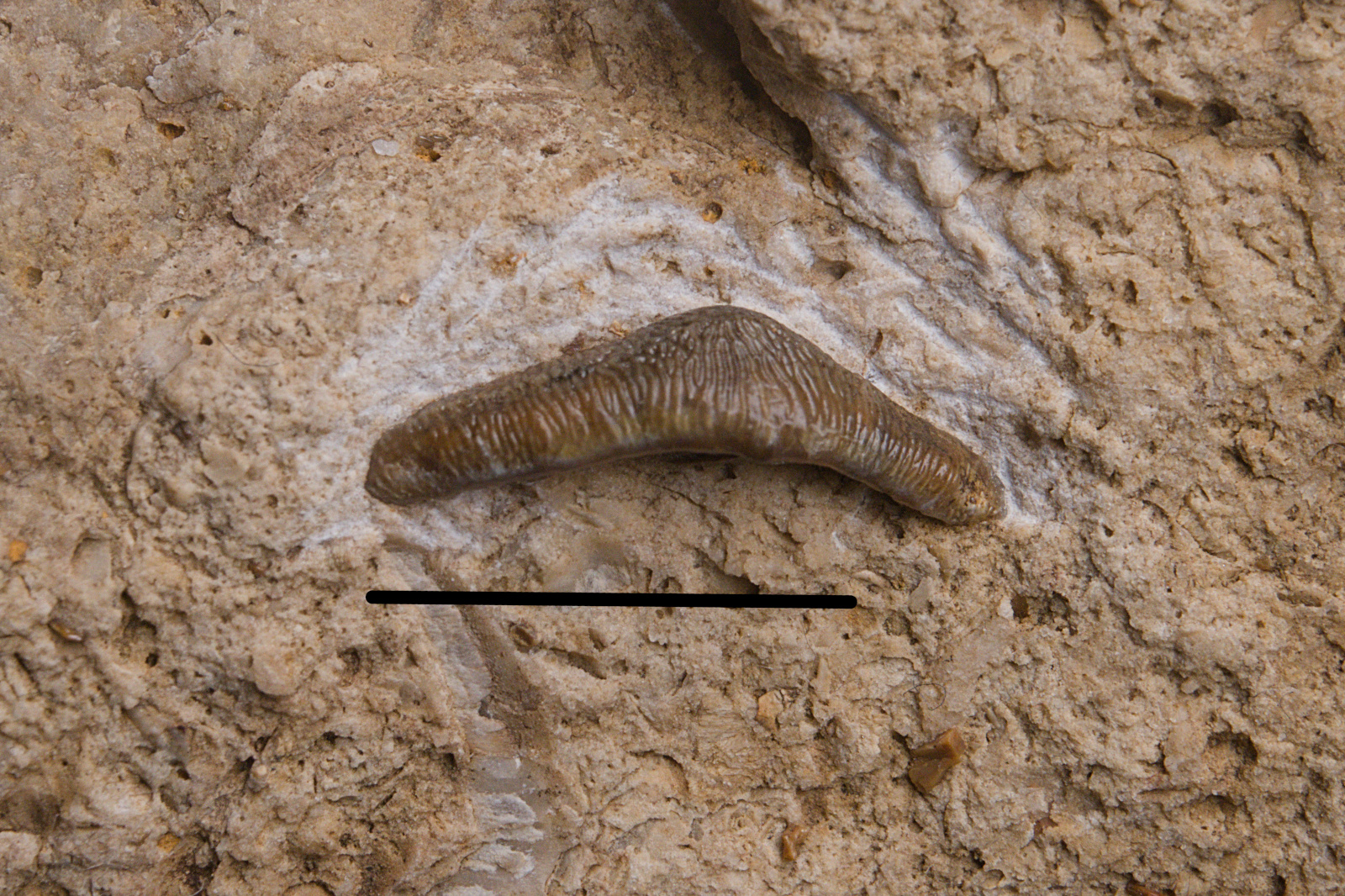
A beautifully preserved tooth crown from Acrodus sp.. The root is missing, suggesting it was much less durable than the crown itself. In fact, these occasionally broken (though still recognizable) crowns are often the only identifiable elements in the “fishy mess” of vertebrate remains I encounter.
The specimen did not require preparation. I removed some of the surrounding matrix to enhance the contrast.
For a long time, distinguishing the ornamentation of Acrodus lateralis from Acrodus gaillardoti has been a challenge for me, and I’m sure I still make occasional mistakes. However, the general diagnostic features are as follows:
Acrodus gaillardoti: The teeth are usually larger (over 15 mm long). A prominent longitudinal ridge is visible at the top, from which radiating striae radiate, forming a ladder-like pattern.
Acrodus lateralis: The teeth are usually smaller. The striae run from the base and converge towards the apex, forming a more radiating pattern.
In this case I’m not sure – ornamentation looks a bit like A. lateralis, size and shape more like A. gaillardoti.
In addition to these characteristics, morphological variation in the teeth must be considered. Acrodus was heterodont, meaning that the shape and size of its teeth varied significantly depending on their position in the jaw. This, of course, makes identification even more challenging.
Leave a Reply