
Category: Vertebrae
-

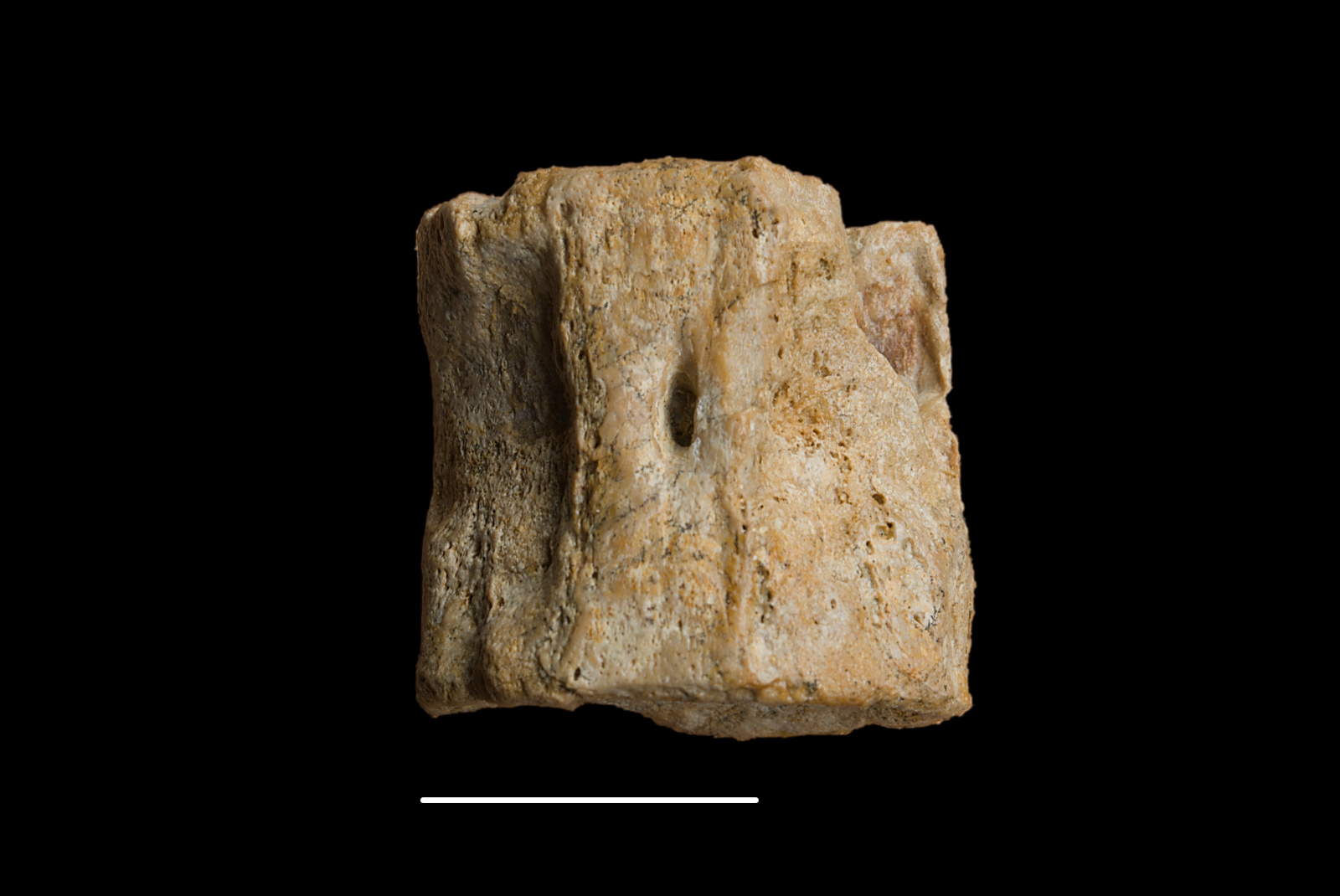
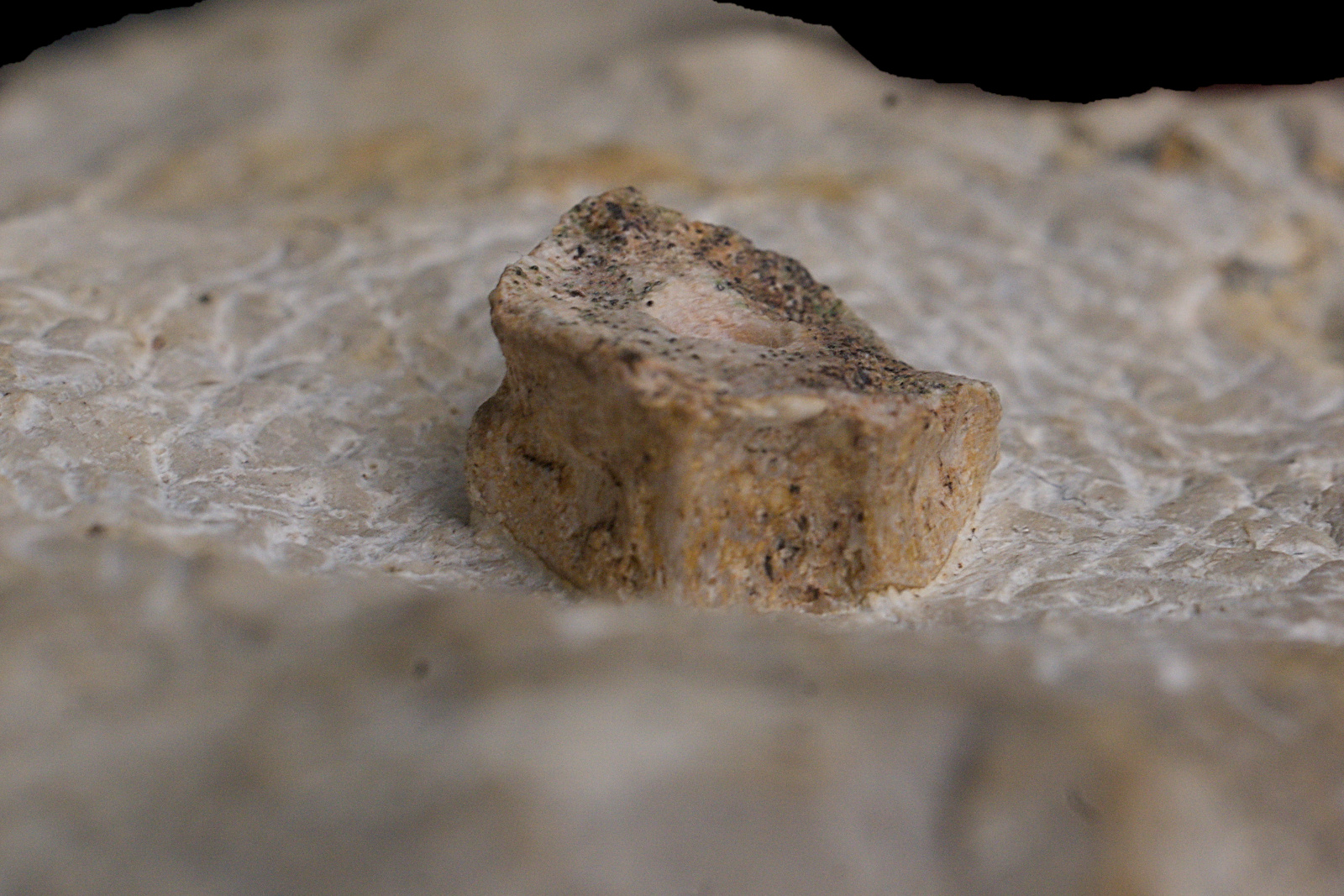
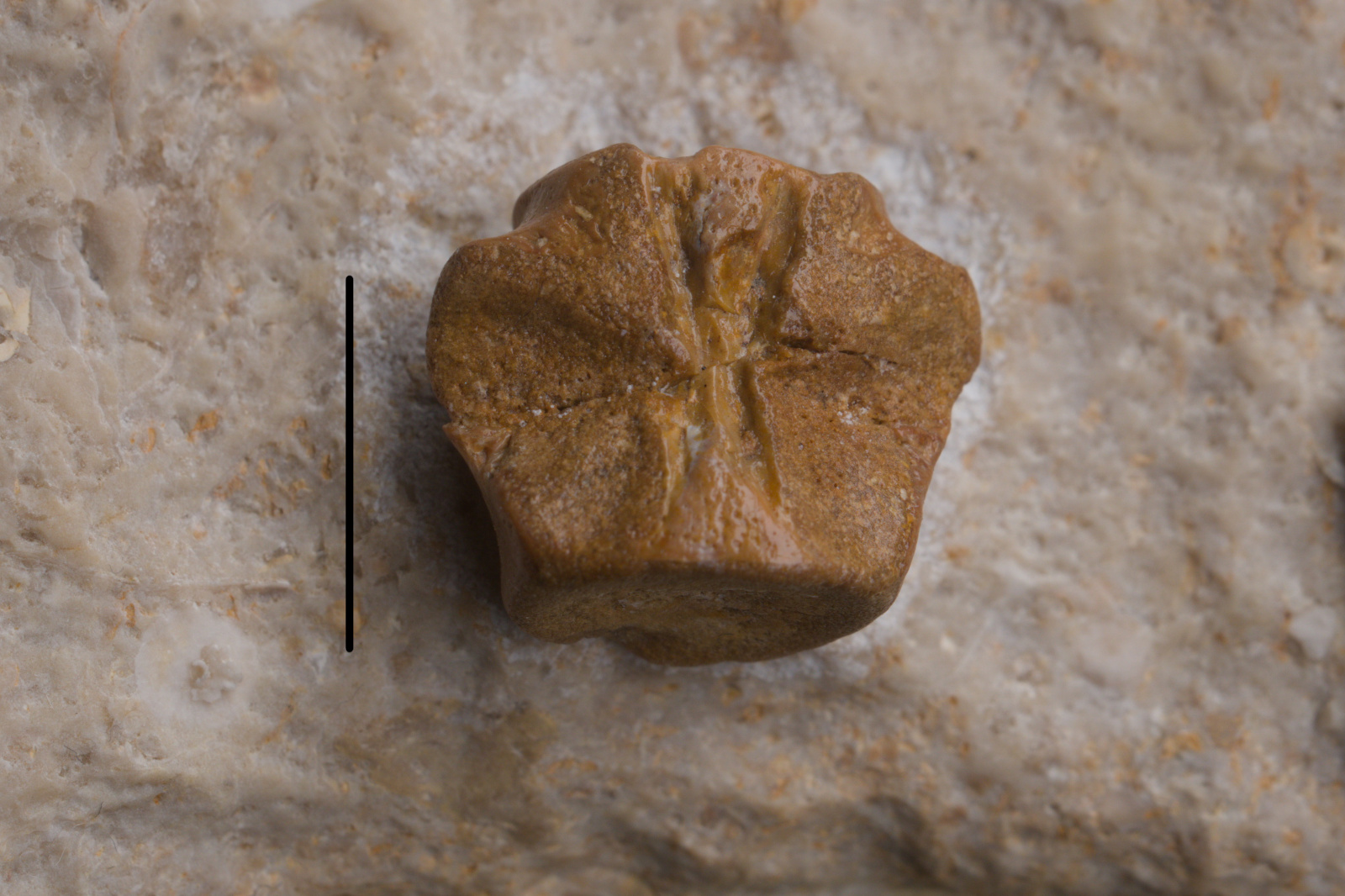
Pistosaurus longaevus, cervical vertebra centrum, 10/UMK
Pistosaurus longaevus Middle Triassic, Upper Muschelkalk (Ladinian), Upper Silesia, Poland Isolated vertebra centrum of Pistosaurus longaevus. Despite abrasion and incompleteness (the neural arch is missing), the specimen’s features allow for a number of conclusions. The centrum is flattened. In dorsal view, the articulation surfaces (pedicular facets) of the missing arch are visible as depressions on…
-
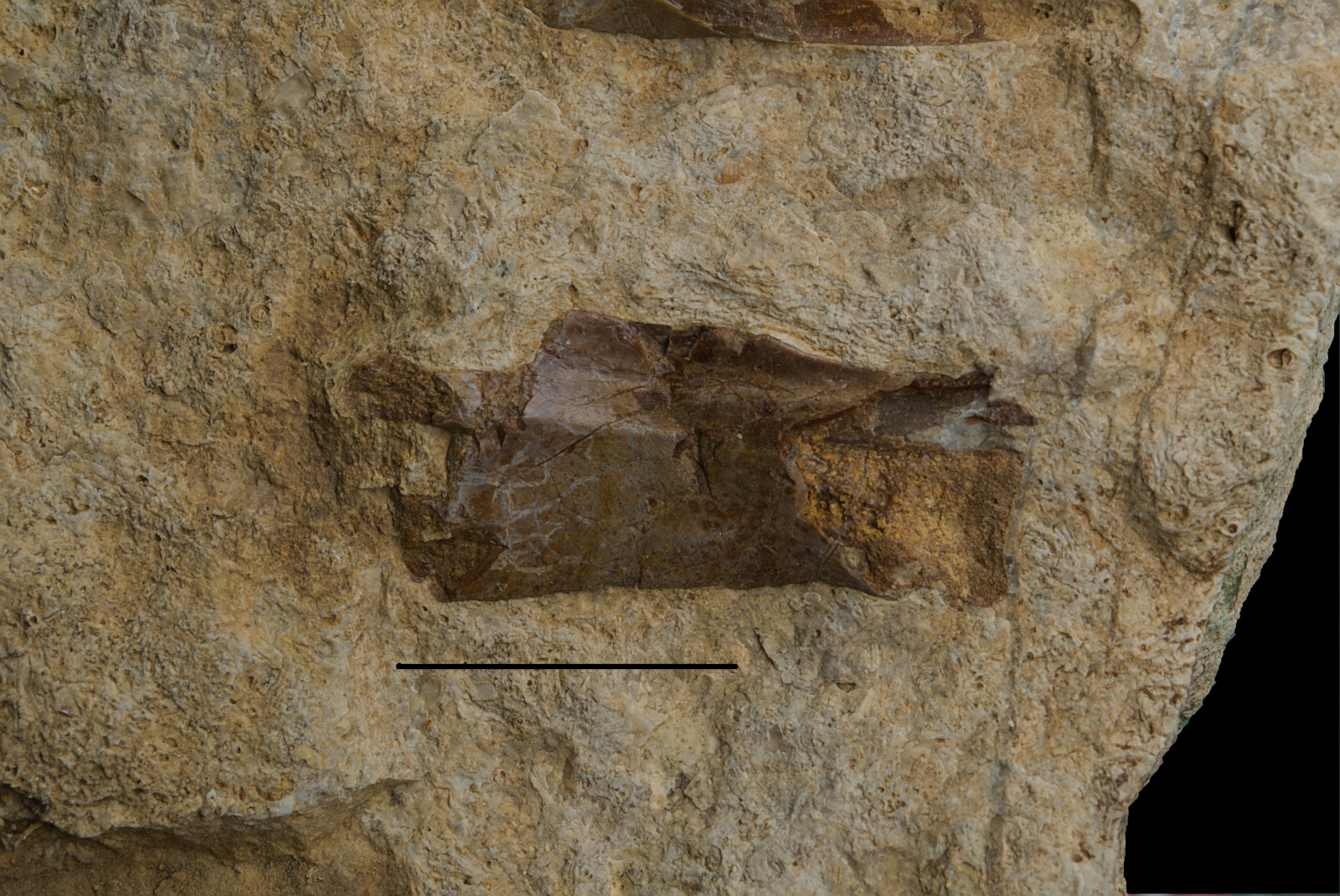
Protanystropheus antiquus cervical vertebra assoc. Reptilia indet. cervical rib, 20/LMK?
Protanystropheus antiquus (“Tanystropheus antiquus”) is an extremely rare find in Lower Muschelkalk sediments, whose systematic position is still uncertain.
-
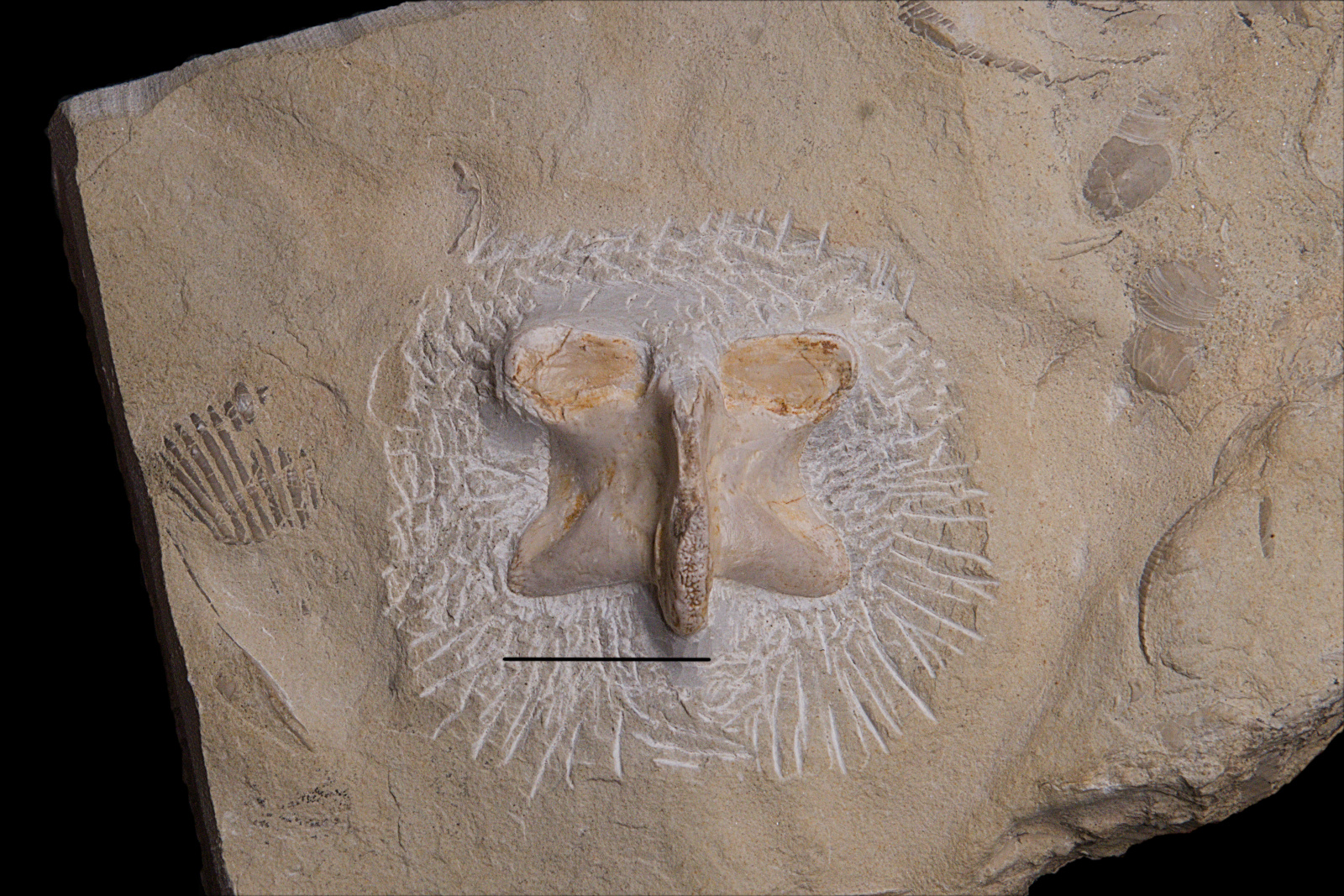
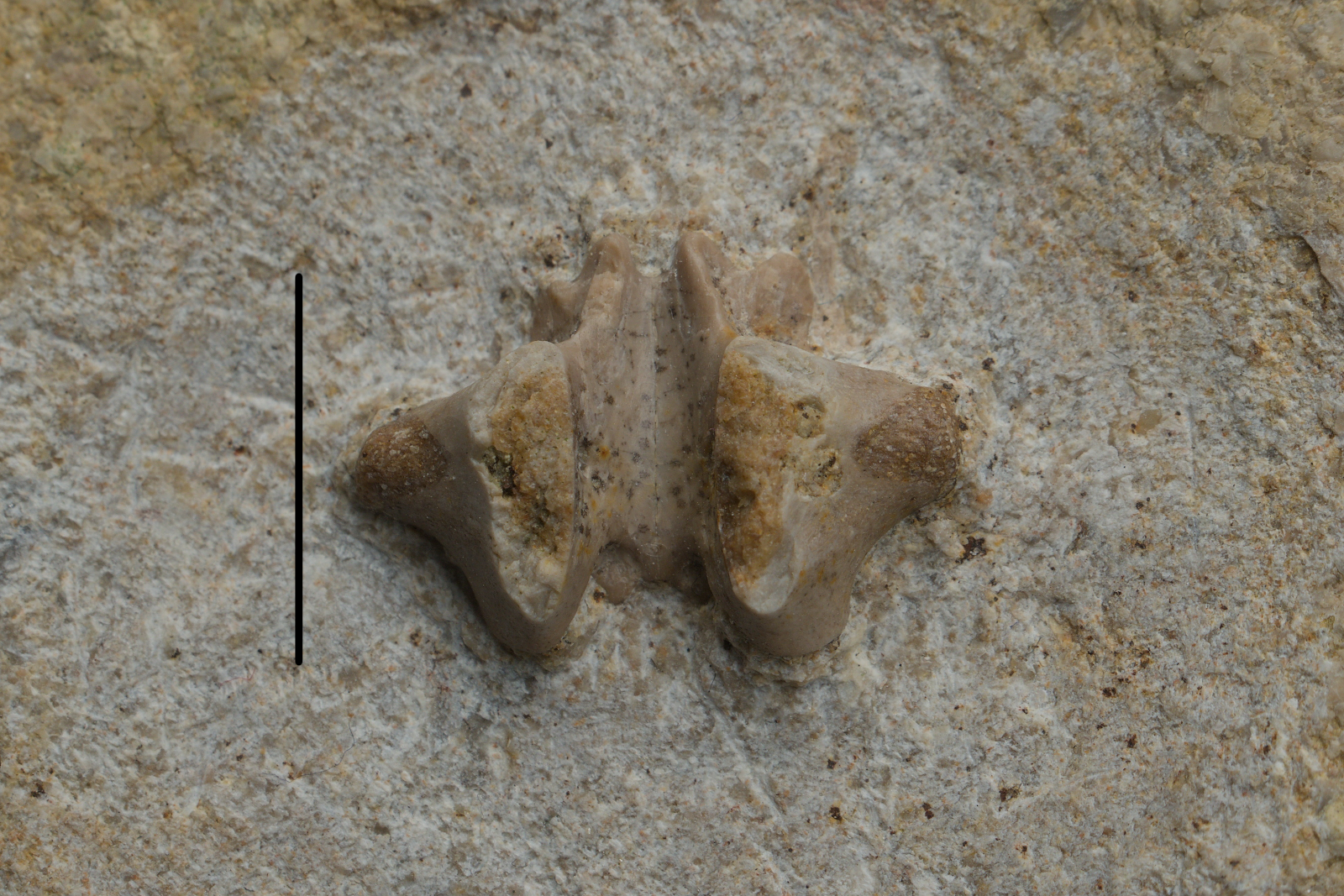
Nothosaurus sp., vertebral neural arch, 17/LMK
Nothosaurus sp. Neural arch. Gogolin Beds. Upper Silesia. Poland – The specimen is a beautifully preserved neural arch (in dorsal view). Considering its shape and size, it can be fairly safely assigned to the genus Nothosaurus.
-
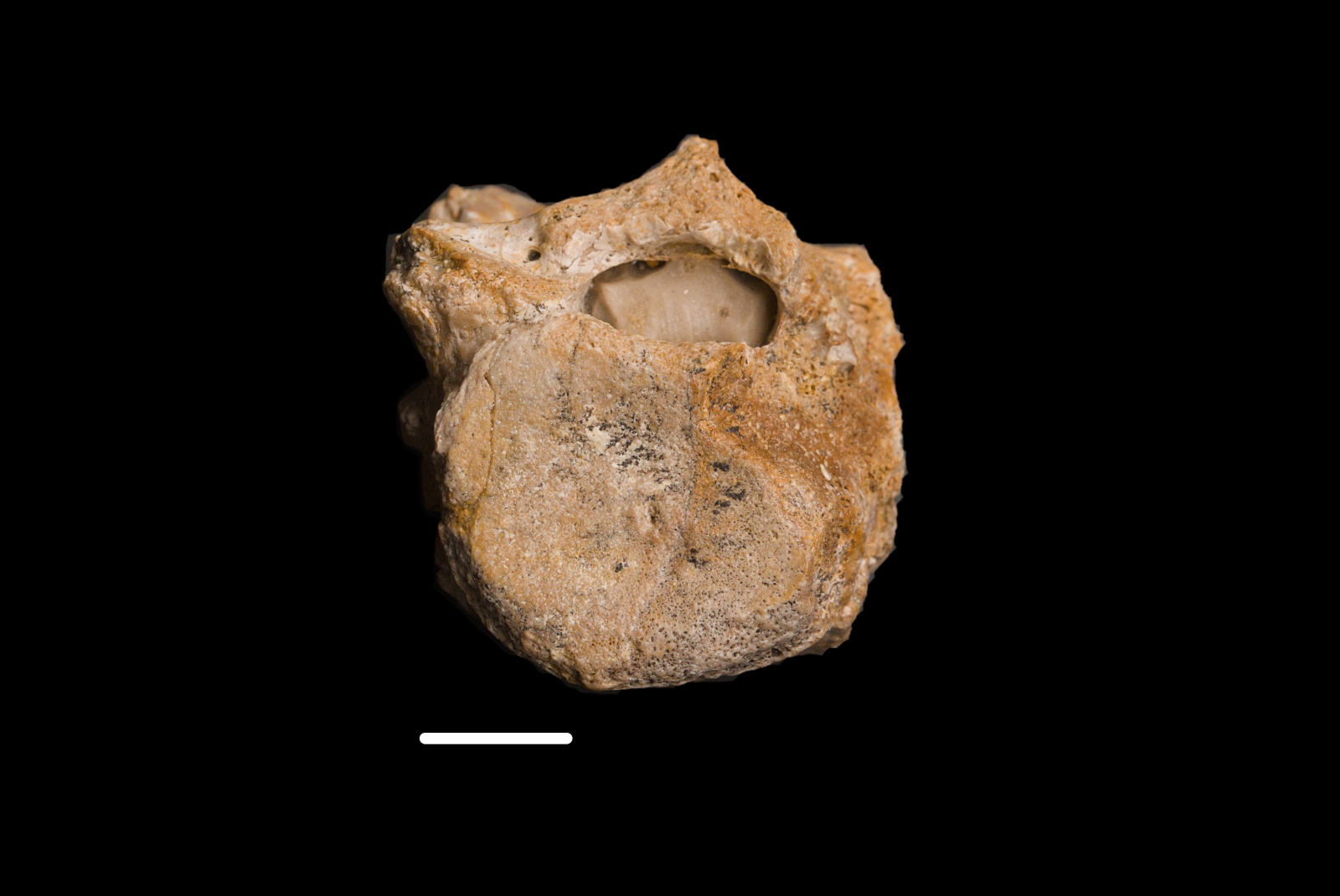
Pistosaurus longaevus, vertebra, 6/UMK
A beautiful specimen of a nearly complete vertebra of Pistosaurus longaevus. Middle Triassic, Upper Muschelkalk (Ladinian), Upper Silesia, Poland
-
Ichthyosauria indet. (cf. Mixosaurus sp.), vertebra centrum, 16/LMK
Ichthyosauria indet. (cf. Mixosaurus sp.) Middle Triassic, Lower Gogolin Beds, Upper Silesia, Poland Ichthyosaur remains are extremely rare in the Muschelkalk deposits of Upper Silesia. The photos show a single vertebral centrum – though slightly damaged, it clearly displays the diagnostic features that allow for its assignment to this group of extinct marine reptiles (most…
-
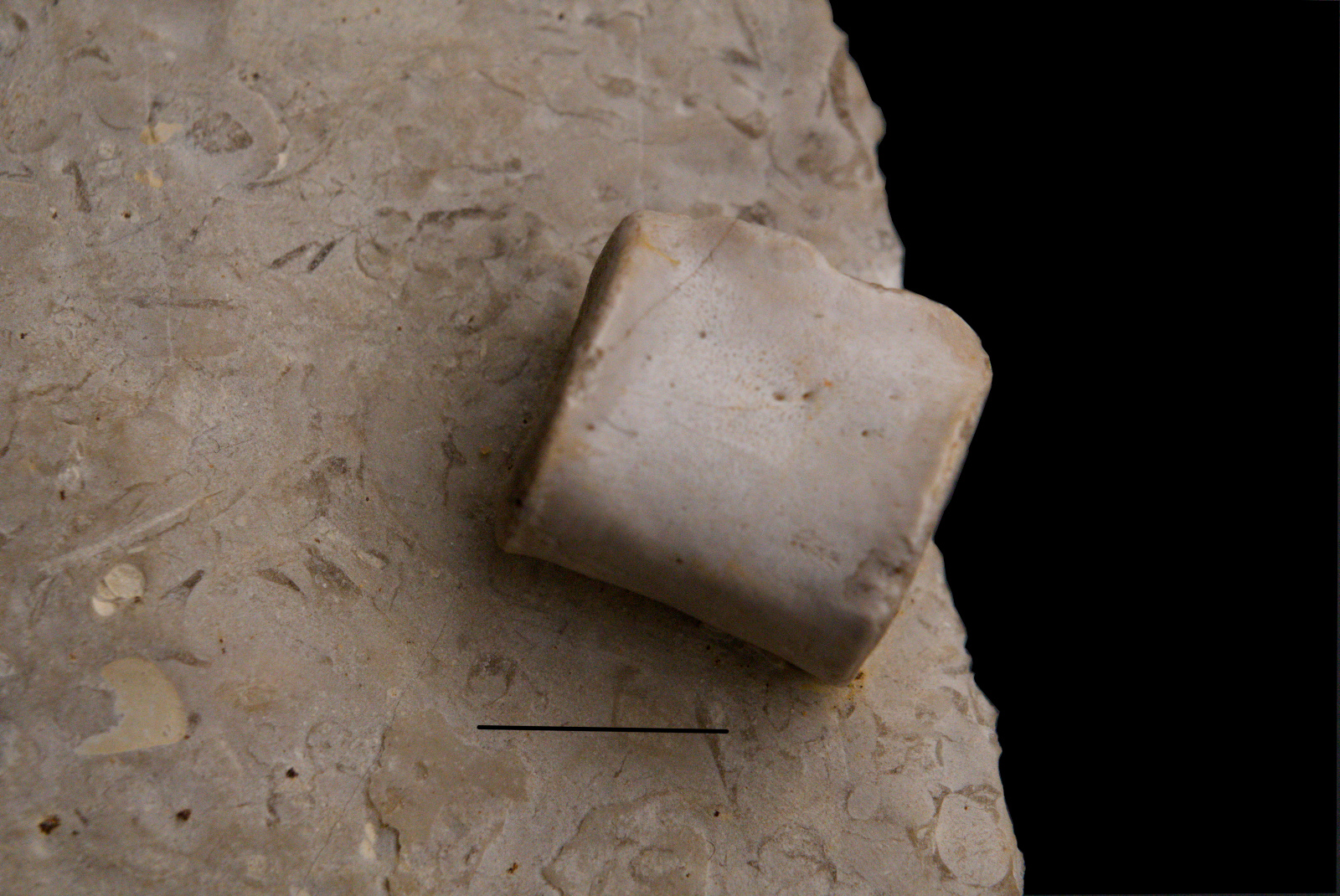
Sauropterygia cf. Nothosaurus, vertebra centrum, 14/LMK
Sauropterygia cf. Nothosaurus Middle Triassic, Lower Gogolin Beds, Upper Silesia, Poland An example of a Sauropterygian vertebra centrum (likely Nothosaurus sp.). This is a well-preserved, large specimen (for this region). The first photo shows the vertebra in lateral view. A nutrient foramen (vascular opening) through which blood vessels entered the bone is visible upon closer…
-
Sauropterygia indet. cf. Nothosaurus vertebra centrum 7/LMK
Sauropterygia indet. cf. Nothosaurus vertebra centrum Middle Triassic (Anisian), Lower Muschelkalk, Gogolin Beds, Upper Silesia, Poland I must admit, this is one of the best prep of a Sauropterygian vertebra centrum I’ve ever made. Finally, the center “popped” out of the matrix without damage. I glued it in place with Palaroid B72. This allows it…
-
Pachypleurosauridae indet. vertebra 5/LMK
Pachypleurosauridae indet. Middle Triassic, Lower Muschelkalk (Anisian), Gogolin Beds, Upper Silesia, Poland The vast majority of fossil vertebrate specimens in the Silesian Muschelkalk are single, isolated bones. As for the vertebrae themselves, I most often encounter vertebral centra, sometimes neural arches. Complete vertebrae, however, are truly rare – almost always separated into two parts. The…
-
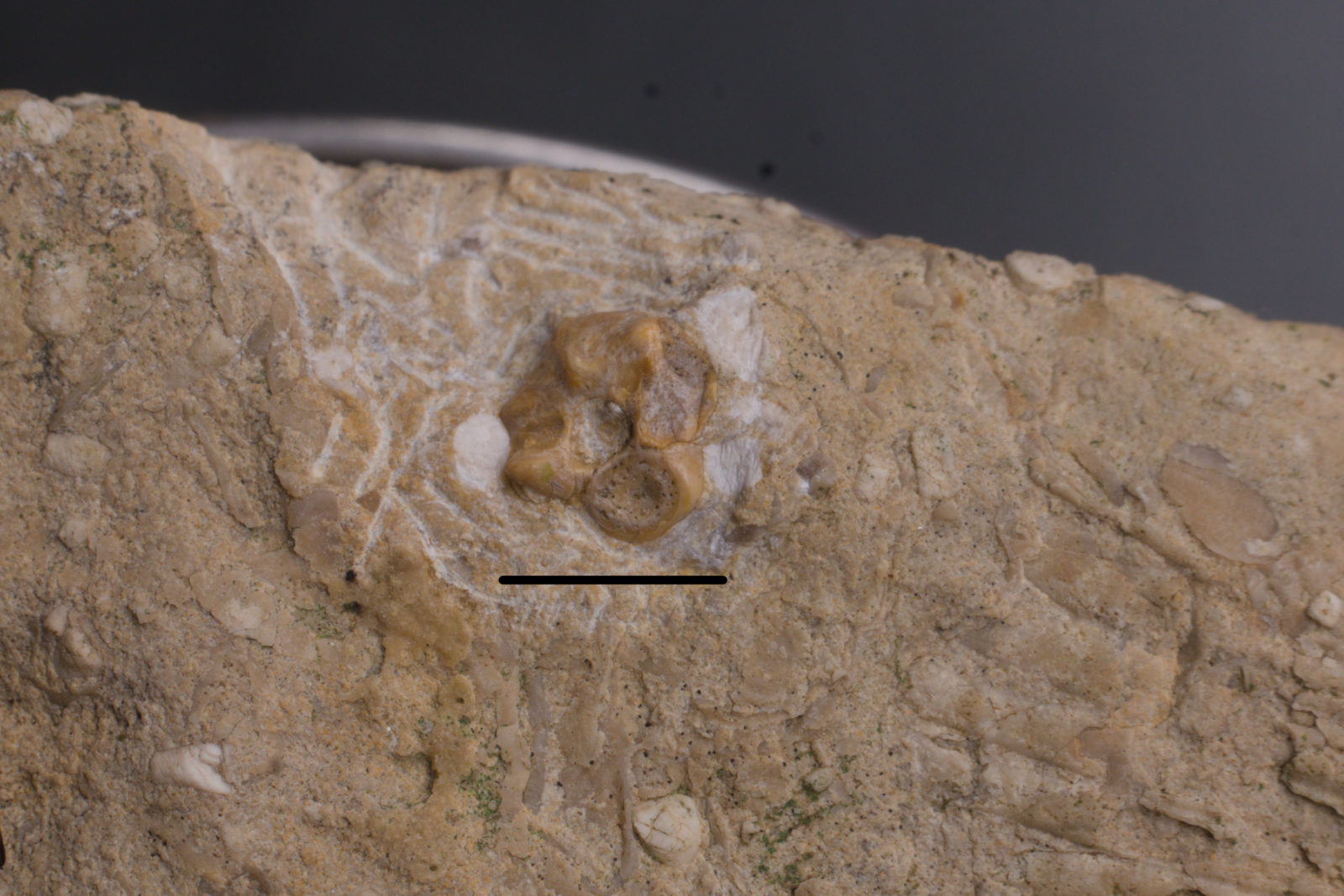
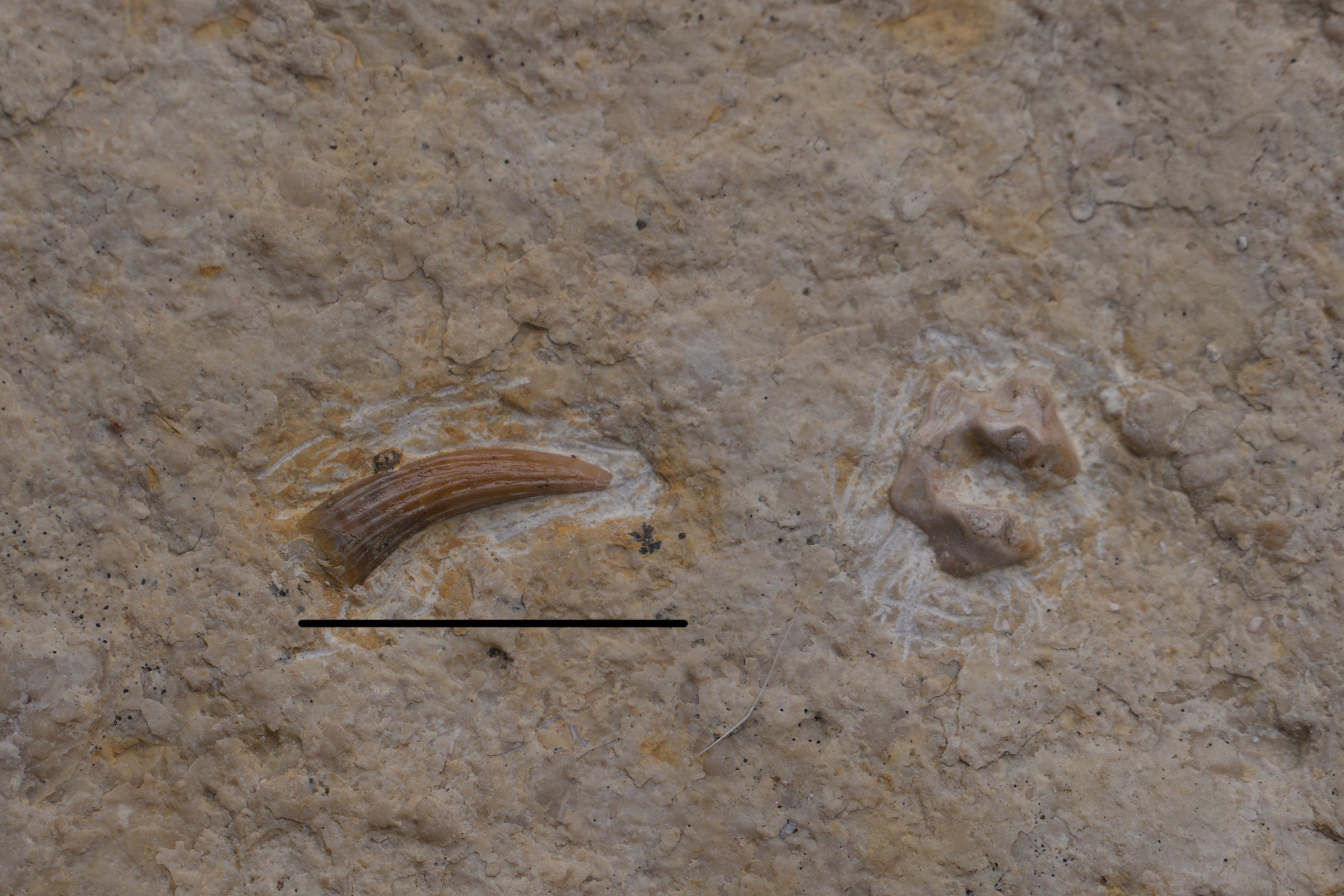
Pachypleurosauridae indet. disarticulated elements 4/LMK
Sauropterygia ?Pachypleurosauridae indet. Disarticulated elements (tooth, neural arch, vertebral centrum) Middle Triassic, Lower Muschelkalk (Anisian), Gogolin Beds, Upper Silesia, Poland Here, you can see three specimens in one. The rock fragment contains disarticulated parts of the skeleton of a small Sauropterygian – a tooth, a vertebra centrum, and a neural arch. Given their age and…
-
Sauropterygia indet. vertebral neural arch 3/LMK
Sauropterygia indet. cf Nothosaurus sp. Middle Triassic, Lower Muschelkalk (Anisian), Lower Gogolin Beds, Upper Silesia, Poland This is an example of a vertebral neural arch (a part of a vertebra). A fairly common find in the Gogolin Beds. Complete vertebrae are truly rare. In this case, the arch “lies on its back,” exposing the canal…