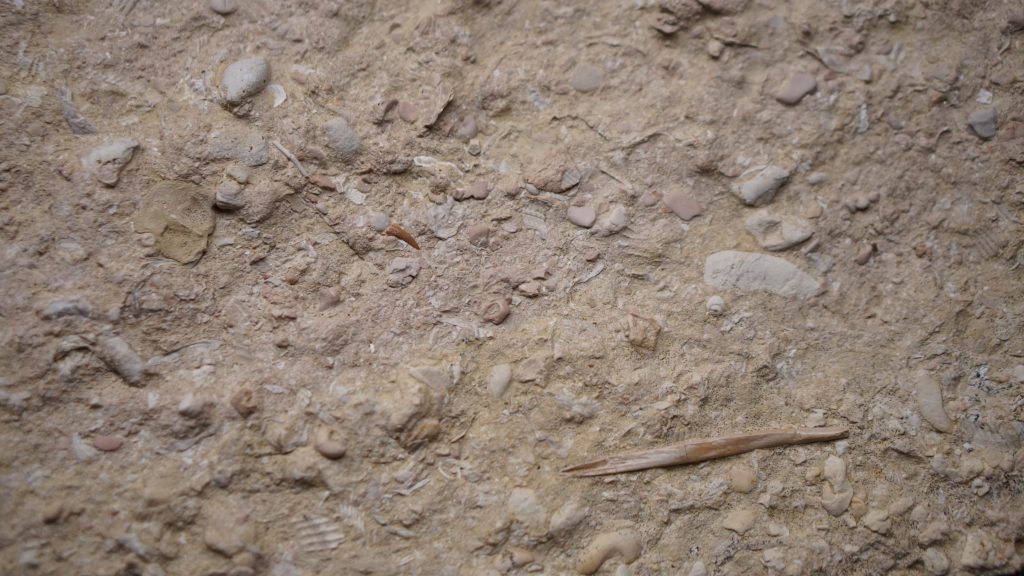

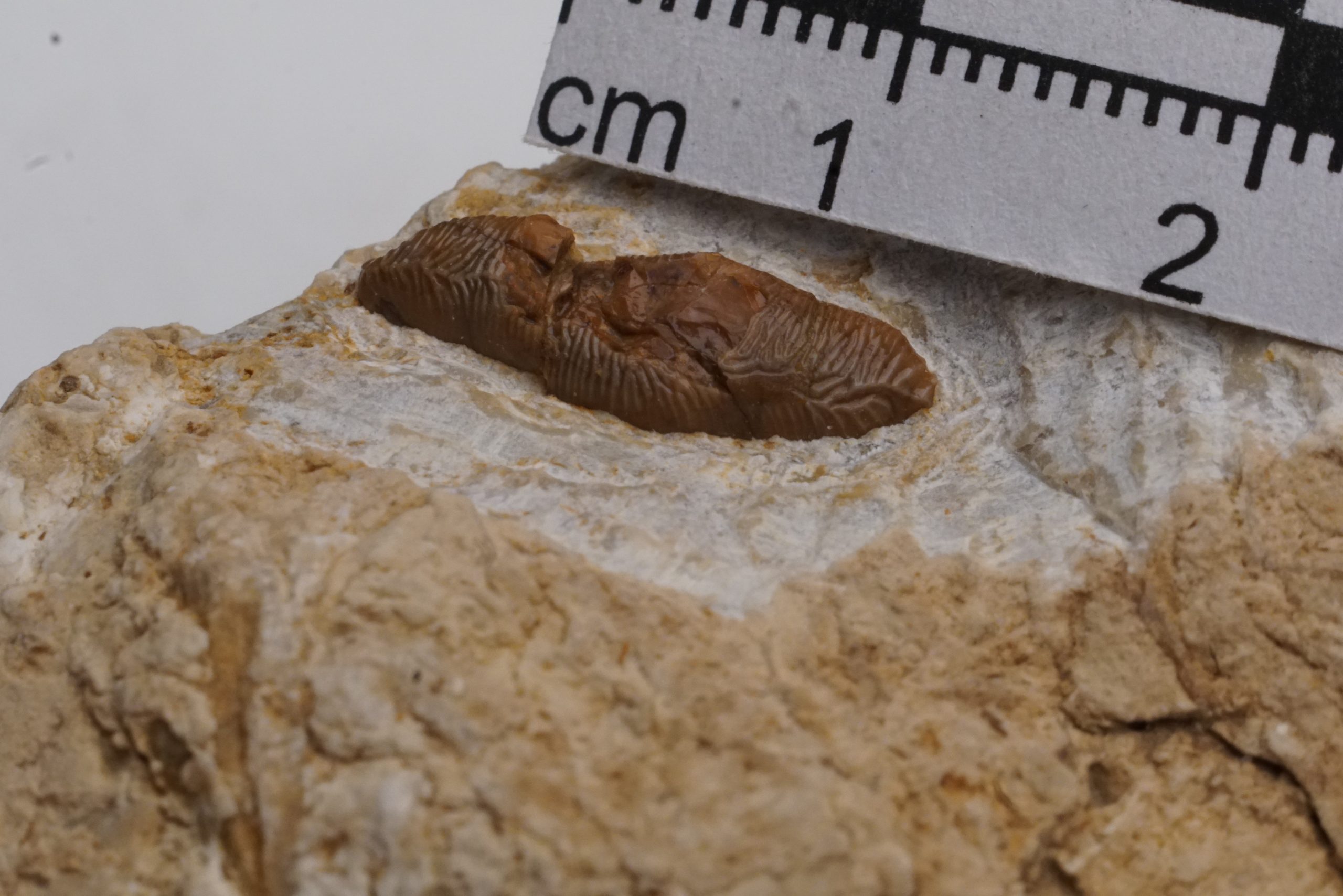
Acrodus gaillardoti?
Middle Triassic, Upper Muschelkalk (ladinian), Upper Silesia, Poland
Acrodus teeth are quite common in the Upper Muschelkalk sediments of Silesia, much more common than remains of other cartilaginous fishes (at least that’s my impression).
Acrodus was a durophagous shark – it fed on armored prey. For this reason, its teeth do not resemble those of modern sharks, which are active predators. The teeth are elongated, rather low, and have indistinct ridges. Their surfaces are covered with characteristic grooves, facilitating the crushing of hard prey. Crowns are most often preserved. Complete teeth are much rarer.
This specimen, although the degree of preservation leaves something to be desired, perfectly illustrates the typical dental features of the genus Acrodus.
Leave a Reply to Acrodus lateralis, tooth, 4/UMK – SilesianTriassic Cancel reply